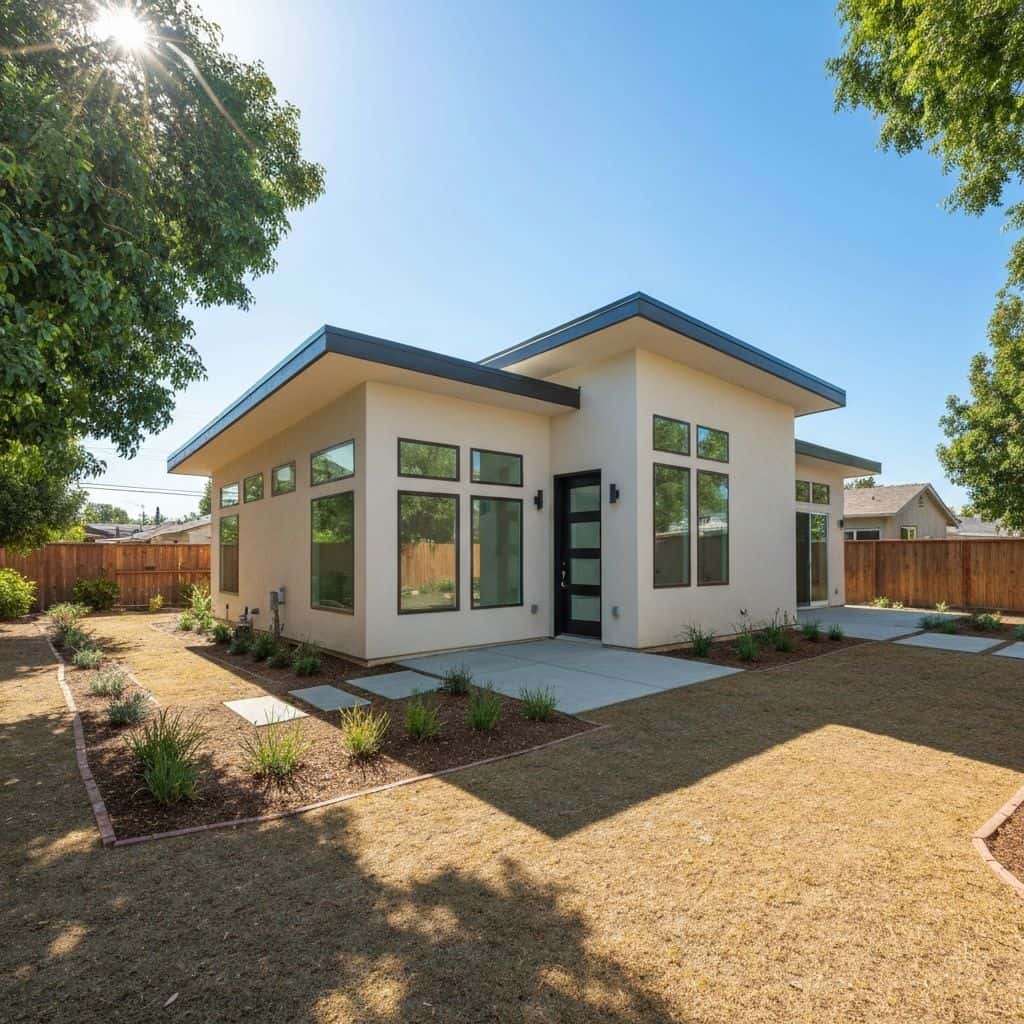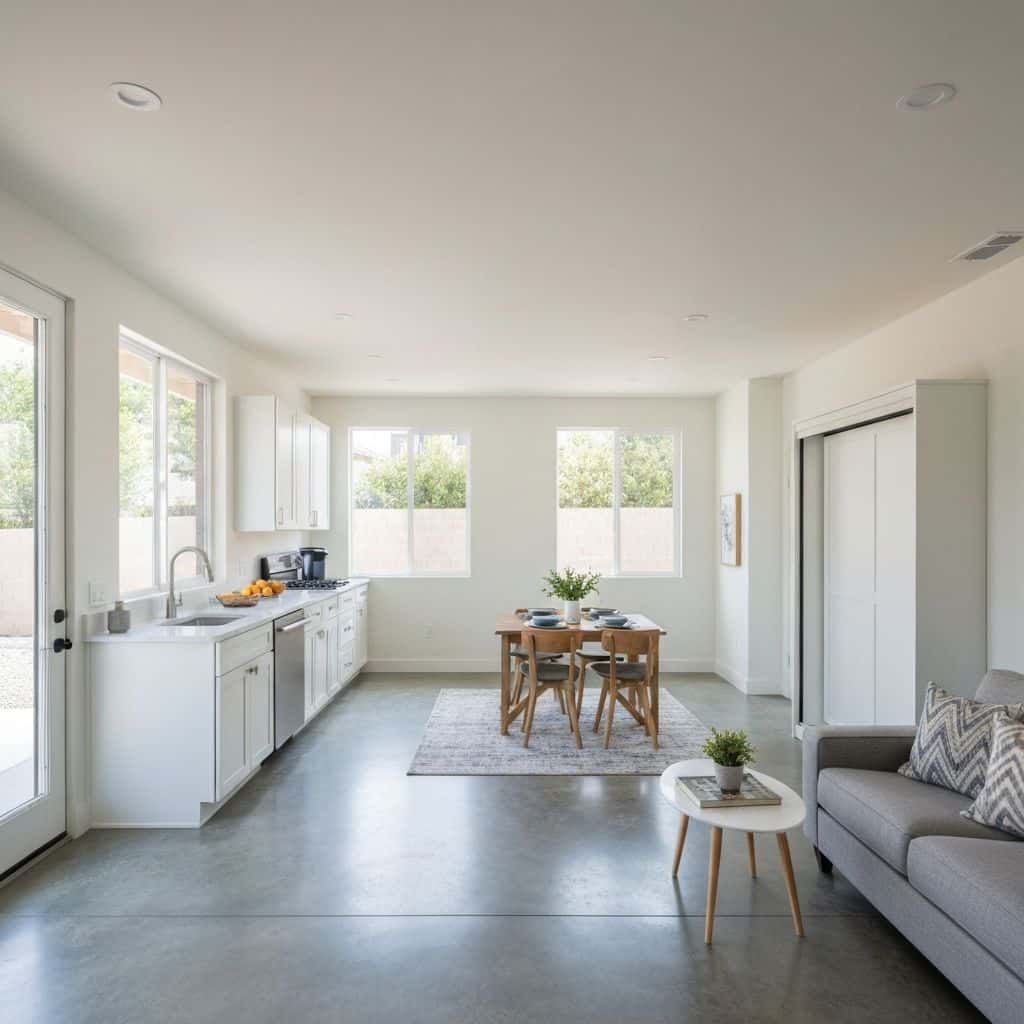
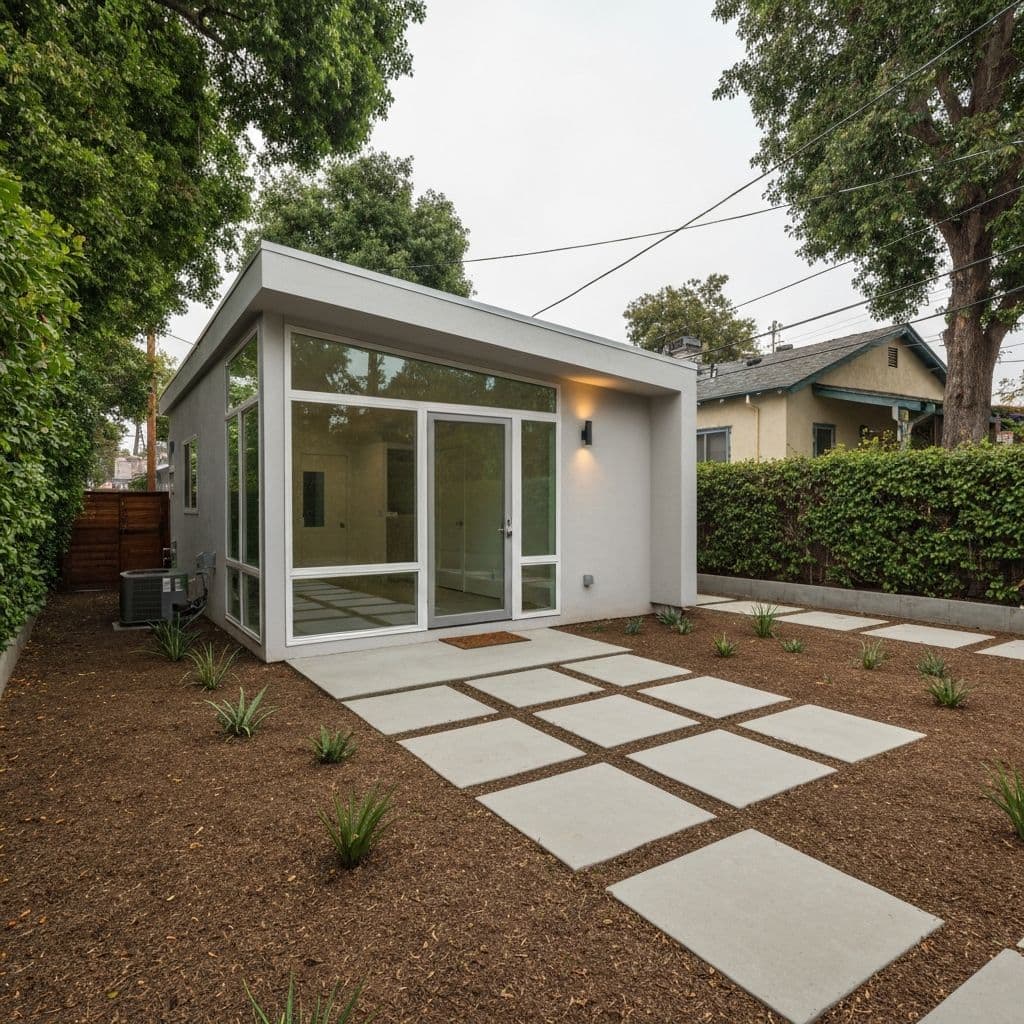
A well-built one-bedroom ADU in the San Fernando Valley rents in the range of $2,100 to $2,900 per month depending on neighbourhood, with studios closer to $1,700 to $2,300 and two-bedroom units reaching $3,000 to $3,600 in stronger submarkets like Sherman Oaks and Studio City. Build cost for that one-bedroom is $220,000 to $300,000. Gross yield therefore lands somewhere between 9 and 14 percent of build cost, which sounds excellent until you subtract the things that never make it into the pitch. Here is the full arithmetic.
Realistic rents across Valley submarkets
Rent tracks the submarket, not the ADU. The same 600 sq ft unit performs very differently across the Valley floor.
Stronger rent submarkets: Sherman Oaks, Studio City, Toluca Lake, Encino south of Ventura. A finished one-bedroom detached ADU with its own entrance, in-unit laundry and a private patio sits at the upper end of the range. Proximity to Ventura Boulevard and the studios drives demand.
Mid submarkets: Van Nuys, North Hollywood, Valley Village, Reseda near the Orange Line. Solid demand, more supply of competing ADUs, rents in the middle of the band.
Softer submarkets: parts of Sylmar, Pacoima, Arleta, Canoga Park. Lower rent, but also lower build cost pressure and lower land basis.
Three features consistently earn a premium rather than just filling the unit: in-unit washer and dryer, a genuinely separate entrance and outdoor space, and off-street parking. A unit without laundry rents, but slower and for less.
Pro Tip
Price the laundry hookups in at design stage. Retrofitting a stacked washer-dryer into a finished 600 sq ft unit is disproportionately expensive.
The costs that come off the top
Gross rent is not income. On a $2,500/month unit, expect these annual deductions:
- Property tax increase. The ADU is assessed as new construction; the existing house is not reassessed. A $250,000 assessed addition at roughly 1.2 percent effective rate is about $3,000 a year.
- Insurance. Adding a second dwelling and landlord liability typically adds $600 to $1,600 a year.
- Utilities. If you did not install a separate meter, you are paying water, power and gas. Budget $1,200 to $2,400 a year and consider sub-metering or a flat utility charge in the lease.
- Maintenance and reserves. Use 8 percent of gross rent. That is $2,400 on $30,000 of annual rent. Water heaters, appliances and paint all have finite lives.
- Vacancy. Use 5 percent even in a strong market. Turnovers cost cleaning and lost weeks.
- Management. If you are not doing it yourself, 6 to 8 percent.
Self-managing, on $30,000 gross you realistically net $21,000 to $23,000.
Pro Tip
Ask LADWP about separate metering during design. Retrofitting a second meter after construction is far more expensive and sometimes not possible.
Ready to Start Your Project?
Schedule a free consultation with our design team.
Payback: the honest number
Take a $265,000 one-bedroom detached ADU in Van Nuys renting at $2,450.
- Gross annual rent: $29,400
- Net after tax, insurance, utilities, maintenance and vacancy: roughly $21,500
- Simple payback on cash: $265,000 / $21,500 = 12.3 years
That is the number nobody puts in a brochure. It is still a strong return (an unlevered 8.1 percent net yield on build cost beats most alternatives) but it is not the four-year payback some marketing implies.
Three things change the picture materially:
Rent growth. At 3 percent annual escalation, payback shortens to roughly 10.5 years.
Financing. If you borrowed at 7 percent on a $200,000 draw, interest in year one is about $14,000, which eats most of the net. But you also only put $65,000 of cash in. Cash-on-cash return in that structure looks very different from the unlevered figure, and it improves as principal amortises.
Sale value. Appraisers in the Valley have increasingly credited permitted ADUs, often at 60 to 80 percent of build cost on resale rather than dollar-for-dollar. Assume the ADU adds $160,000 to $215,000 to a $265,000 build, not the full amount.
Why garage conversions often out-perform on yield
A garage conversion at $135,000 renting for $2,000 as a studio or small one-bedroom produces a net around $16,500 after costs. Payback: roughly 8.2 years. That beats the detached unit meaningfully.
The reason is simple. You skipped the foundation, framing, roof and exterior envelope (roughly 40 percent of a new build's hard cost) while the rent difference between a well-finished 400 sq ft conversion and a 600 sq ft new build is usually only $300 to $500 a month.
The trade-offs are real, though. You lose the garage, which some Valley buyers still want. Ceiling heights are typically lower. And a conversion tends to appraise less favourably than purpose-built detached space.
Where a detached unit wins is optionality: a 750 sq ft two-bedroom with a proper kitchen serves ageing parents, an adult child, or a long-term tenant equally well, and it holds rent better through a soft market.
Pro Tip
If yield is the priority and you have a detached garage you rarely use, the conversion is usually the better financial decision.
Verify these five things before you commit capital
- Actual comparable rents, not asking rents. Look at what similar Valley ADUs leased for in the last six months, not what is listed today. Listed and leased differ.
- Panel and sewer capacity. A 100-amp service upgrade is $4,500 to $9,000 and an ejector pump for an uphill sewer run is $8,000 to $25,000. Both come off your yield.
- Hillside status. If your lot falls under the Baseline Hillside Ordinance (184,802), foundation costs can add $35,000 to $90,000, which pushes payback out several years. Much of the south Valley hillside above Ventura Boulevard is affected.
- Impact fee threshold. Units under 750 sq ft avoid development impact fees under state law. Designing to 749 sq ft is often the right financial call.
- Your own exit horizon. If you plan to sell inside five years, the ADU is a resale-value play, not an income play, and the maths above should be run on appraised uplift instead of rent.
Pro Tip
Get written rent comps from a leasing agent who works your specific submarket before you approve final plans.
Final Thoughts
A San Fernando Valley ADU is a sound long-term asset with a realistic payback of eight to twelve years, not three. Garage conversions produce the faster return; detached units produce the more flexible and better-appraising asset. Run the numbers with property tax, insurance, utilities, maintenance and vacancy included, verify your panel and sewer before you design, and stay under 750 square feet unless there is a good reason not to.
Frequently Asked Questions
A one-bedroom detached ADU generally rents for $2,100 to $2,900 a month, studios for $1,700 to $2,300, and two-bedroom units for $3,000 to $3,600 in stronger submarkets like Sherman Oaks and Studio City. In-unit laundry, a separate entrance and off-street parking each command a measurable premium.
Eight to twelve years for most Valley projects. A $265,000 detached one-bedroom renting at $2,450 nets roughly $21,500 a year after property tax, insurance, utilities, maintenance and vacancy, giving about 12 years. A $135,000 garage conversion renting at $2,000 pays back in roughly eight.
No. In California only the new construction is assessed and added to your existing base; the original home retains its Proposition 13 basis. On a $250,000 assessed ADU expect roughly $3,000 a year in additional property tax at typical effective rates. Confirm specifics with the county assessor.
Appraisers commonly credit a permitted ADU at roughly 60 to 80 percent of its build cost rather than dollar-for-dollar, so a $265,000 unit might add $160,000 to $215,000. A permitted unit with a certificate of occupancy appraises far better than an unpermitted conversion, which may not be credited at all.
If it is feasible on your service, yes. Separate metering removes utility cost from your carrying expense and simplifies the lease. Decide during design and confirm with the utility; retrofitting a second meter after construction is significantly more expensive and sometimes not possible on the existing service.