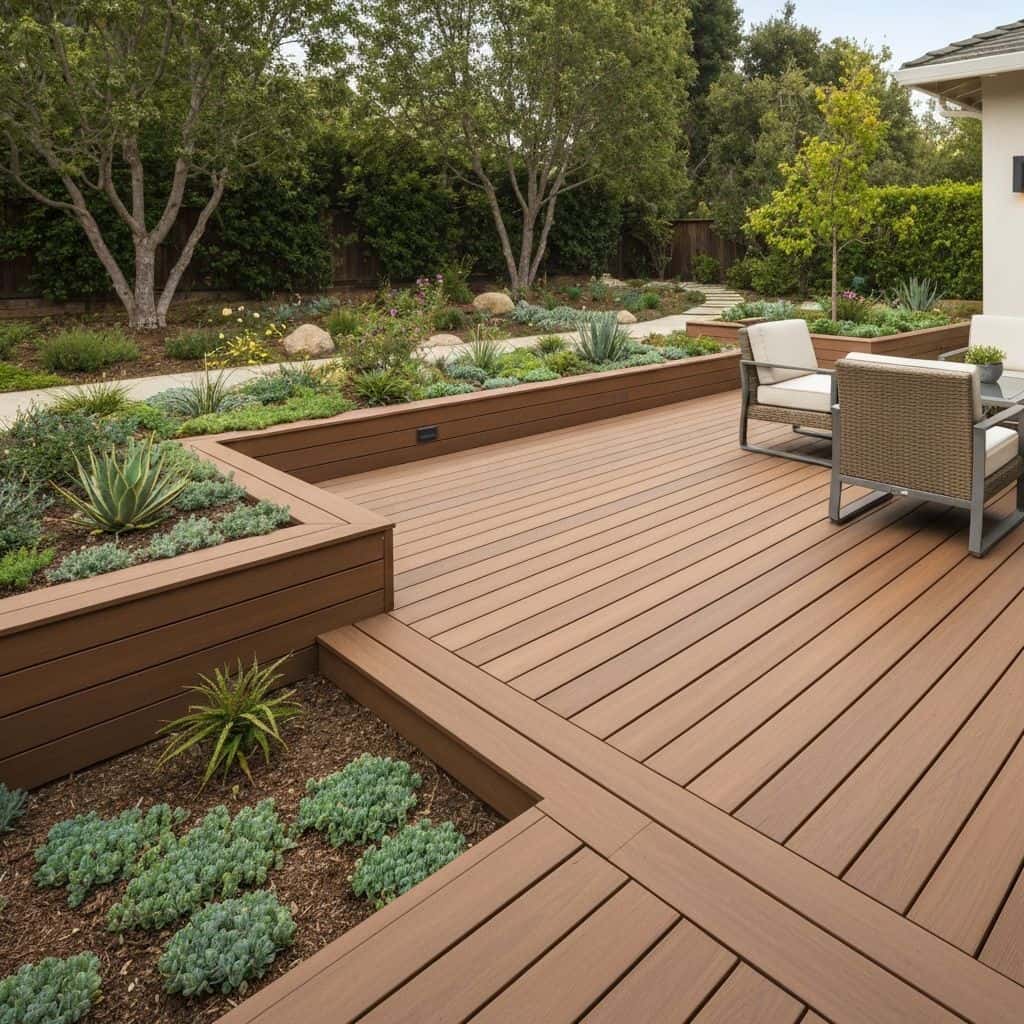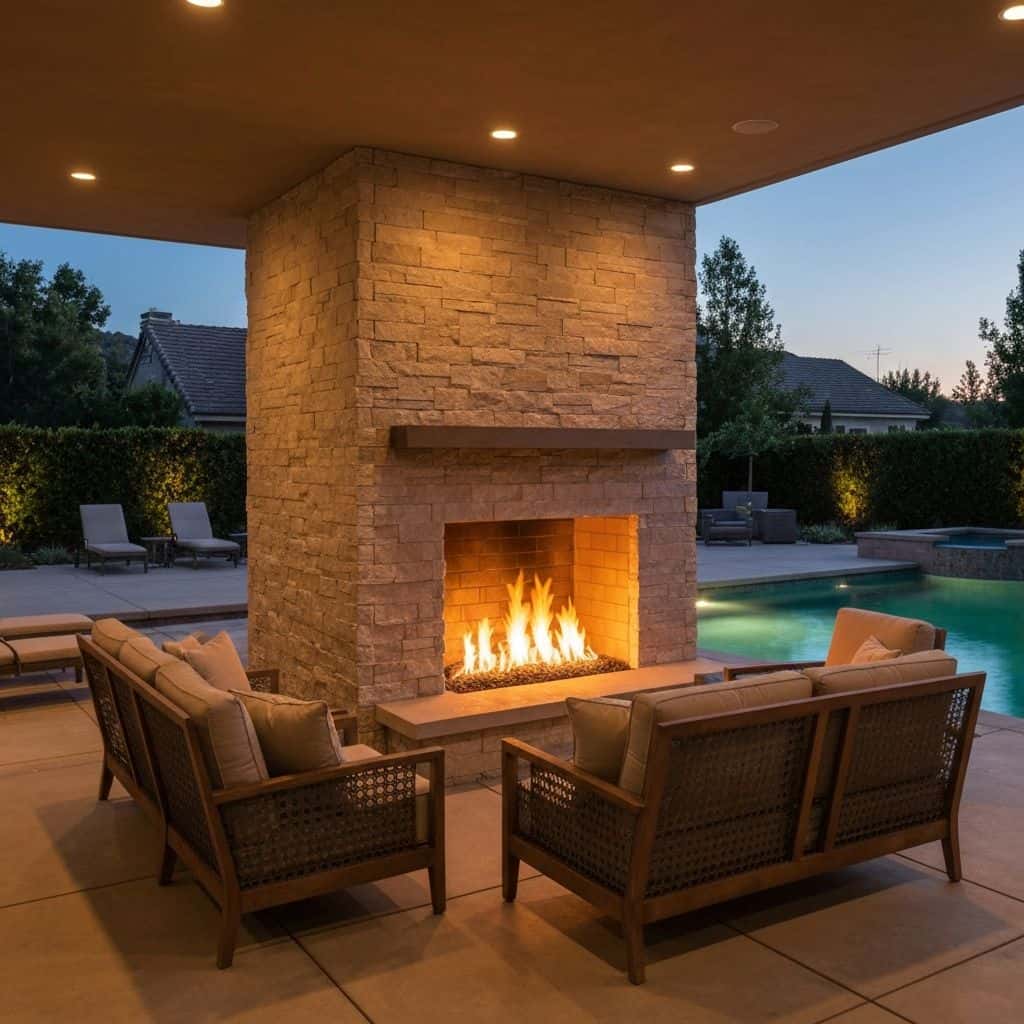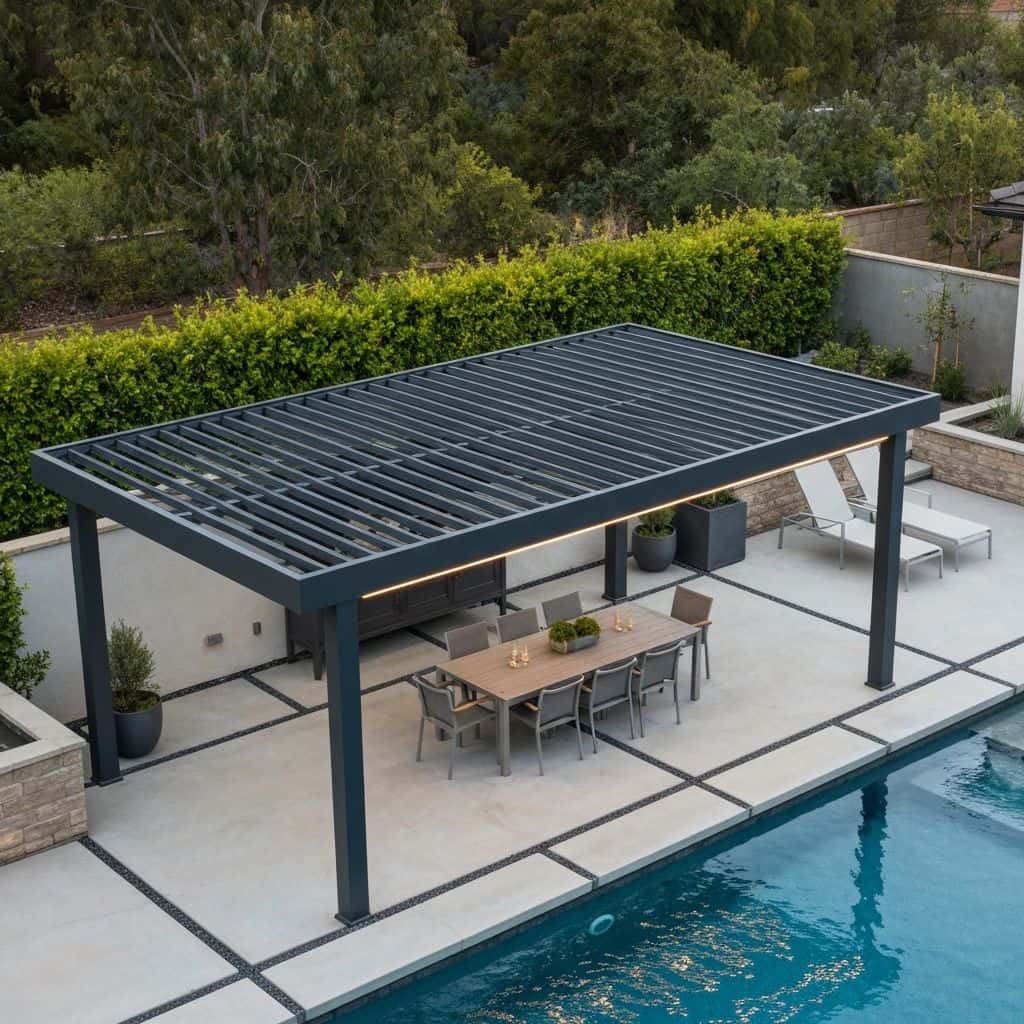
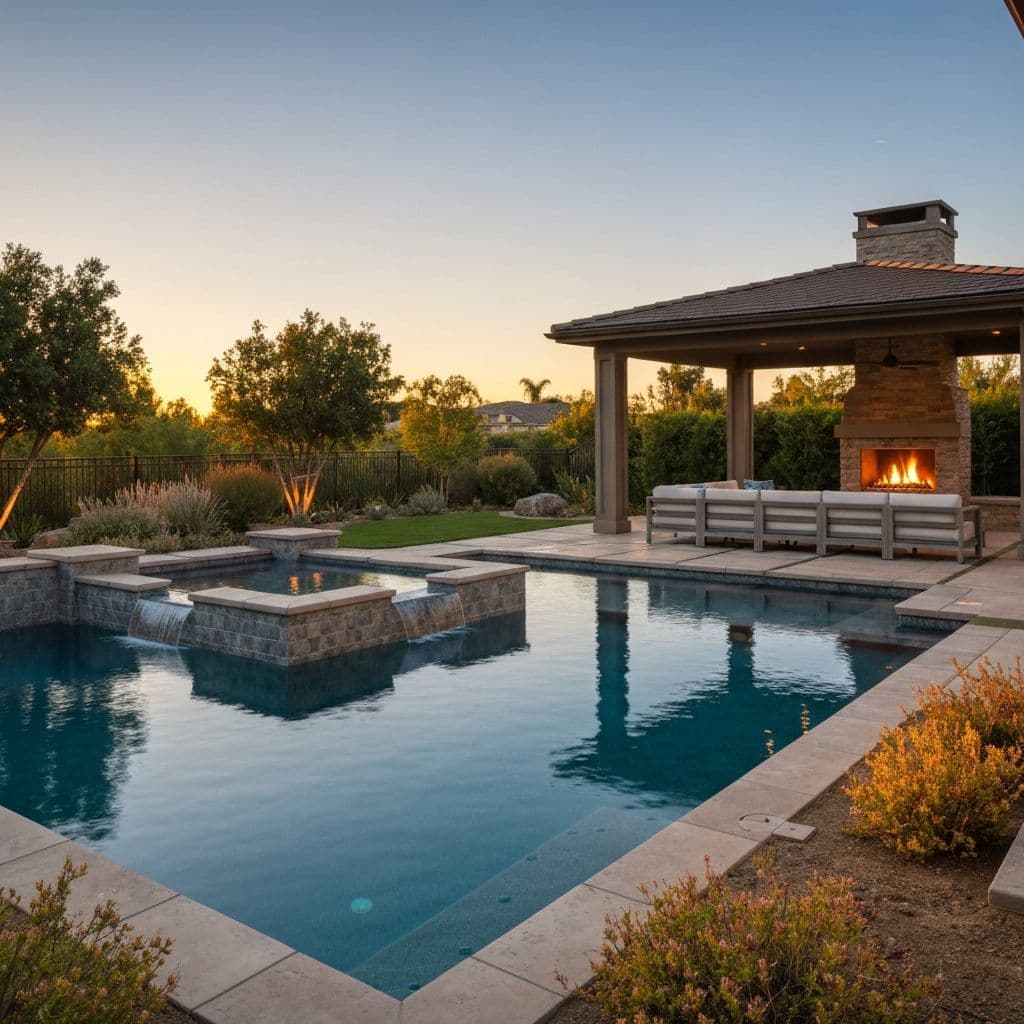
Outdoor living in Chatsworth costs $90,000 to $300,000 and up. The reason is lot size. Where a Van Nuys yard is 1,200 sq ft, a Chatsworth parcel off Rinaldi, Chatsworth Street or up in the equestrian pockets near the Santa Susana foothills can carry 15,000 to 40,000 sq ft with a genuinely large rear area. At $18-$32/sq ft installed for hardscape, the size of the plan drives the budget more than the grade of the materials. Chatsworth also brings three things other Valley markets do not: sandstone and rock in the excavation, exposure to the strongest Santa Ana wind in the Valley, and a fire zone designation across much of the northern and western area that governs material selection.
Working at Chatsworth scale without spending on empty space
The mistake on a large Chatsworth lot is treating the whole yard as a project. Paving 4,000 sq ft at $25/sq ft is $100,000 for ground nobody stands on.
Better approach: build three or four defined destinations connected by inexpensive circulation, and let the rest be planting, decomposed granite or turf.
Destinations worth building:
- Covered cook and dine terrace, 400-600 sq ft: $60,000-$120,000 including structure and kitchen
- Fire lounge, 250-400 sq ft with a gas fire pit and seat walls: $18,000-$40,000
- Pool and deck zone, if included: $95,000-$180,000
- A shaded destination at the far end of the lot (a simple pergola over a DG pad, $12,000-$28,000) which is what makes a big lot feel used rather than just large
Circulation: DG paths at $4-$8/sq ft or stepping stone runs at $12-$20/sq ft rather than continuous paving. On a large lot this saves $30,000-$70,000 with no loss of function.
Turf versus planting: artificial turf at $12-$20/sq ft is cheap per square foot but expensive across 3,000 sq ft. Native and drought-tolerant planting with drip runs $6-$14/sq ft installed and looks correct in Chatsworth's landscape.
Pro Tip
Walk the lot and mark where you would actually sit. Build those spots properly and connect them cheaply.
Rock: the Chatsworth excavation variable
The Santa Susana formation sandstone that gives Chatsworth its boulder outcrops does not stop at the rock piles. Sandstone, conglomerate and cemented material show up in excavation across the northern and western parts of the area.
What it costs:
- Normal soil excavation for a pool, 180-220 cubic yards: $9,000-$18,000
- Rock encountered requiring a hammer attachment: add $4,000-$20,000 depending on volume and hardness
- Heavy rock requiring extended hammer work or, rarely, controlled breaking: can add $25,000+
This is why every serious Chatsworth contract should address rock explicitly. Either the contractor has done a test dig and priced it, or the contract states a rock clause with a defined unit rate. A flat quote with no rock provision on a Chatsworth lot is a change order waiting to happen.
A test pit costs $800-$2,500 and is worth it before finalising a pool location. Move the pool 15 ft and you may avoid the rock entirely.
Rock has an upside. Exposed sandstone outcrops are the best design feature on the lot. Building a terrace or a fire lounge that incorporates existing rock rather than removing it saves money and produces something no one can buy.
Pro Tip
Do a test pit before you fix the pool or spa location. Relocating on paper is free; hammering through sandstone is not.
Ready to Start Your Project?
Schedule a free consultation with our design team.
Santa Ana wind and Very High Fire Hazard Severity Zone
Chatsworth takes the wind coming down out of the Santa Susana Pass at full strength. Gusts over 60 mph occur most years, sometimes higher on the western edge.
Structural response. Freestanding covers need engineered footings sized to the actual wind exposure category, typically 24 in diameter by 42-48 in deep on a louvered aluminium pergola here, rather than the standard 18 x 30 in. Add $2,000-$4,000 to a $18,000-$40,000 structure for the upgraded footings and calculations. Solid roof covers catch more wind than louvered systems and need corresponding uplift resistance in the connections.
Everything else. Loose furniture, umbrellas, planter pots and unsecured screens become hazards. Design for it: built-in seating, in-ground umbrella sleeves, heavy planters, louvered rather than solid screens.
Fire zone. Much of northern and western Chatsworth sits in a Very High Fire Hazard Severity Zone. That requires ignition-resistant construction on outdoor structures, non-combustible or rated decking surfaces, fire-resistant plant selection, and defensible-space clearance from structures. Practically: aluminium or steel-framed covers rather than wood lattice, porcelain or concrete surfaces rather than wood decking near slopes, and a planting palette with clearance zones built in.
Gas fire features are generally workable with correct clearances and shutoffs. Confirm the specifics for your parcel with LADBS at plan check. The boundary is parcel-specific.
Pro Tip
Ask for the wind exposure category and the fire-zone determination for your parcel in writing before materials are ordered.
Building on Chatsworth equestrian property
Chatsworth retains genuine horse-keeping neighbourhoods, particularly toward the foothills and the western edge. Building outdoor living on an equestrian parcel has specific constraints.
Setbacks and animal keeping. Properties zoned for horse keeping carry required distances between animal-keeping structures and dwellings, and between stables or corrals and property lines. New structures cannot encroach on those. Confirm what the property is entitled to keep and where before designing. Losing the ability to keep horses because a pergola went in the wrong place is a real value loss on these parcels.
Circulation. Horse access to and from the property, and trailer access, must survive the build. Do not pave over the route a trailer uses, and do not put a fire pit in the turning radius.
Surfacing near animals. Decomposed granite compacts and drains and is appropriate near paddocks. Pavers and smooth porcelain are not. They are slippery for shod hooves and get destroyed by them.
Dust and drainage. Arena and paddock runoff carries organics. Do not route it toward a pool or an entertaining terrace. Design drainage so the animal areas discharge separately.
Flies and siting. Site the cook and dine terrace upwind and at distance from paddocks and manure storage. This is obvious once said and routinely ignored on plans.
Budget effect: equestrian parcels generally cost the same per square foot to build, but the constrained siting means more circulation and longer utility runs. Add 10-20 percent to trenching and gas or electrical runs.
Pro Tip
Map trailer turning radius and horse routes on the site plan before laying out any hardscape. It is the constraint that cannot be moved later.
Running utilities across a large Chatsworth lot
Distance costs money on large parcels and it is consistently underestimated.
Gas. A 200 ft run to a far-end kitchen and fire pit needs upsizing (often 1.25 in or larger) because pressure drop over developed length is real. At $30-$60 per linear foot trenched and installed, that is $6,000-$12,000 for the run alone, plus a possible meter upgrade at $2,500-$6,000.
Electrical. Voltage drop over long runs requires larger conductors. A 200 ft feeder to a remote sub-panel in conduit runs $6,000-$15,000. Where the destination is far enough, a dedicated remote sub-panel is cheaper than home-running every circuit.
Water and irrigation. A 1 in main from the meter with dedicated zones and a master valve. On large lots, smart irrigation control with flow sensing pays for itself. A broken lateral on a 30,000 sq ft parcel can run for days undetected. Budget $2,500-$7,000 for a good controller and flow-sensing setup on top of the irrigation build.
Lighting. Landscape lighting on a large Chatsworth lot exceeds the typical $3,000-$12,000 range; plan $10,000-$25,000 for genuine coverage. Use multiple transformers positioned near load groups rather than one central unit with long runs. It solves voltage drop and simplifies service.
Trenching discipline. Every service goes in one coordinated trenching pass with proper separation and sand bedding. Re-opening a 200 ft trench across a finished lot is $8,000-$20,000 of unnecessary spend.
Pro Tip
Install two spare conduits on every long run. At roughly $3-$6 per foot they are the cheapest insurance on a large lot.
Final Thoughts
Chatsworth gives you room to build something genuinely good, provided you spend where it counts. Define three or four real destinations and connect them inexpensively rather than paving the whole parcel. Test-pit for rock before locating a pool. Get the fire-zone determination and wind exposure category in writing before selecting materials. On equestrian property, map the animal and trailer routes first. Budget $90,000 to $300,000 depending on scope, and build the long utility runs once, properly, with spare conduit in the trench.
Frequently Asked Questions
Budget $90,000 to $300,000 and up. Lot size drives the number more than finish grade, because Chatsworth parcels of 15,000 to 40,000 square feet offer far more area than typical Valley lots. Hardscape runs $18 to $32 per square foot installed, so a defined-destination plan costs far less than paving the whole yard.
Possibly. Santa Susana formation sandstone and cemented conglomerate appear across northern and western Chatsworth. Rock requiring hammer work adds $4,000 to $20,000 to a pool excavation, more in heavy conditions. A test pit at $800 to $2,500 before fixing the pool location is worth it, and every contract should carry an explicit rock clause.
Chatsworth takes wind straight out of the Santa Susana Pass, with gusts over 60 mph most years. Freestanding covers need engineered footings, commonly 24 inches diameter by 42 to 48 inches deep rather than the standard 18 by 30. Expect $2,000 to $4,000 of the structure budget in upgraded footings and wind calculations.
Yes, with constraints. Horse-keeping zoning carries required setbacks between animal structures, dwellings and property lines that new construction cannot encroach on. Trailer turning radius and horse routes must survive the build, animal-area drainage must discharge separately, and decomposed granite is the appropriate surface near paddocks rather than pavers.
Distance. A 200 foot gas run needs upsizing for pressure drop and costs $6,000 to $12,000 trenched and installed. A long electrical feeder needs larger conductors for voltage drop, running $6,000 to $15,000 to a remote sub-panel. Landscape lighting on a large parcel realistically runs $10,000 to $25,000 rather than the typical $3,000 to $12,000.