Your pool's plaster finish does more than look pretty. It seals the concrete shell, affects water chemistry, and determines how your pool feels and functions for years.
What Is Pool Plaster?
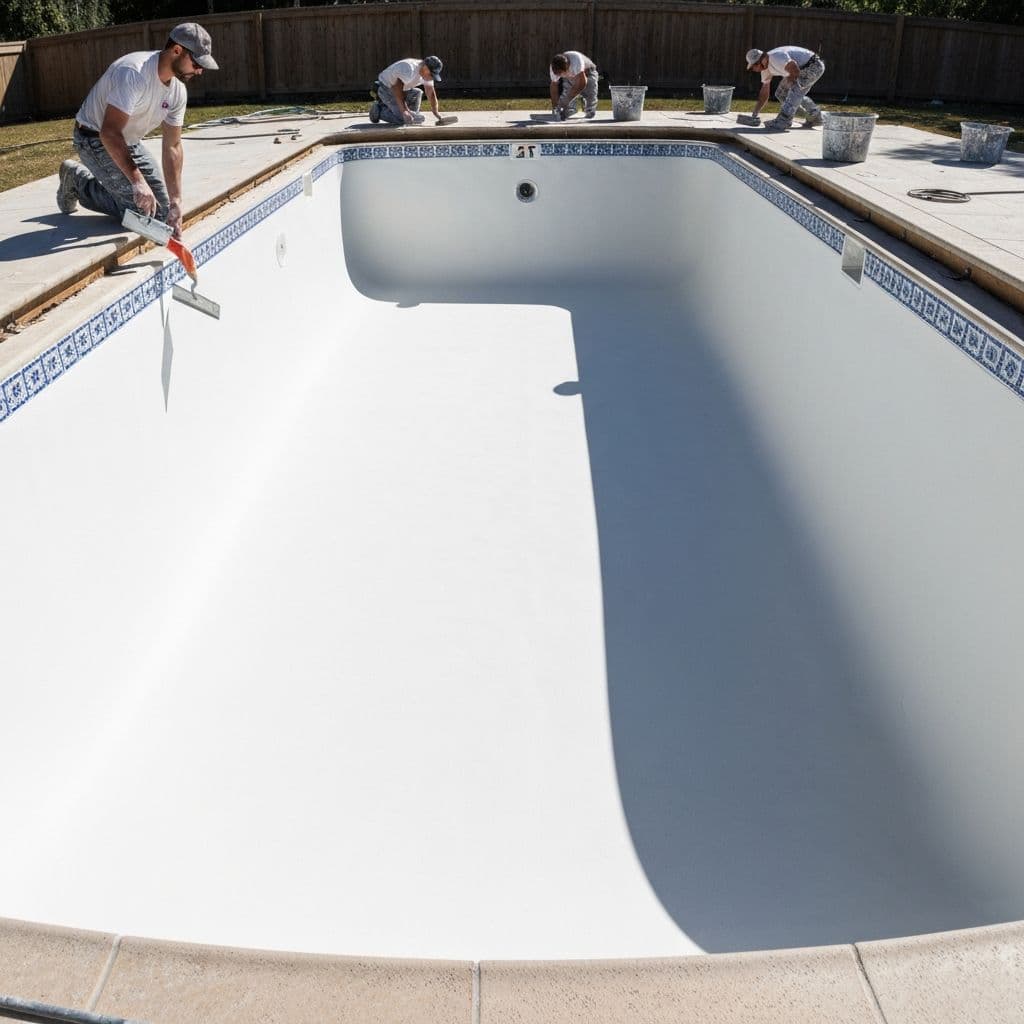
Pool plaster is a mixture of white cement, marble dust, and water applied over your pool's concrete shell. It typically goes on 3/8 to 1/2 inch thick and cures over 28 days.
Plaster Types Explained
Traditional white plaster: Most affordable, lasts 7-12 years. Colored plaster: Uses pigments for various colors. Pebble finishes: Embedded aggregate for durability (15-25 years). Quartz finishes: Added silica for shine and durability.
How Plaster Affects Water Chemistry
New plaster is highly alkaline and affects pH and calcium hardness. The curing process requires specific water chemistry management. Improper startup is a leading cause of plaster problems.
Maintaining Pool Plaster
Proper water chemistry is essential: pH 7.2-7.6, calcium hardness 200-400 ppm, and adequate chlorine levels. Brushing new plaster twice daily for two weeks helps remove plaster dust and promotes proper curing.
Final Thoughts
Understanding how your pool plaster works helps you maintain it properly. Most plaster problems stem from water chemistry issues that are preventable with knowledge and attention.
Build this at your home
We build from Santa Clarita to Long Beach, Thousand Oaks to Riverside, and Orange County down to Mission Viejo. Start with your city:
Frequently Asked Questions
How long does pool plaster take to cure?
Full cure takes 28 days. The first 14 days are most critical for water chemistry management.
Why does my new plaster have streaks?
Streaking usually indicates water chemistry problems during startup or troweling issues during application.
Topics
- pool plaster
- pool maintenance
- pool finish
- pool chemistry

About the author
Remodel Your Vibe Design Team
Written by the design team at Remodel Your Vibe, a licensed (CSLB #1119054 (opens the CSLB license record in a new tab)), bonded and insured, veteran-owned and family-operated design-build company based in Los Angeles. Our own crews design, permit and build pools, backyards, ADUs and interiors across Greater Los Angeles and Orange County.
How we work