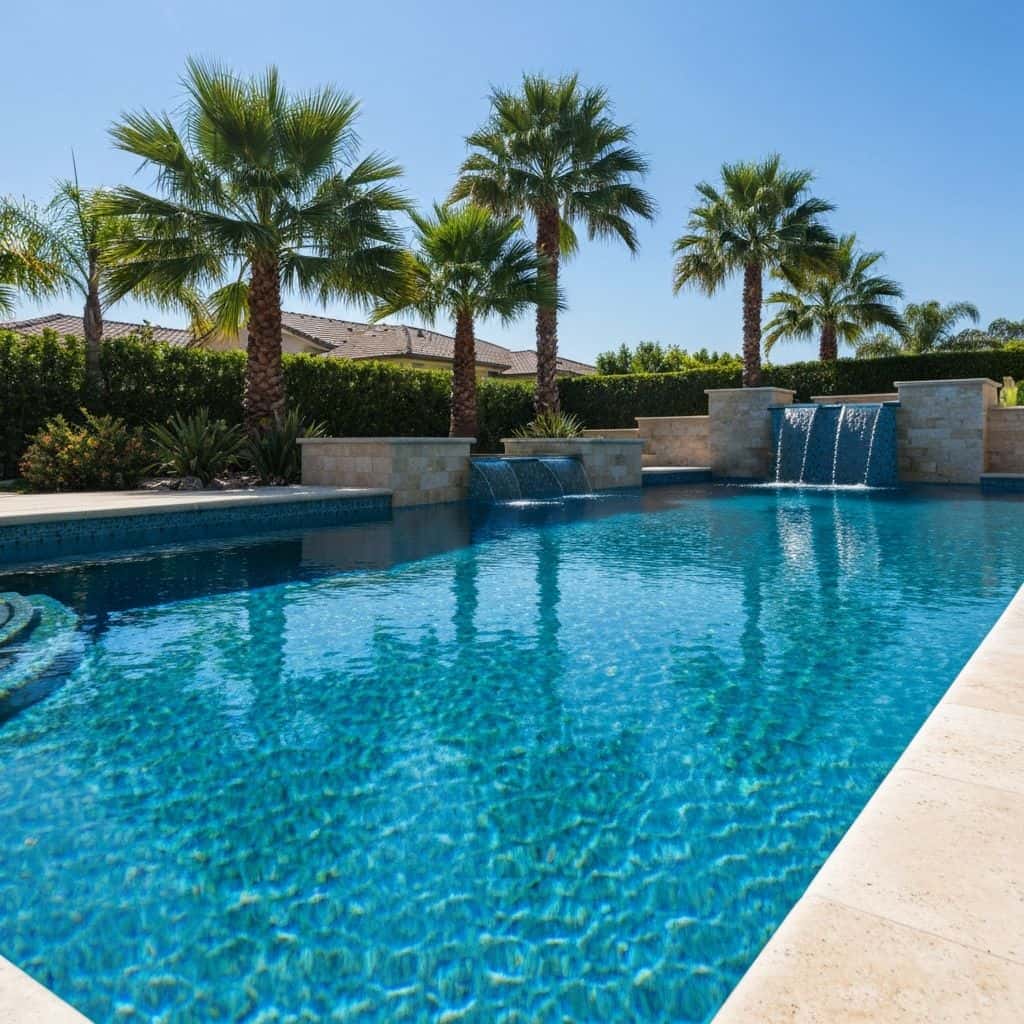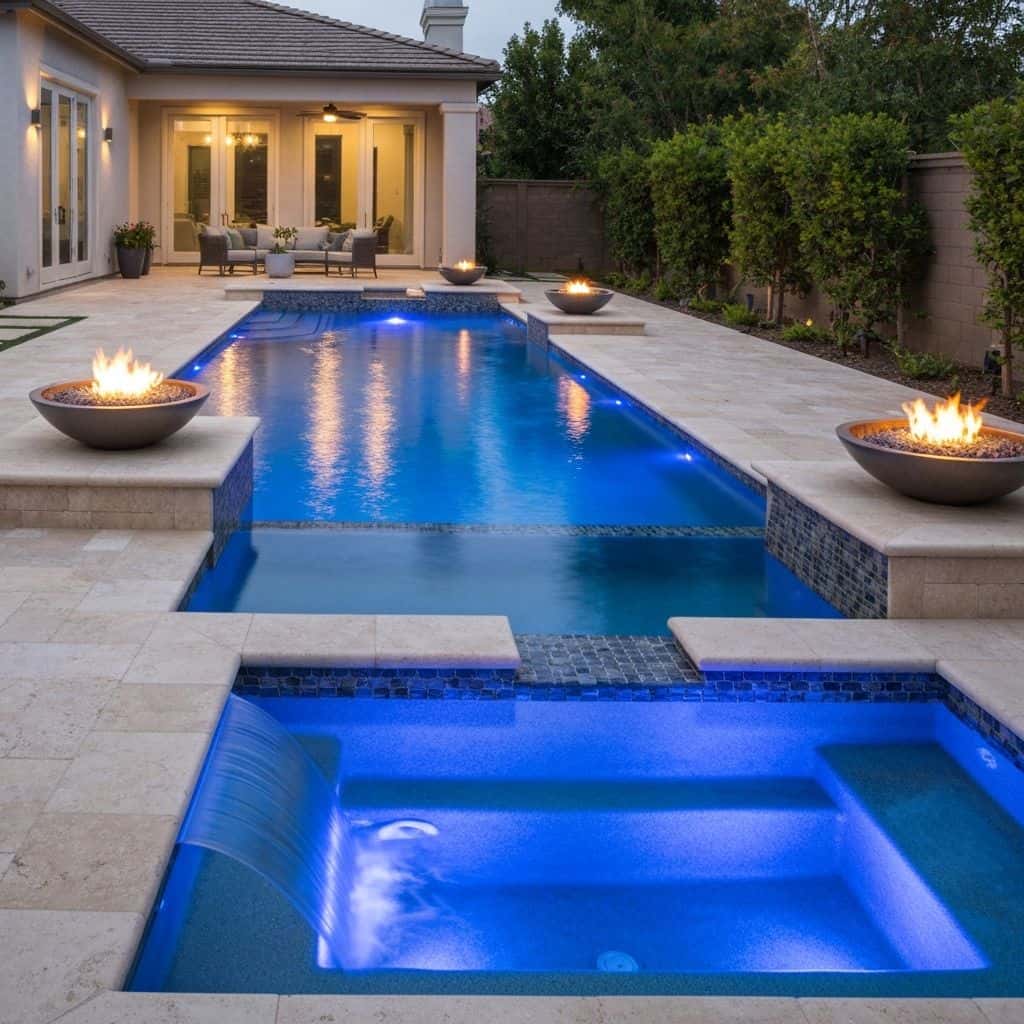
A pool renovation in Laguna Beach runs $22,000 to $60,000, against $15,000 to $45,000 for the same scope on a flat inland lot. The pool work is identical. What differs is getting materials down a steep driveway or up a canyon lot, a design review step most cities do not have, and the fact that essentially the whole city sits in the Coastal Zone. Add slope geology in the canyon neighbourhoods and you have four cost drivers that have nothing to do with tile or plaster. Here is how each one prices out.
Renovation costs and the access surcharge
Three scopes cover most Laguna renovations:
- Finish refresh: drain, chip-out where needed, waterline tile and new plaster: $22,000-$32,000
- Mid-range: the above plus new coping, LED lighting and a full equipment set: $32,000-$45,000
- Full renovation: add structural repair, new decking and automation: $45,000-$60,000 and up
The underlying line items are ordinary. Plaster $8,000-$15,000. Tile and coping together $6,000-$14,000. Equipment set $4,000-$9,000. A 600 sq ft paver deck $10,800-$19,200.
What is not ordinary is the access surcharge: 15 to 35 percent added to labour on lots where trucks cannot reach the yard. A crane set from the street runs $2,500 to $6,000 per day. Demolition spoil that has to be wheelbarrowed up a stair run can add several thousand on its own.
Pro Tip
Ask every bidder to state the access method and equipment they have priced. That single line explains most quote-to-quote variation in Laguna.
Why Laguna access costs what it does
The street pattern here was not designed around concrete trucks. In Woods Cove, Victoria Beach, Three Arch and the canyon streets, driveways are steep, frontages are narrow, on-street parking is scarce and the yard is frequently a flight of stairs below or above the road.
The consequences are specific. Shotcrete gets pumped through long hose runs, which needs a larger pump and a bigger crew placing and finishing before it sets. Deck demolition leaves by wheelbarrow or conveyor rather than by machine. Pavers, coping and equipment are carried by hand from a staged truck. A crane over the house solves some of this but only for lifts that can be rigged safely, and it needs street closure coordination.
None of that is exotic. It just consumes crew hours, and crew hours are what you are actually paying for on a renovation.
Ready to Start Your Project?
Schedule a free consultation with our design team.
Design review and coastal permits
Laguna Beach reviews exterior work more closely than neighbouring cities. Many alterations visible from public viewpoints go through the city's design review process, where neighbourhood compatibility, bulk, height and view considerations are weighed. Raised spas, elevated decks, shade structures and tall equipment enclosures are the elements most likely to attract comment.
Separately, the city lies almost entirely within the Coastal Zone. Coastal development permits are administered under the city's certified Local Coastal Program, with certain decisions remaining appealable to the California Coastal Commission.
Practically, that means a renovation staying inside the existing shell with no height or footprint change is a much simpler path than one that raises a spa wall or extends a deck toward a view corridor. Decide early which side of that line your project sits on, because moving the line later means redrawing the set and restarting review.
Slope stability and pools on hillsides
Laguna's canyon and hillside neighbourhoods have a documented history of ground movement, and pools on slopes are treated as structures, not water features.
Expect a geotechnical report at $4,000 to $9,000 wherever new load, retaining or regrading is proposed. Where a pool bears partly on the downslope side, the engineered solution is normally drilled piers with a grade beam tying the shell into competent material; that package commonly adds $8,000 to $25,000 depending on depth and pier count.
Three details matter on any hillside pool. A subdrain behind pool and retaining walls, so hydrostatic pressure never builds against the structure. A hydrostatic relief valve in the shell floor where seepage is present. And drainage that collects deck runoff in solid pipe to a legal point of discharge ($4,000 to $11,000) rather than letting it soak into the slope. Skipping any of the three is how small problems become expensive ones.
Materials on an ocean-facing lot
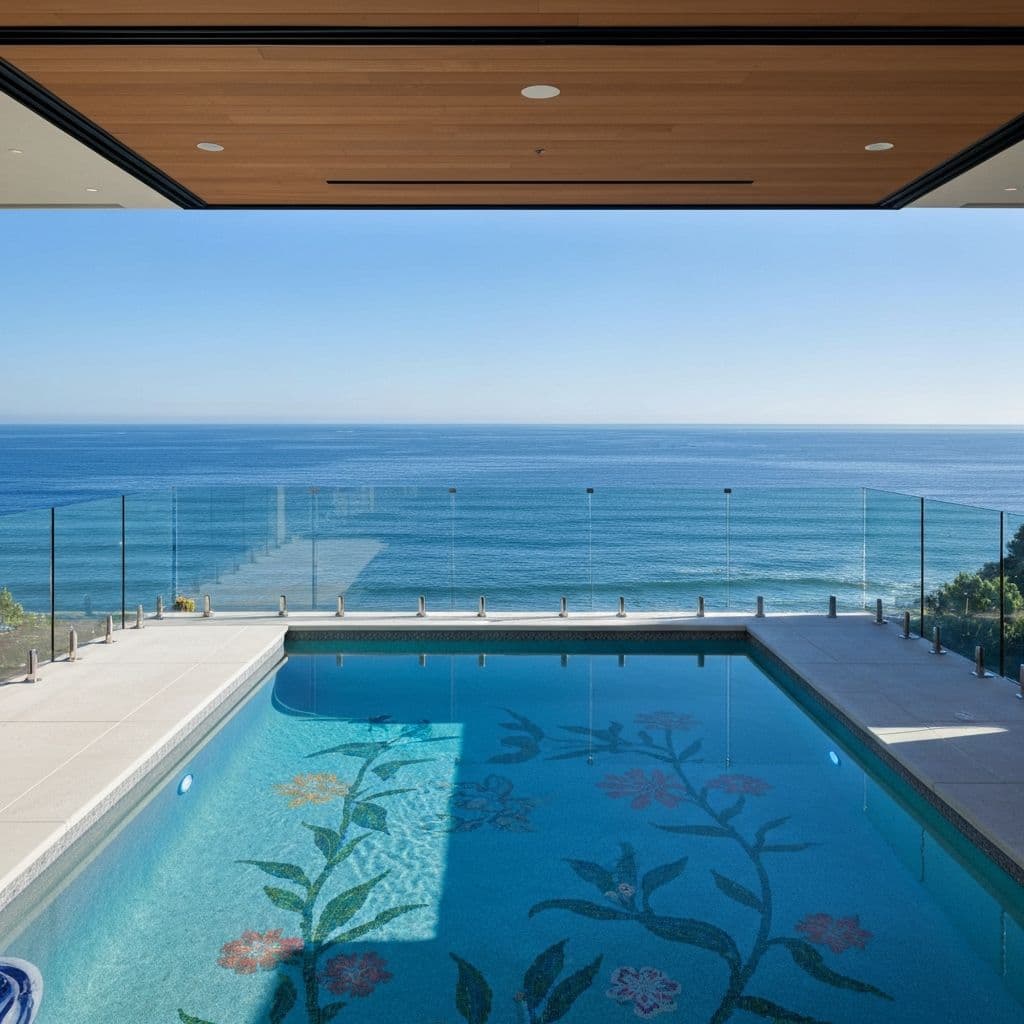
Ocean-facing Laguna lots take salt-laden wind directly, and the equipment pad usually sits on the exposed side of the house because there is nowhere else for it.
Specify 316 stainless for rails, ladder anchors and any exposed fastener. Put the equipment in a ventilated enclosure with a hose bib for freshwater rinsing, and keep automation panels out of direct spray. Powder-coated marine-grade aluminium is the right choice for gates, screens and shade structures.
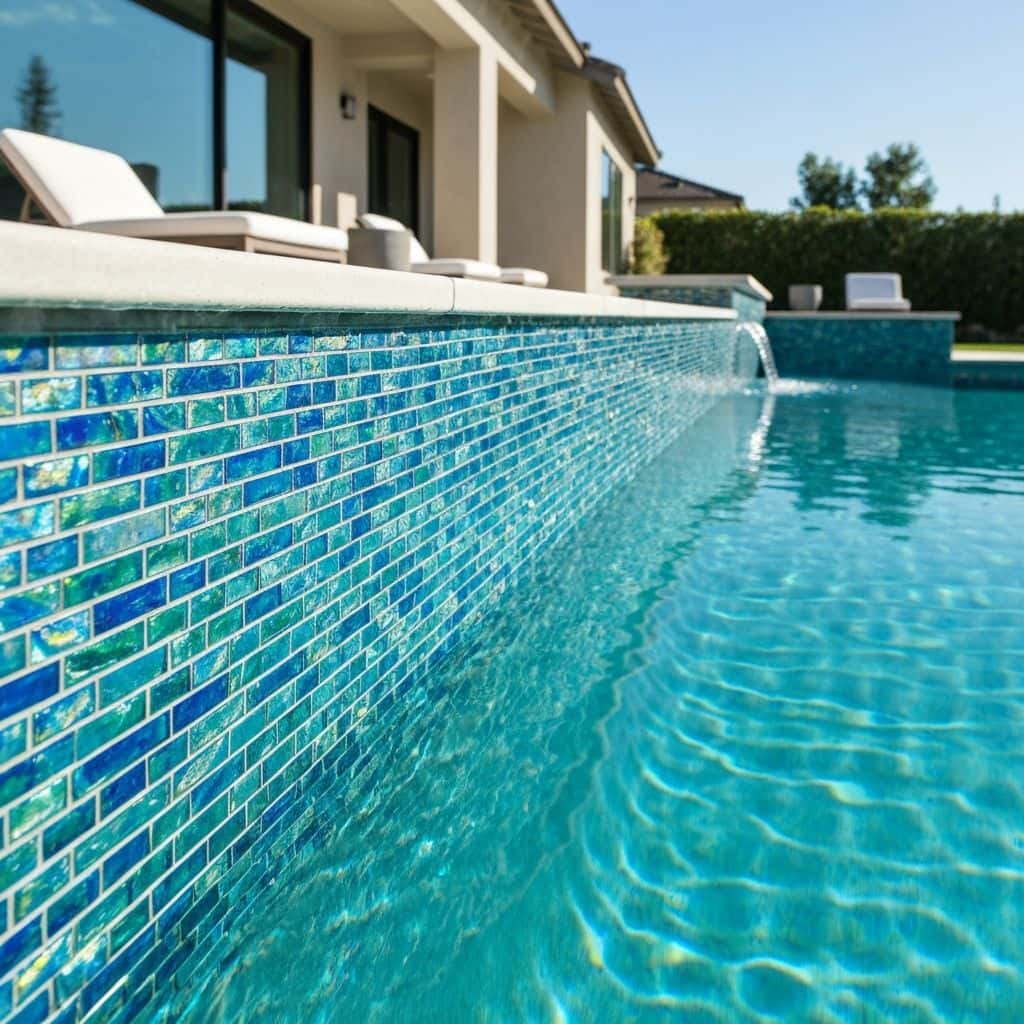
For decking, through-body porcelain resists the salt and the UV better than travertine, which pits over time near the shoreline. Glass waterline tile performs well but the setting system matters. Use a polymer-modified thinset and epoxy grout rather than a standard sanded grout.
For lighting, brass or copper fixture bodies. Painted aluminium fixtures on an ocean-facing terrace are a two-year product.
What to renovate and what to leave alone
A useful decision framework before you spend:
Shell sound with only surface staining and minor delamination: resurface. Chip-out and replaster gets you another 10 to 15 years at the low end of the budget.
Structural cracks that leak or open seasonally: get them investigated before any finish work. A crack that moves will telegraph through new plaster within a season.
Equipment older than 10 to 12 years: replace the set rather than the failed component. A variable-speed pump is required for replacement under Title 24 anyway, and mixing a new pump with an old filter and heater rarely saves money for long.
Sound coping and a good tile setting bed: keep them. That single decision can take $6,000 to $14,000 out of the job.
Sequence the work as demolition, structure, tile and coping, deck, then interior finish last so deck dust never lands on fresh plaster.
Final Thoughts
Laguna renovation budgets go wrong when owners price the pool and ignore the site. Access, design review, coastal permitting and slope engineering are where the money and the schedule actually live. Settle those four questions first, then choose the finish. The pool work itself is the most predictable part of the project.
Frequently Asked Questions
Access, mostly. On steep or stair-access lots, shotcrete is pumped through long hose runs, spoil leaves by wheelbarrow and materials are carried by hand, which adds 15 to 35 percent to labour. A crane from the street runs $2,500 to $6,000 per day. Design review and coastal permitting add soft cost on top.
It depends on the scope. Work staying inside the existing shell with no change to height or footprint is a much simpler path. Raising a spa wall, extending decking or adding a shade structure visible from public viewpoints is far more likely to require review for compatibility, bulk and view considerations.
A geotechnical report runs $4,000 to $9,000. Where the pool bears partly on a downslope, drilled piers with a grade beam commonly add $8,000 to $25,000 depending on depth and count. Add a wall subdrain and a piped deck drainage system at $4,000 to $11,000. All of it is cheaper than remediating movement later.
If the set is 10 to 12 years old, replace it together. A replacement circulation pump has to be variable-speed under Title 24 in any case, and pairing a new pump with an ageing filter and heater usually means a second service call and a second trip charge within a year or two.