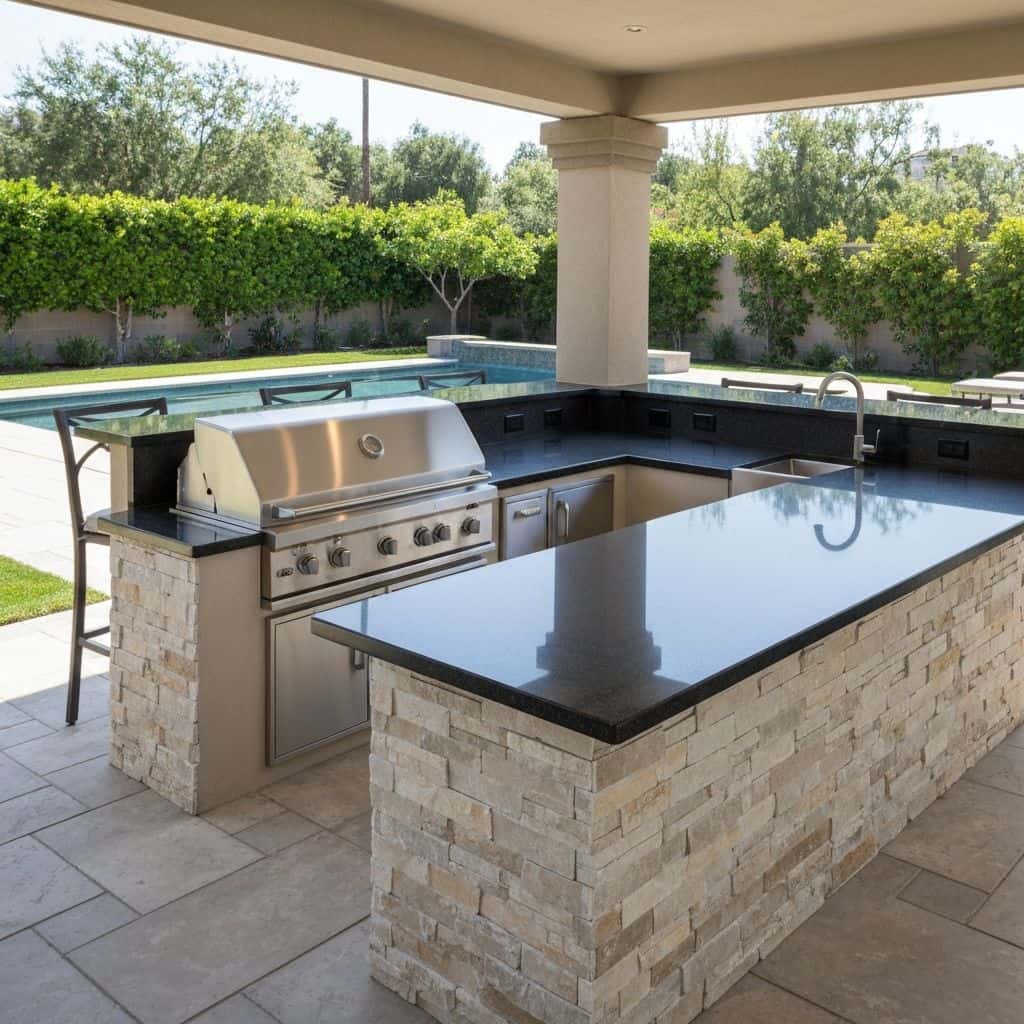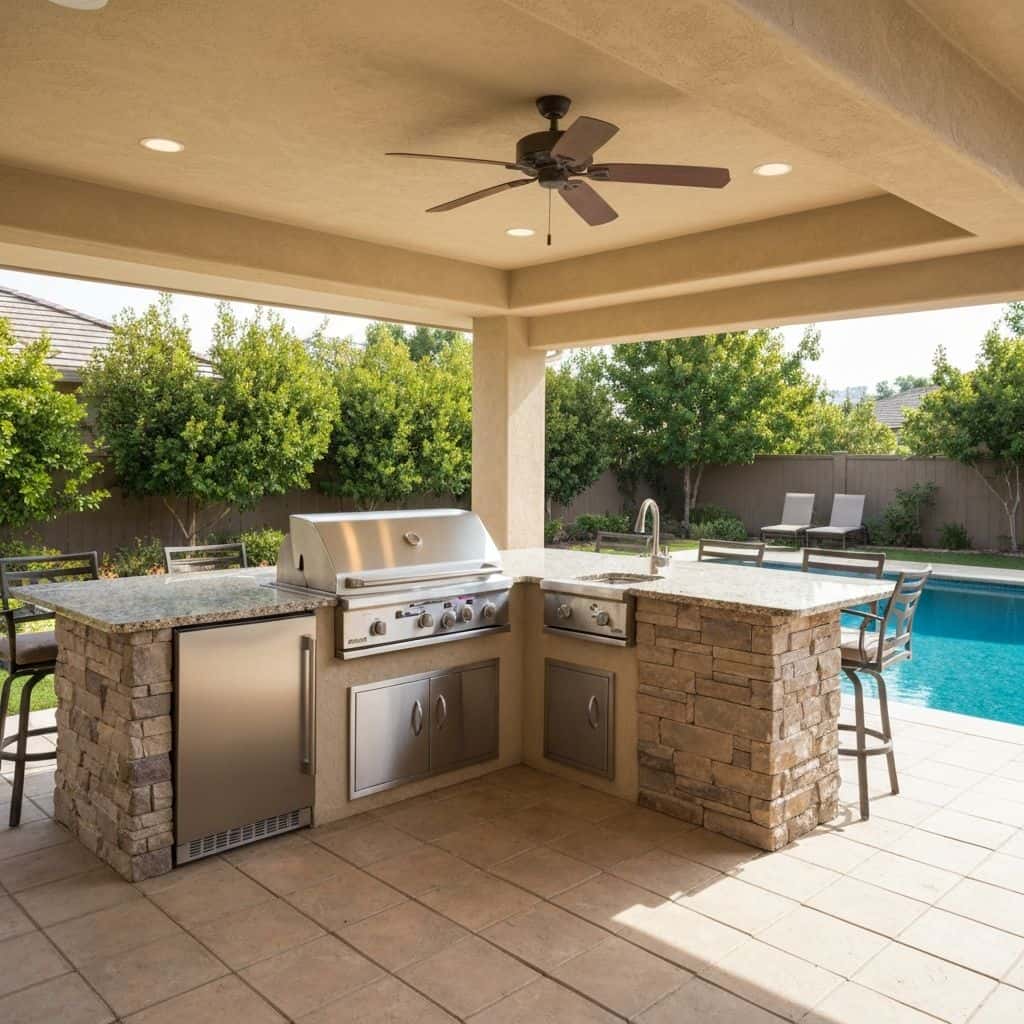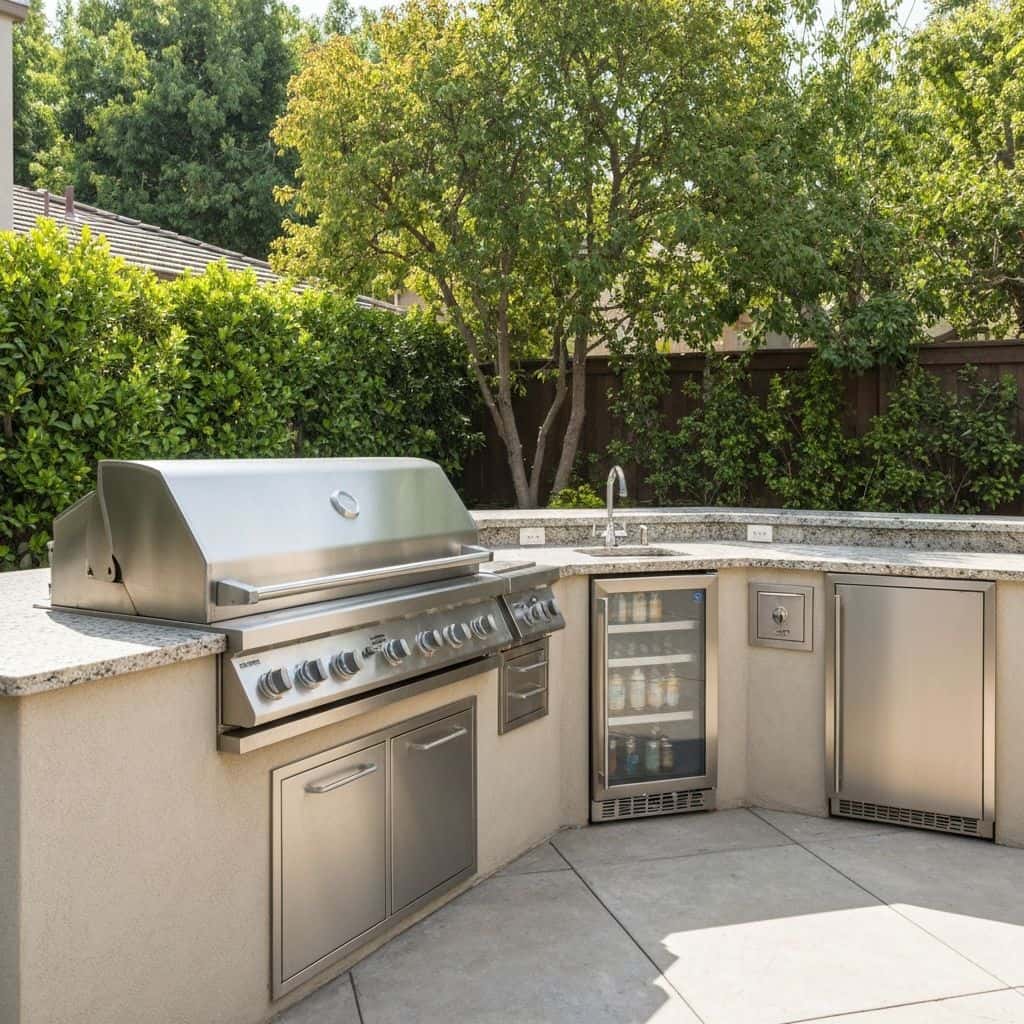
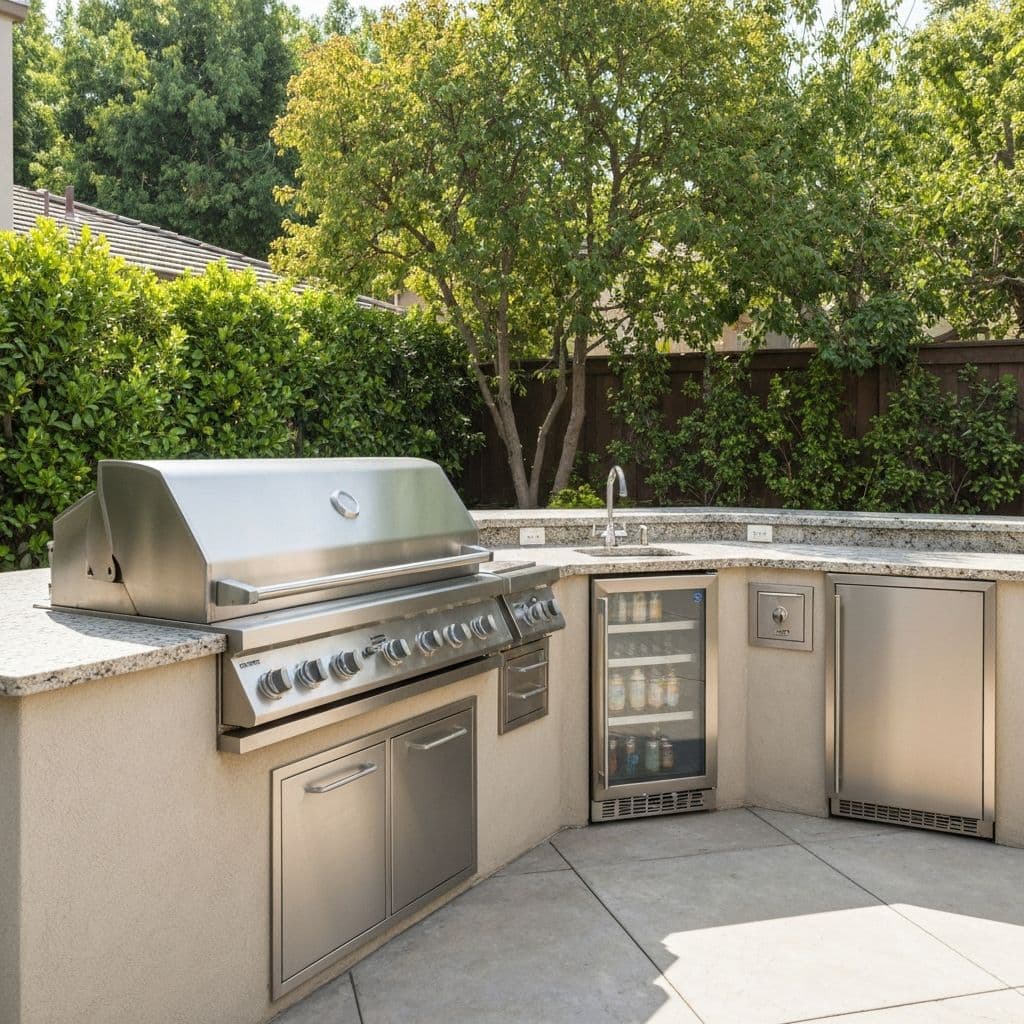
A 36-inch built-in grill is the right size for most Southern California households: roughly 600 to 800 square inches of primary cooking surface, three or four burners, enough for eight to twelve people. It also demands 60,000 to 90,000 BTU per hour of gas, and that is where projects go wrong. A half-inch line running 60 feet from a meter in the side yard will not deliver it. Price the gas run and the island venting before you fall in love with a particular grill.
Size, configuration and what people actually cook
Built-in grills come in 30, 32, 36, 42 and 48-inch widths. The jump that matters is 30 to 36 inches, which takes you from about 450 to about 700 square inches of grate and from two burners to three or four. Independent burner control is what lets you run a hot sear zone and a rest zone at the same time.
A 42 or 48-inch grill is a genuinely different tool. It will hold a full brisket and a tray of vegetables at once, but it needs a wider island and more gas, and very few households use the extra width more than a few times a year.
Options worth buying: an infrared rear rotisserie burner at 10,000 to 15,000 BTU, and a dedicated sear zone. Options usually not worth buying: the integrated smoker box, which underperforms a standalone smoker, and a warming rack that ends up storing spatulas.
Pro Tip
Buy the 36-inch grill and spend the difference on refrigeration and a power burner. Those are what actually get used.
Grades of stainless and what to inspect
Ask two questions: what grade of stainless, and how are the burners made.
304 stainless is the minimum for the hood, body and cart. 443 and 430 magnetic stainless are cheaper and will show rust. Take a magnet to the showroom; 304 is essentially non-magnetic. Within about two miles of the water in Hermosa Beach, Newport Beach or Dana Point, specify 316 for fasteners, hinges and access doors as well.
Burners. Cast stainless burners with a heavy wall last far longer than thin folded tube burners, and burners are the part that fails first on a cheap grill. Grates: 3/8-inch solid stainless rod holds and transfers heat properly. Hollow tube grates cool the instant food touches them, and cast iron cooks beautifully but rusts fast in coastal air.
Hood. A double-walled hood holds temperature for indirect roasting and stays cooler to the touch.
Ready to Start Your Project?
Schedule a free consultation with our design team.
Gas supply: the line nobody sizes
Total the BTU of everything on the island. A 36-inch grill at 75,000, a side burner at 15,000, a power burner at 60,000 and a fire pit at 90,000 comes to 240,000 BTU per hour. That is not a half-inch line.
Pipe size is a function of total connected load, length of run and allowable pressure drop. In practice, a long run from a house meter out to a rear-yard island typically needs 3/4-inch or 1-inch pipe, and a large load across several appliances can require the gas utility to upsize the meter. That request carries a lead time, so it belongs at the start of the project, not the week before the grill is delivered.
If there is no gas at the property, propane works. A 20-pound tank gives roughly 10 to 15 hours on a mid-size grill. Note that propane is heavier than air, which changes the island venting requirements.
Clearances, island venting and hoods
Manufacturers publish a cutout size and a set of clearances. Both are conditions of the appliance listing and both get ignored.
Most premium built-ins are listed for zero clearance to non-combustible construction only. If any part of the island is framed in wood, or if there is a drawer or a propane tank directly beneath the firebox, the grill needs its factory insulated jacket. That jacket is a $300 to $700 accessory and it is not optional.
Island venting: manufacturers typically require vents on opposite sides of the enclosure so gas cannot accumulate. This matters most with propane, which settles at the bottom of a sealed island.
Under a solid roof or patio cover you need a hood plus clearance above the grill. Size the hood at roughly 100 CFM per 10,000 BTU, so a 75,000 BTU grill wants around 1,200 CFM, and extend it 3 to 6 inches past the grill on each side. Under an open-slat or louvered pergola in the open position, natural ventilation usually suffices.
What to budget
Entry built-in, 32 to 36 inches, 304 body, tube burners: $1,200 to $2,500. Mid-range with cast burners, solid rod grates and a rotisserie: $2,500 to $5,000. Premium built-ins from the established outdoor brands: $5,000 to $12,000, with the very high end running above that.
The grill is only one line. A realistic appliance package for a 36-inch cook station, meaning the grill, insulated jacket, access doors, a 5.5 cubic foot outdoor-rated refrigerator, a double side burner and a stainless trash pull, lands around $6,000 to $14,000.
Set that against the island itself. A basic BBQ island in Southern California starts around $10,000 to $15,000; a full cook suite with refrigeration, a bar, a sink and a hood runs $30,000 to $50,000 and beyond. Appliances are typically 30 to 45 percent of the total. Decide the appliance list first, then design the island around it.
Final Thoughts
Choose the appliance list first, then design the island around it. A 36-inch grill in 304 stainless with cast burners and solid rod grates covers almost every household. Then spend the planning effort where it matters: gas line sizing, meter capacity, island venting and the clearances the manufacturer's listing requires. Those are the items that hold a project up.
Frequently Asked Questions
A 36-inch grill, roughly 600 to 800 square inches of primary grate across three or four burners, suits most households and handles eight to twelve people comfortably. Go to 42 or 48 inches only if you regularly cook for large groups, because the extra width demands a wider island and substantially more gas capacity.
Frequently, yes. Add up the connected load: a 36-inch grill at around 75,000 BTU plus a side burner, a power burner and a fire feature can exceed 200,000 BTU per hour. A long run from the house meter usually needs 3/4-inch or 1-inch pipe, and a large load can require the utility to upsize the meter.
Under an open-slat pergola, or a louvered pergola left open while cooking, natural ventilation is usually adequate with the manufacturer's stated overhead clearance. Under a solid roof you need a vent hood sized at roughly 100 CFM per 10,000 BTU, so about 1,200 CFM for a 75,000 BTU grill, extending past the grill on each side.
For the grill body and hood, yes, provided it is cleaned regularly. Within about two miles of the ocean, salt aerosol will still attack fasteners, hinges and thinner components, so specify 316 marine grade for hardware, access doors and any stainless countertop. Avoid 443 and 430 magnetic stainless entirely in coastal exposure.
You do if any part of the island is combustible framing, or if there is a drawer, a storage cavity or a propane tank directly beneath the firebox. Most premium grills are listed for zero clearance to non-combustible construction only. The jacket costs $300 to $700 and is a condition of the appliance listing, not an upsell.