Choosing between pavers and concrete is one of the most important decisions you'll make for your outdoor living space. Both materials have their place in Southern California landscaping, but understanding the real differences will help you make a decision you'll be happy with for decades.
Understanding the True Cost Difference
Let's address the elephant in the room: yes, pavers typically cost more upfront. For a standard 500 sq ft patio in Los Angeles, you might pay $8,000-12,000 for quality pavers versus $5,000-8,000 for stamped concrete. But here's what most contractors won't tell you: concrete has hidden long-term costs.
Concrete cracks. It's not a matter of if, but when. In California's soil conditions, with our cycles of drought and rain causing ground movement, even perfectly installed concrete develops cracks within 5-10 years.
Durability in Southern California's Climate
Our Mediterranean climate is actually quite demanding on hardscape materials. We get intense UV exposure year-round, significant temperature swings between day and night, and seasonal rain that saturates the ground after months of drought.
Quality concrete pavers are manufactured under extreme pressure, creating a dense material that resists UV fading, salt damage, and freeze-thaw cycles.
Design Flexibility and Aesthetics
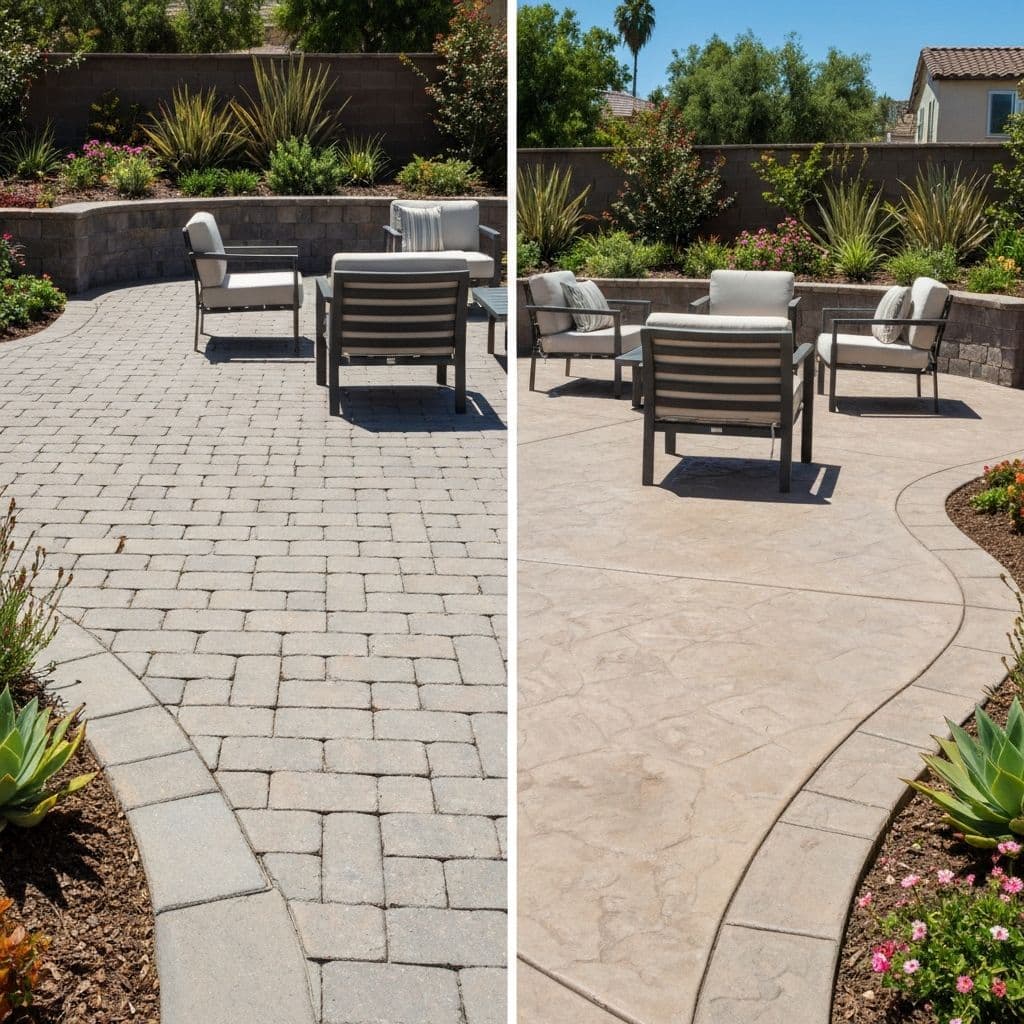
This is where personal preference plays a bigger role. Concrete offers unlimited color options through integral coloring and staining, plus the ability to stamp patterns that mimic stone, brick, or tile.
Pavers come in hundreds of shapes, colors, sizes, and textures from manufacturers like Belgard, Tremron, and Acker-Stone.
Maintenance Requirements
Concrete maintenance includes periodic sealing (every 2-3 years for stamped concrete), pressure washing, and crack repair. Once cracks form, they tend to spread unless properly addressed.
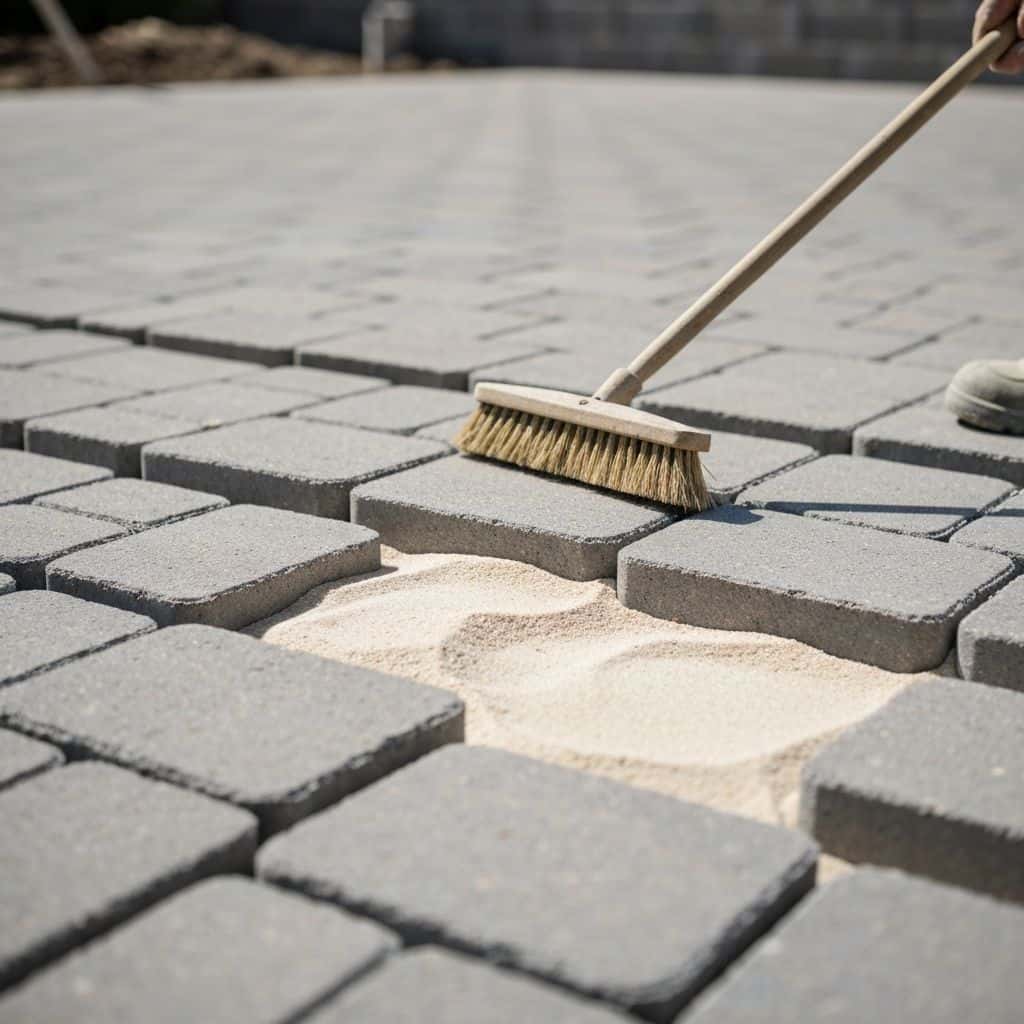
Paver maintenance involves occasional weed control in joints, pressure washing, and potentially re-sanding joints every 5-10 years.
Our Recommendation for Different Applications
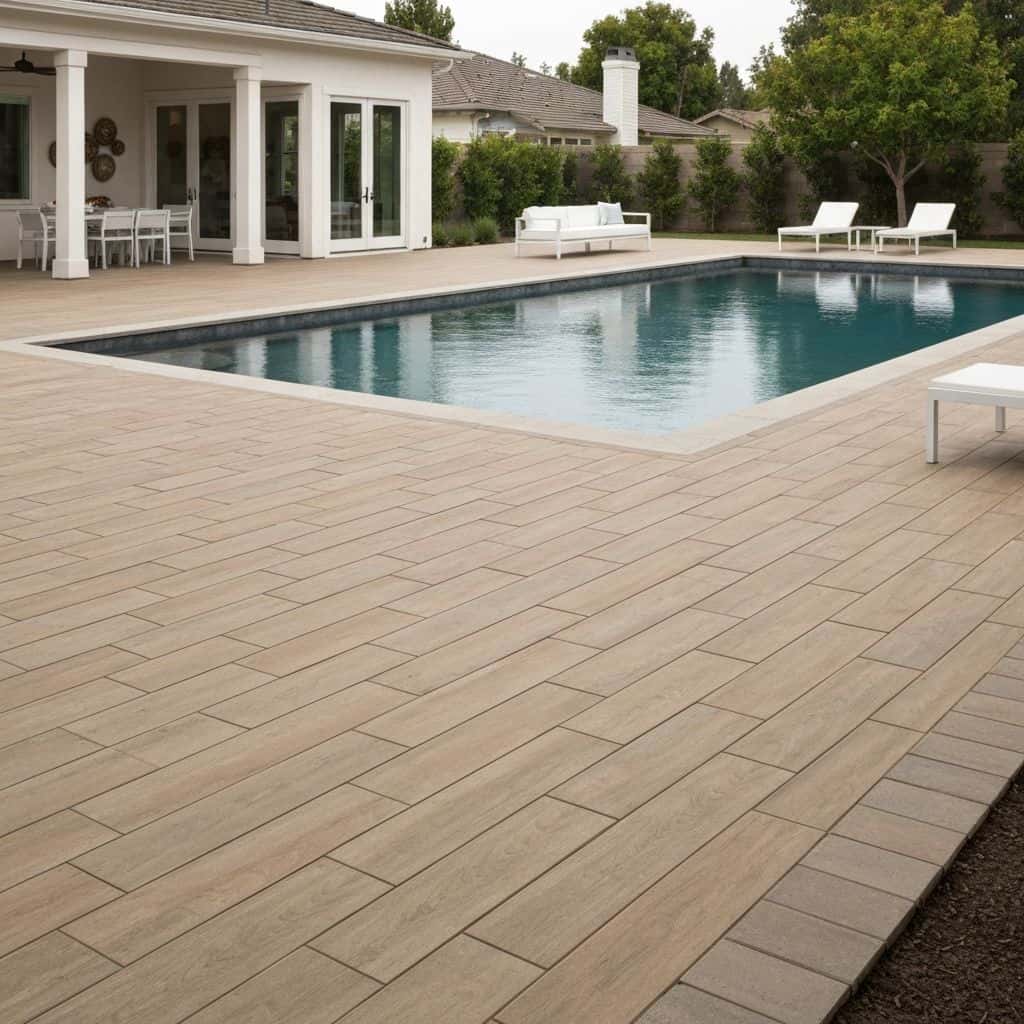
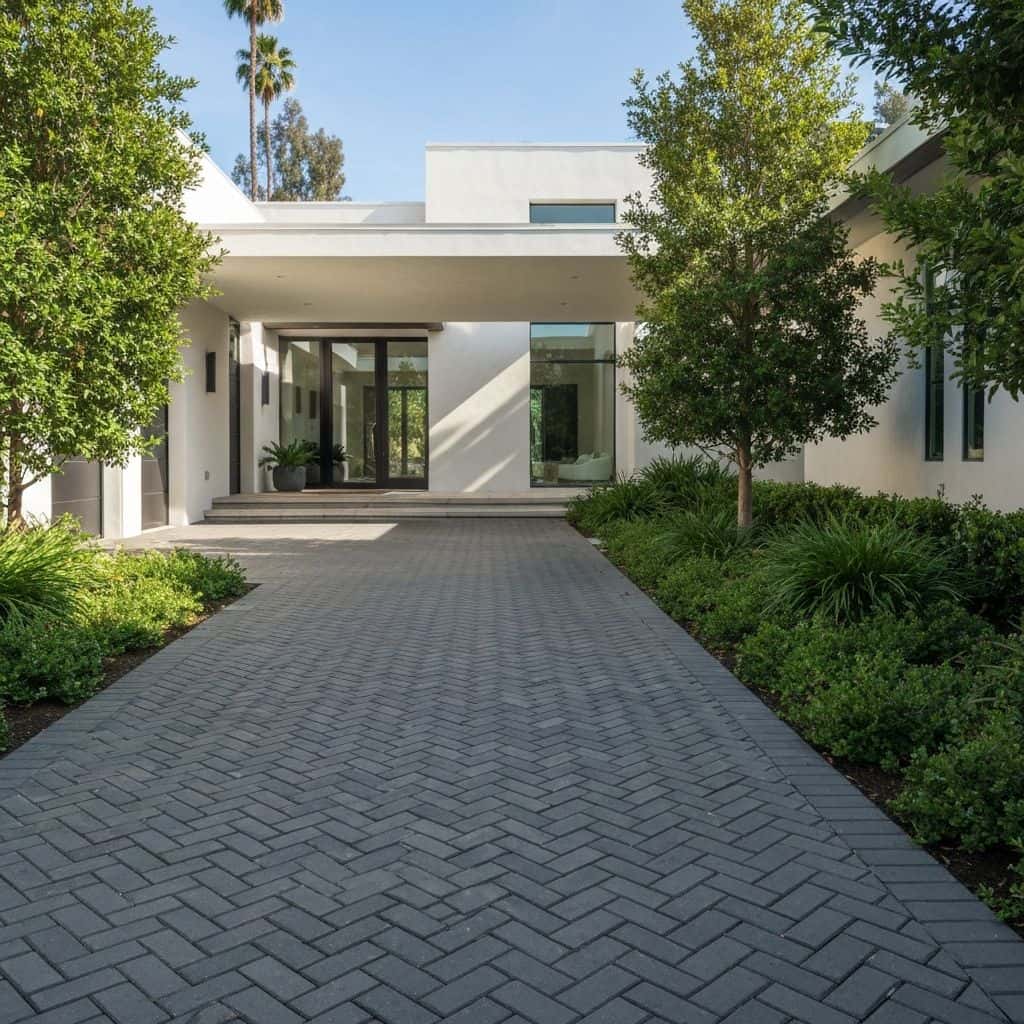
Choose pavers for: Pool decks, patios, outdoor living areas, driveways with heavy use, areas near trees, and any space where you want long-term value.
Consider concrete for: Large flat areas where cost is the primary concern, contemporary homes seeking a seamless look, and projects where specific custom colors are essential.
Final Thoughts
The pavers vs concrete decision ultimately comes down to your priorities. If upfront cost is the deciding factor, concrete serves many homeowners well. If you're building your forever home and want a hardscape that improves with age, pavers are the investment that pays dividends for decades.
Build this at your home
We build from Santa Clarita to Long Beach, Thousand Oaks to Riverside, and Orange County down to Mission Viejo. Start with your city:
Frequently Asked Questions
Are pavers more expensive than concrete?
Initially, pavers cost 10-25% more than poured concrete. However, pavers often provide better long-term value because individual units can be replaced if damaged, while concrete cracks require full slab replacement.
Do pavers crack like concrete?
Pavers are designed to flex with ground movement rather than crack. The joints between pavers absorb stress that would crack a solid concrete slab.
How long do pavers last in California?
Quality interlocking pavers typically last 25-50 years in Southern California's climate with proper installation and maintenance.
Which is better for pool decks?
Pavers are generally preferred for pool decks because they stay cooler underfoot, provide better drainage, and offer slip-resistant textures.
Topics
- pavers
- concrete
- hardscape
- driveway
- patio
- comparison
- cost

About the author
Remodel Your Vibe Design Team
Written by the design team at Remodel Your Vibe, a licensed (CSLB #1119054 (opens the CSLB license record in a new tab)), bonded and insured, veteran-owned and family-operated design-build company based in Los Angeles. Our own crews design, permit and build pools, backyards, ADUs and interiors across Greater Los Angeles and Orange County.
How we work