If you're researching paver patios or driveways, you've probably encountered the term polymeric sand. This isn't just regular sand. It's a specialized product that can make or break your paver installation's long-term performance.
What Exactly Is Polymeric Sand?
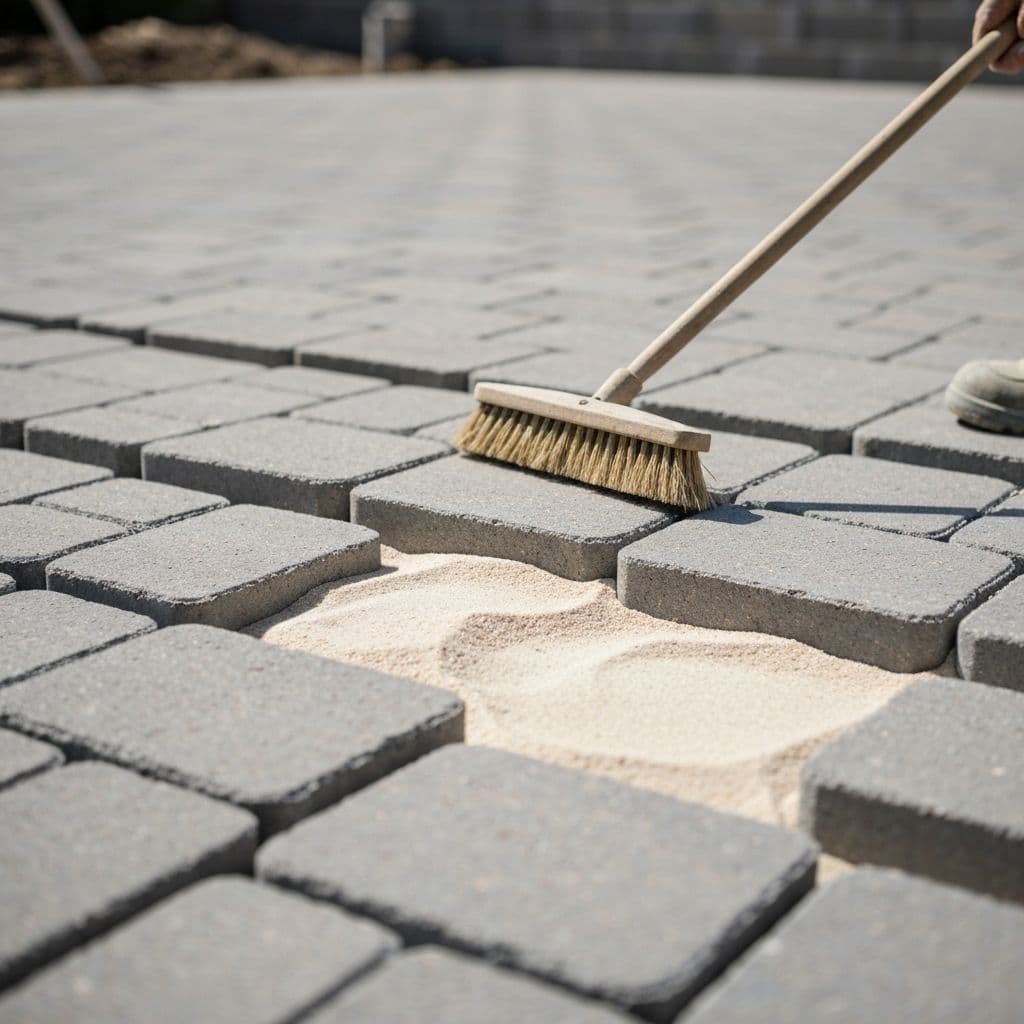
Polymeric sand is a fine sand mixed with special polymer additives, typically silica particles combined with water-activated binders. When installed in paver joints and misted with water, these polymers bind the sand particles together, creating a firm yet slightly flexible joint.
How Polymeric Sand Works
The installation process requires precision: pavers must be completely dry, sand is swept into joints and compacted, excess sand is carefully removed, and a fine mist of water activates the polymers. The sand cures over 24-48 hours.
Benefits of Polymeric Sand
Weed Prevention: The hardened sand creates a barrier that most weed seeds can't penetrate. Ant Resistance: Ants can't build colonies in hardened polymeric sand. Paver Stabilization: Locked joints prevent shifting. Washout Resistance: Rain and pool water won't displace the sand.
Final Thoughts
Polymeric sand is a small line item in your paver project budget but has outsized impact on long-term performance. Always ask contractors about the brand they use and their installation process.
Build this at your home
We build from Santa Clarita to Long Beach, Thousand Oaks to Riverside, and Orange County down to Mission Viejo. Start with your city:
Frequently Asked Questions
How long does polymeric sand last?
Quality polymeric sand typically lasts 8-12 years before needing replacement.
Can I apply polymeric sand myself?
While DIY is possible, it requires careful technique. Mistakes can cause hazing on paver surfaces.
Topics
- polymeric sand
- pavers
- hardscape
- joint sand
- paver maintenance

About the author
Remodel Your Vibe Design Team
Written by the design team at Remodel Your Vibe, a licensed (CSLB #1119054 (opens the CSLB license record in a new tab)), bonded and insured, veteran-owned and family-operated design-build company based in Los Angeles. Our own crews design, permit and build pools, backyards, ADUs and interiors across Greater Los Angeles and Orange County.
How we work