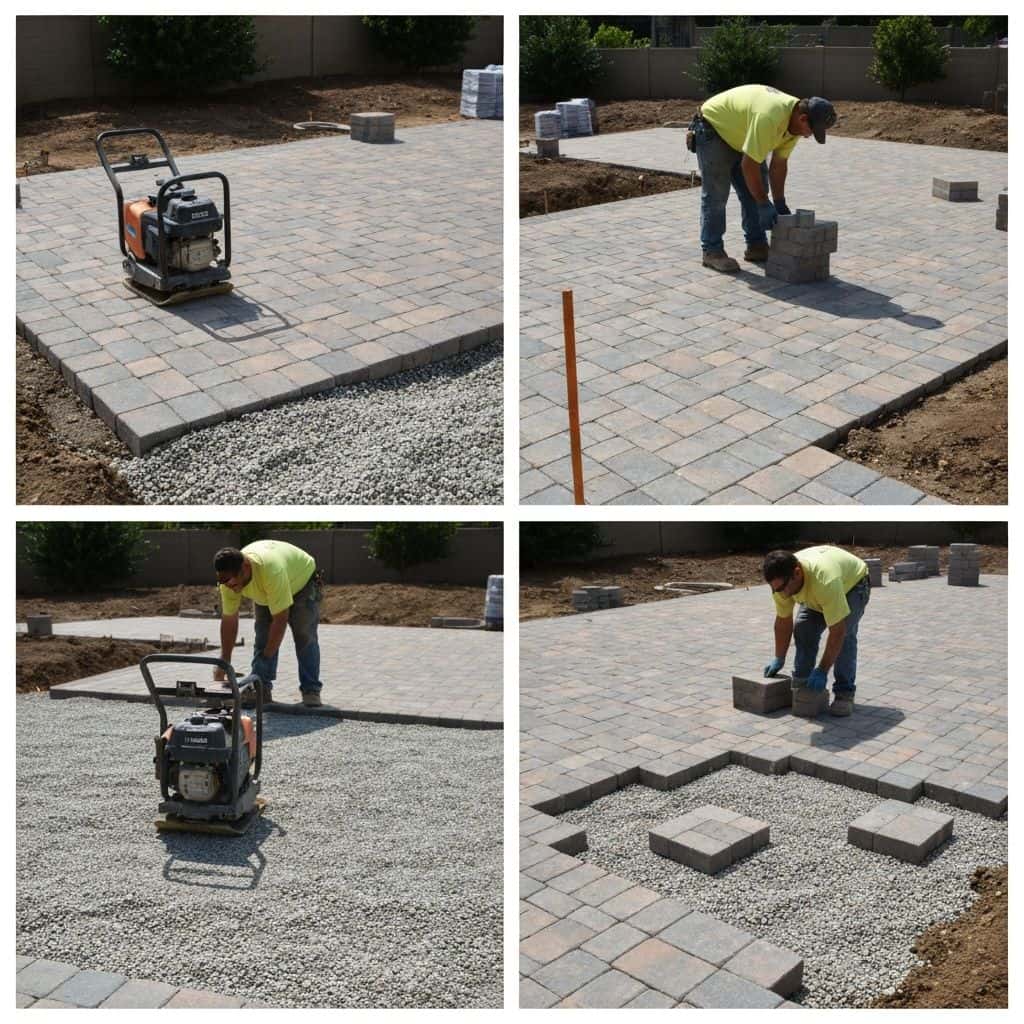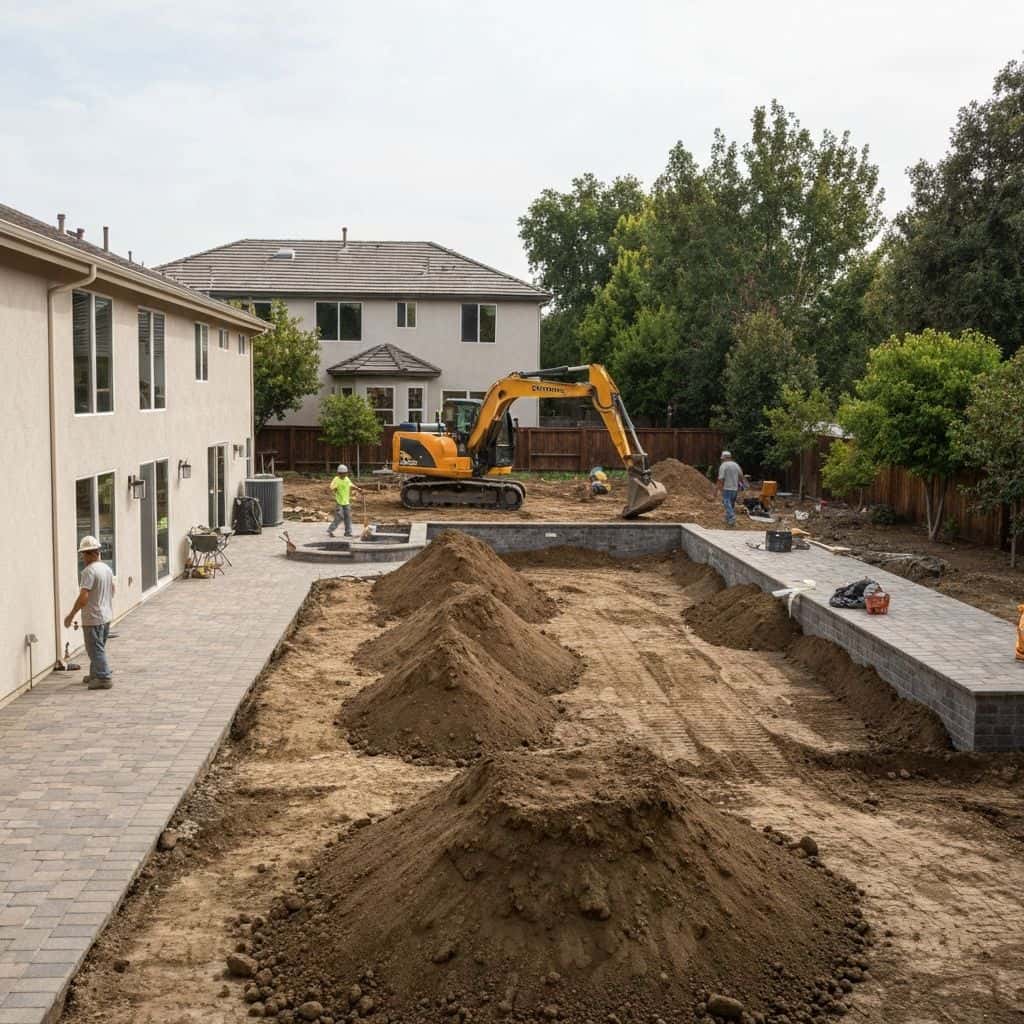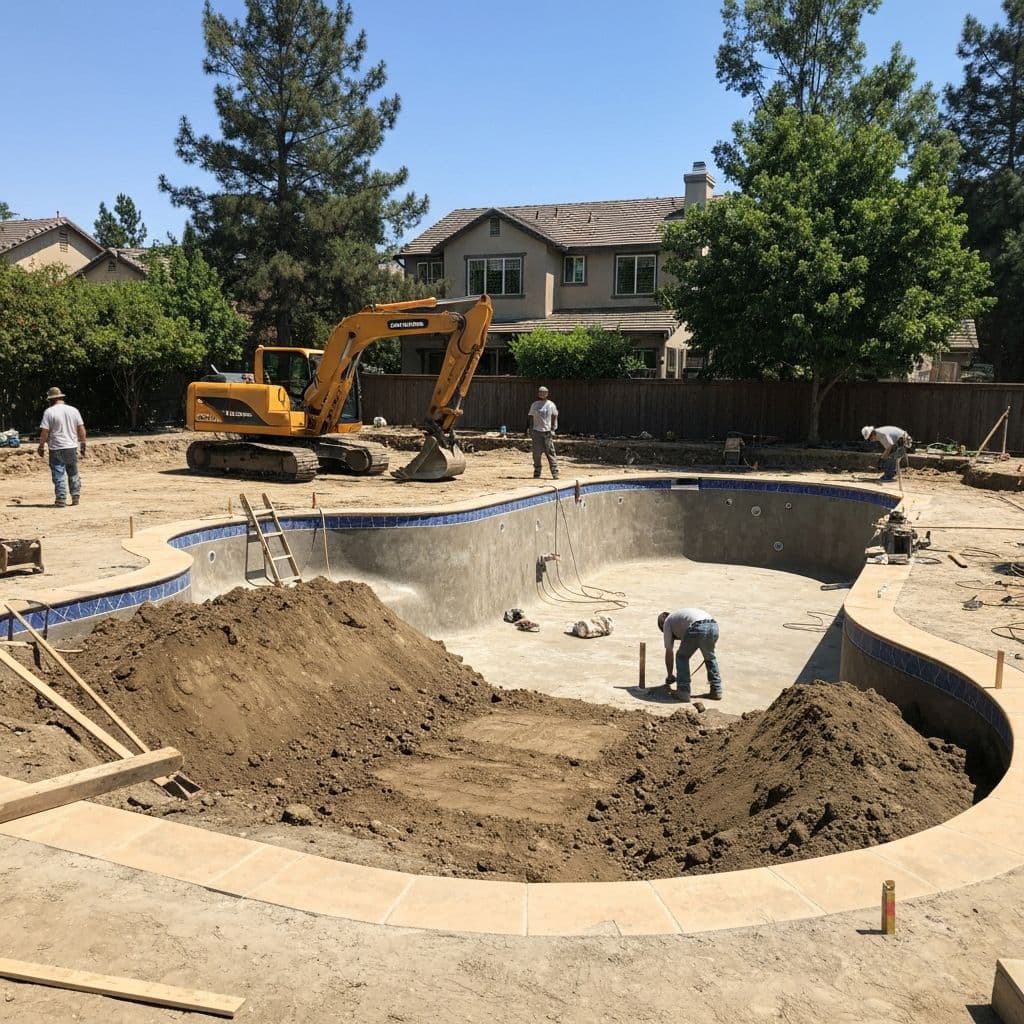
Excavation transforms your yard into a construction zone. Understanding this phase helps you prepare mentally and practically for what's coming.
The Excavation Process
Equipment arrives (skid steer, excavator, or manual labor depending on access). Soil is removed to design specifications. Spoils are either hauled away or used on-site for grading.
Site Access Requirements
We need equipment access to your backyard. Side yard access of 36+ inches works for small equipment. Crane lifts or hand excavation may be needed for limited access sites.
What Gets Disrupted
Excavation is noisy (wear ear protection). Dust is significant. Lawn, sprinklers, and some landscaping in the work zone will be removed. Plan for 1-5 days of intensive activity.
Utility Considerations
We call USA Underground (811) before digging. Existing irrigation, gas, electric, and plumbing lines may need relocation. We identify these during design.
Final Thoughts
Excavation is temporary but transformative. The mess is followed by visible progress as your new outdoor space takes shape.
Build this at your home
We build from Santa Clarita to Long Beach, Thousand Oaks to Riverside, and Orange County down to Mission Viejo. Start with your city:
Frequently Asked Questions
How deep will you dig?
Depends on the project. Pool shallow ends: 3-4 feet. Deep ends: 6-8 feet. Patio base: 8-12 inches. Retaining wall foundations: varies by height.
What happens to the dirt?
Excavated soil is either hauled off-site (additional cost) or used for backfill and grading elsewhere on your property.
Topics
- excavation
- construction
- process
- pool construction

About the author
Remodel Your Vibe Design Team
Written by the design team at Remodel Your Vibe, a licensed (CSLB #1119054 (opens the CSLB license record in a new tab)), bonded and insured, veteran-owned and family-operated design-build company based in Los Angeles. Our own crews design, permit and build pools, backyards, ADUs and interiors across Greater Los Angeles and Orange County.
How we work