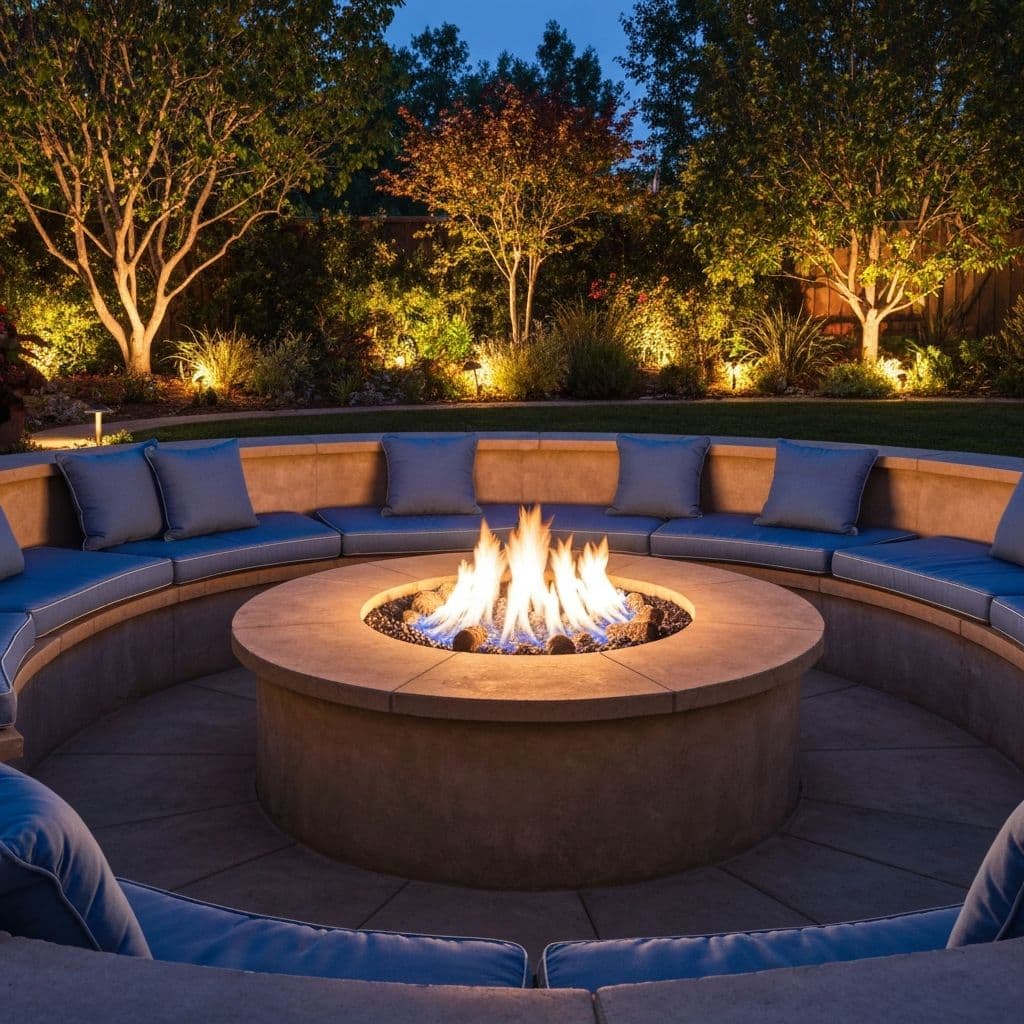
A built-in gas fire pit costs $3,500 to $12,000 in Southern California. A wood-burning masonry pit costs $2,500 to $8,000. Gas costs more up front, needs a line run and a permit, and is the one homeowners actually light. Wood is cheaper, needs no utilities, produces smoke that drifts into neighbors' windows, and in much of Los Angeles and Orange County sits under fire-hazard and air-quality restrictions. Here are the real costs of both, the clearances that govern placement, and where each one belongs.
What a gas fire pit costs, itemized
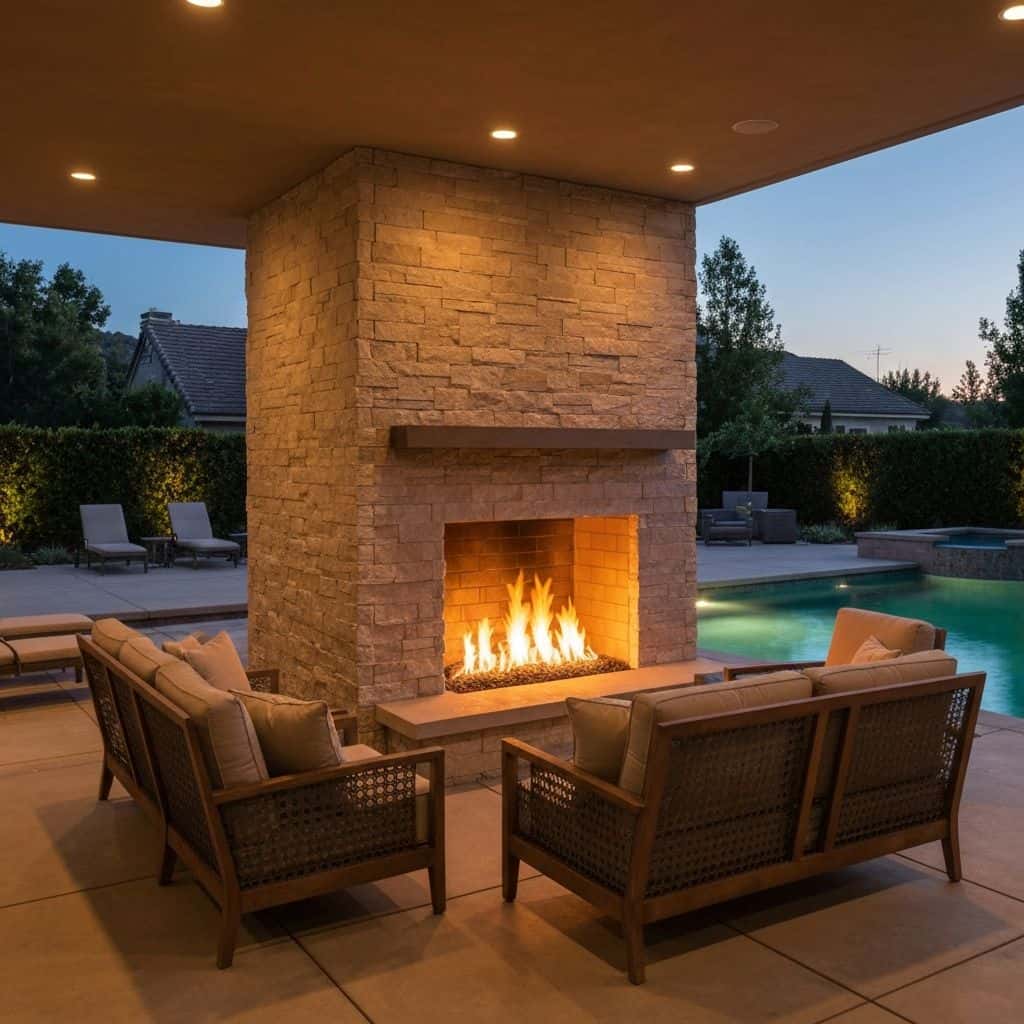
A 42 to 48 inch masonry gas fire pit at $3,500 to $6,500 typically breaks down as: a CSA-listed stainless burner pan or ring rated 65,000 to 200,000 BTU at $400 to $1,400; a masonry or steel-framed enclosure with veneer at $1,200 to $3,500; a gas line run at $18 to $35 per lineal foot from a meter with capacity to spare; a key valve with an emergency shutoff outside the seating radius; and lava rock plus fire glass or ceramic logs at $300 to $900. Options add up quickly. Electronic ignition with flame sensing and a remote adds $900 to $2,200 and needs a 120 volt circuit. A wind guard is $250 to $700 and is worth it in coastal Palos Verdes or anywhere with an afternoon onshore breeze. Custom board-formed concrete or a stone-clad linear trough pushes the total toward $12,000.
Pro Tip
Match-lit is cheaper and reliable. Electronic ignition is worth the money only if the pit sits far from where you keep a lighter or if guests will operate it.
What a wood-burning pit costs, itemized
A wood-burning pit is masonry and nothing else, which is why it is cheaper. A 36 to 48 inch in-ground or raised ring with a firebrick liner, a steel insert and a stone or block veneer runs $2,500 to $8,000, driven almost entirely by veneer choice and whether there is a seat wall. A sunken conversation pit with integrated seating and a fire ring will land at the top of that range or above. There are no utility costs, no permits for the fire feature itself in most cases, and nothing to service. Ongoing costs are firewood, ash removal and a spark screen. The build detail that matters is the liner: an unlined block or paver ring cracks and spalls within a couple of seasons of real heat cycling. Specify firebrick or a heavy-gauge steel insert, and provide drainage at the base so the pit does not hold rainwater.
Ready to Start Your Project?
Schedule a free consultation with our design team.
Clearances, smoke and local restrictions
Placement rules are the part most homeowners skip. Manufacturers and local jurisdictions commonly require a fire feature to sit at least ten feet from structures and property lines, with three to five feet of clear non-combustible surface to seating and overhead clearance to anything that can burn. Neither type belongs under a solid roof or a wood pergola unless the appliance is specifically listed for it, and putting an open flame under aluminium louvers is not acceptable unless the manufacturer permits it and the louvers stay open. Wood carries two additional constraints in Southern California. Regional air-quality no-burn advisories discourage or restrict residential wood burning on high-pollution winter days across the South Coast basin. And in the very high fire hazard severity zones covering much of the Santa Monica Mountains, the foothill communities and the canyons, open outdoor wood burning is often restricted or prohibited outright. Check with your local fire department before building.
The usage difference nobody quotes
This is the deciding factor and it is not really about the fire pit. A gas pit is a decision that takes four seconds: turn the key, touch a lighter, done, and off just as fast when everyone goes in. A wood pit is a project: buy and store dry wood, build the fire, wait twenty minutes for it to be pleasant, move seats as the smoke shifts, and then wait for it to burn down safely before going to bed. In practice a gas pit in an Encino or Irvine backyard gets used dozens of nights a year and a wood pit gets used a handful. Fuel cost is not the differentiator: a 100,000 BTU burner uses about one therm an hour, roughly $2.20, so a three-hour evening costs less than a bundle of firewood. The difference is friction, and friction determines whether a $6,000 feature earns its place.
What we recommend
For the vast majority of Southern California backyards, build gas. Put it within the main seating group, size the burner to the enclosure rather than to the largest number available, run a properly sized line with an accessible key valve outside the seat radius, and add a wind guard if the yard catches afternoon breeze. Specify a CSA-listed pan, not a homemade burner. Build wood only when the specific conditions line up: a large lot with real distance to neighbors and structures, no gas service and no reasonable route for a line, no fire-zone restriction, and an owner who genuinely enjoys the ritual, a Temecula or Fallbrook property rather than a Sherman Oaks yard. If you like the look of wood and the practicality of gas, run gas with ceramic logs and a raised hearth; it reads correctly and lights in four seconds.
Pro Tip
On any gas pit, put the shutoff valve outside the seating circle. A valve you have to reach across flames to close is a design error, not a detail.
Final Thoughts
Wood costs less and delivers a real fire, but smoke, storage, air-quality advisories and fire-zone restrictions mean it sits unused in most Southern California yards. Gas costs $1,000 to $4,000 more, needs a line and a permit, and gets lit on a Tuesday. Build gas unless you have the lot, the distance and the appetite for the ritual.
Frequently Asked Questions
Between $3,500 and $12,000 installed. A 42 to 48 inch masonry pit with a CSA-listed burner pan, veneer, media and a match-lit key valve typically lands at $3,500 to $6,500. Electronic ignition adds $900 to $2,200, a wind guard $250 to $700, and long gas runs at $18 to $35 per lineal foot push the total higher.
It depends on where you are. Much of the Santa Monica Mountains, the foothills and canyon communities fall in very high fire hazard severity zones where open outdoor wood burning is restricted or prohibited. Regional air-quality advisories also discourage residential wood burning on high-pollution winter days. Confirm with your local fire department before you build anything permanent.
Ten feet from structures and property lines is the common requirement, with three to five feet of clear non-combustible surface between the pit and seating, plus overhead clearance to anything combustible. Never place an open flame under a solid roof or a wood pergola unless the appliance is specifically listed for that use. Verify the manufacturer's clearances and your local code.
About $2.20 an hour for a 100,000 BTU burner at roughly $2.20 per therm for natural gas. A three-hour evening therefore costs under $7, less than a bundle of firewood. Fuel cost is not a meaningful reason to choose wood over gas; the meaningful differences are installation cost, smoke and how easily the feature gets used.
For a gas pit, yes. The gas line and any electrical work for ignition are permitted work in Southern California jurisdictions. A wood-burning masonry pit with no utilities often does not require a building permit, but placement is still governed by local fire and zoning rules. Confirm before construction rather than after.