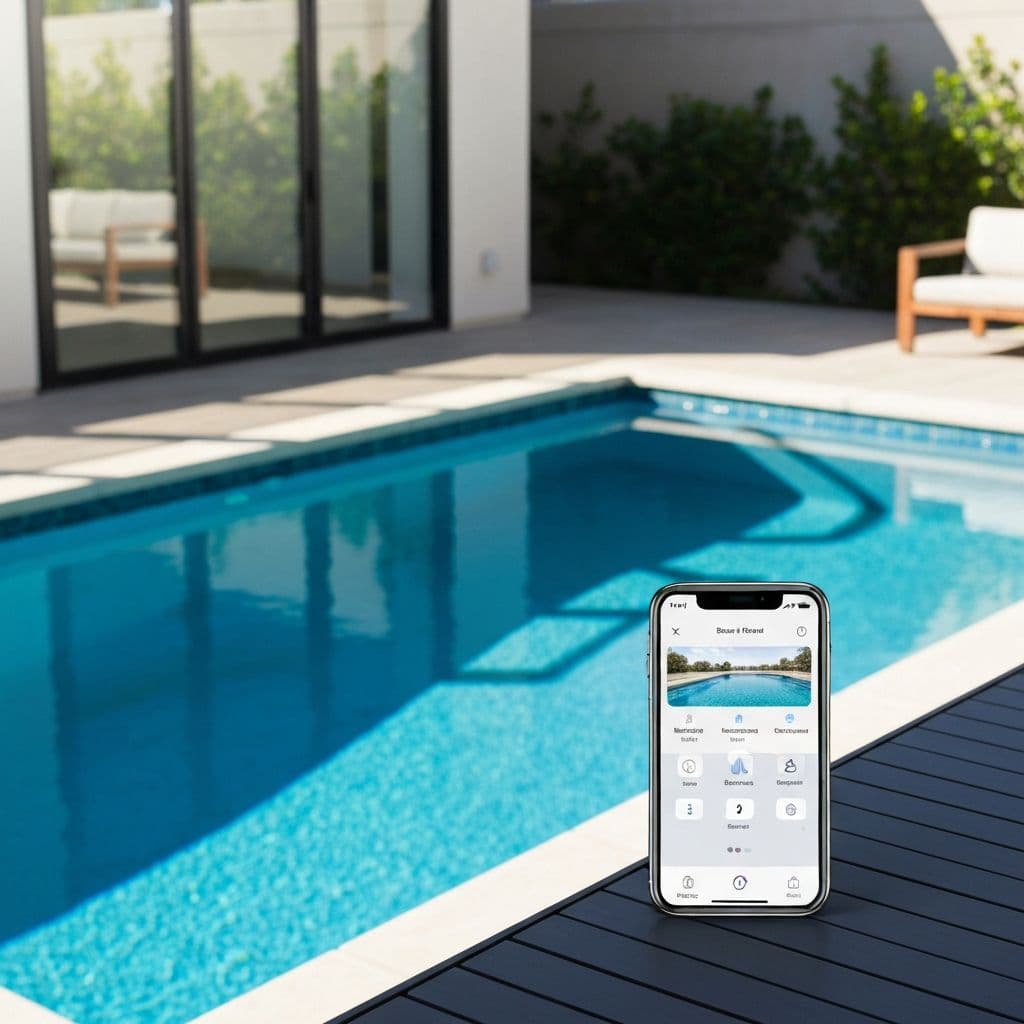
A mid-level pool automation system on an existing pool runs $2,000 to $4,500 installed. A fully loaded system with eight or more controlled circuits, wireless access and a spa-side remote runs $4,500 to $7,500. What you get is scheduled control of the pump, the heater, the valves, the lights and the water features from a phone. What you do not get, unless you buy it separately, is any knowledge of your water chemistry. That distinction is where most of the disappointment comes from.
The circuits an automation system actually runs
Strip away the marketing and a pool controller is a relay panel with a schedule and a radio. It controls the following.
Pump speed. Multiple named speeds for filtration, cleaner, spa jets and water features, each tied to a schedule or a button.
Heater setpoint. Separate pool and spa temperatures, with the ability to fire the heater remotely.
Valve actuators. Two are needed to switch between pool and spa, one on the suction side and one on the return. Each actuator is $250 to $400 installed.
Sanitiser output. Salt chlorine generator percentage, adjusted by season.
Lighting. Pool and spa LED colour scenes, plus low-voltage landscape lighting on a relay.
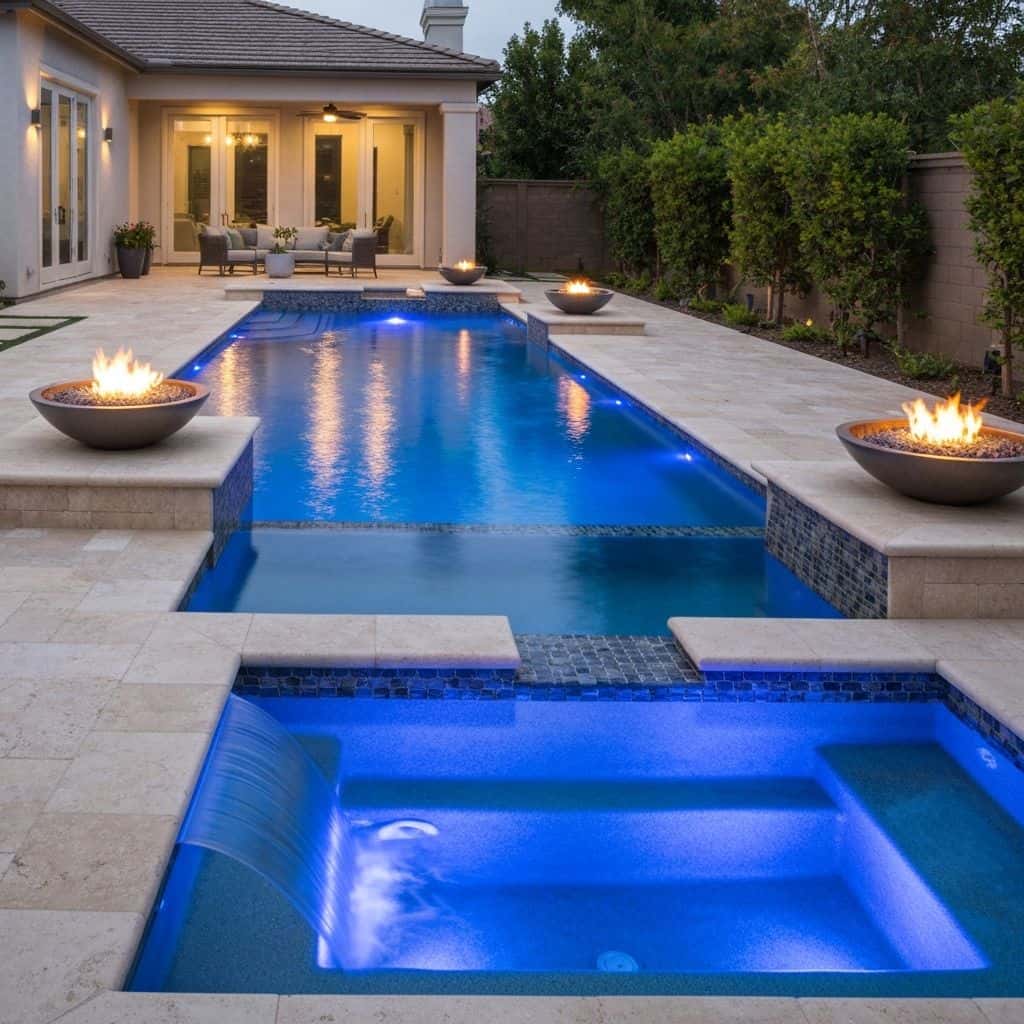
Auxiliary circuits. Water features, a booster pump for a pressure-side cleaner, a fire feature ignition module, a gas valve for fire bowls.
Everything on that list is a relay or a communication line. That is the entire scope of the product.
Three things it does not do
It does not test your water. A standard controller has no idea what the free chlorine or pH is. Chemistry automation is a separate product, an ORP and pH controller with a probe assembly and an acid feed pump, at $1,200 to $2,500 installed on top of the automation. Worth it on a heavily used pool, unnecessary on most.
It does not fix hydraulics. If the plumbing is undersized, if a 20,000-gallon pool is drawing through a single 1.5-inch suction line, or if the filter is too small, automation simply schedules the problem. Sort the plumbing first.
It does not make an old heater smart. Automation reads and sets temperature only on heaters with a compatible communication port. A pre-2000 millivolt heater can be switched on and off by a relay, but the setpoint stays wherever the dial was left. Replacing the heater is often the real cost of an automation retrofit.
Pro Tip
Ask specifically whether your existing heater supports two-wire communication before pricing the automation.
Ready to Start Your Project?
Schedule a free consultation with our design team.
Costs, and what has to be in place first
Typical installed pricing in the Los Angeles and Orange County market:
Entry system, four to six circuits, wired panel and app: $2,000 to $3,200. Mid system, six to eight circuits with colour lighting control and a wireless bridge: $3,200 to $4,500. Full system, eight or more circuits, spa-side remote, chemistry-ready: $4,500 to $7,500.
Prerequisites drive the real number. A variable-speed pump is effectively required, at $1,100 to $1,800 for the pump plus $400 to $900 to install and wire. Valve actuators at $250 to $400 each. If the pad currently has a single-speed pump, a millivolt heater and manual valves, the automation panel will be the smallest line on the invoice.
Connectivity is the sleeper cost. Equipment pads usually sit behind a garage or in a side yard 60 to 100 feet from the router, through stucco and metal. Budget $300 to $900 for an outdoor access point or a buried Cat6 run.
The schedule is where the savings are
Automation earns its keep through pump scheduling, not through the app.
A single-speed 1.5 horsepower pump running four hours a day moves the water but draws roughly 1,800 to 2,000 watts the entire time. A variable-speed pump turning the same volume over ten hours at 1,600 to 1,800 RPM draws a small fraction of that, because pump power falls roughly with the cube of speed. Halve the speed and draw falls to about an eighth; you simply run longer to get the same turnover.
Set it up as layered schedules: a long low-speed filtration run through the day, a short high-speed run for the cleaner, a separate speed for water features, and a spa speed. Then let the controller handle it.
Heating is the second saving. Fire the spa from the car on the drive home rather than heating it on a timer for hours nobody used it.
Choosing between systems
The three mainstream platforms, Pentair IntelliCenter, Hayward OmniLogic and Jandy iAquaLink, are functionally close. The deciding factor is usually what is already sitting on the pad.
Automation talks to pumps, heaters and salt cells over proprietary communication. Matching brands buys real setpoint control and diagnostics. Mixing brands generally works, but often drops back to simple relay on-off control, which loses much of what you paid for.
So the sequence on a retrofit is: identify which equipment is staying, choose the automation that speaks to it, and replace anything that can only be relay-switched if that function actually matters to you.
Finally, insist the panel is mounted where it can be serviced, with circuits labelled physically at the panel and named sensibly in the app. Six months later nobody remembers what AUX 4 does. Name it Fire Bowls.
Final Thoughts
Automation is worth the money when the equipment underneath it is worth automating: a variable-speed pump, a heater that communicates, and plumbing that is not fighting itself. Budget $2,000 to $4,500 for a mid-level retrofit, add the pump and actuators separately, and sort connectivity to the equipment pad before install day rather than after.
Frequently Asked Questions
An entry system with four to six circuits runs $2,000 to $3,200. A mid-level system with colour lighting control and wireless access runs $3,200 to $4,500. A full system with a spa-side remote and eight or more circuits runs $4,500 to $7,500. Add $250 to $400 per valve actuator and $1,500 to $2,700 if a variable-speed pump is also needed.
Not on its own. A standard controller cannot read chlorine or pH. Chemistry control is a separate add-on, an ORP and pH controller with probes and an acid feed pump, at $1,200 to $2,500 installed. It suits high-use pools and rentals. Most single-family pools are better served by a salt cell on a seasonal output schedule.
Usually yes, but the price depends on the existing equipment. A modern variable-speed pump and a heater with a communication port make it straightforward. An old single-speed pump and a millivolt heater mean the automation can only switch them on and off, so the real project becomes an equipment upgrade with automation layered over it.
The savings come from the variable-speed pump the automation coordinates, not from the panel itself. Pump power falls roughly with the cube of speed, so running twice as long at half speed uses about a quarter of the energy for the same turnover. Automation is what makes those layered schedules practical to set and forget.