Coping is the band that caps your pool's bond beam, and it is the detail people touch every time they get in the water. Cast concrete runs $28 to $55 per lineal foot installed. Natural stone runs $55 to $110. Porcelain runs $60 to $120. A typical Southern California pool has 70 to 96 lineal feet of perimeter, so the choice is worth roughly $2,500 at the bottom and $11,000 at the top. Here is what separates them in cost, comfort and how they hold up.
What each option costs installed
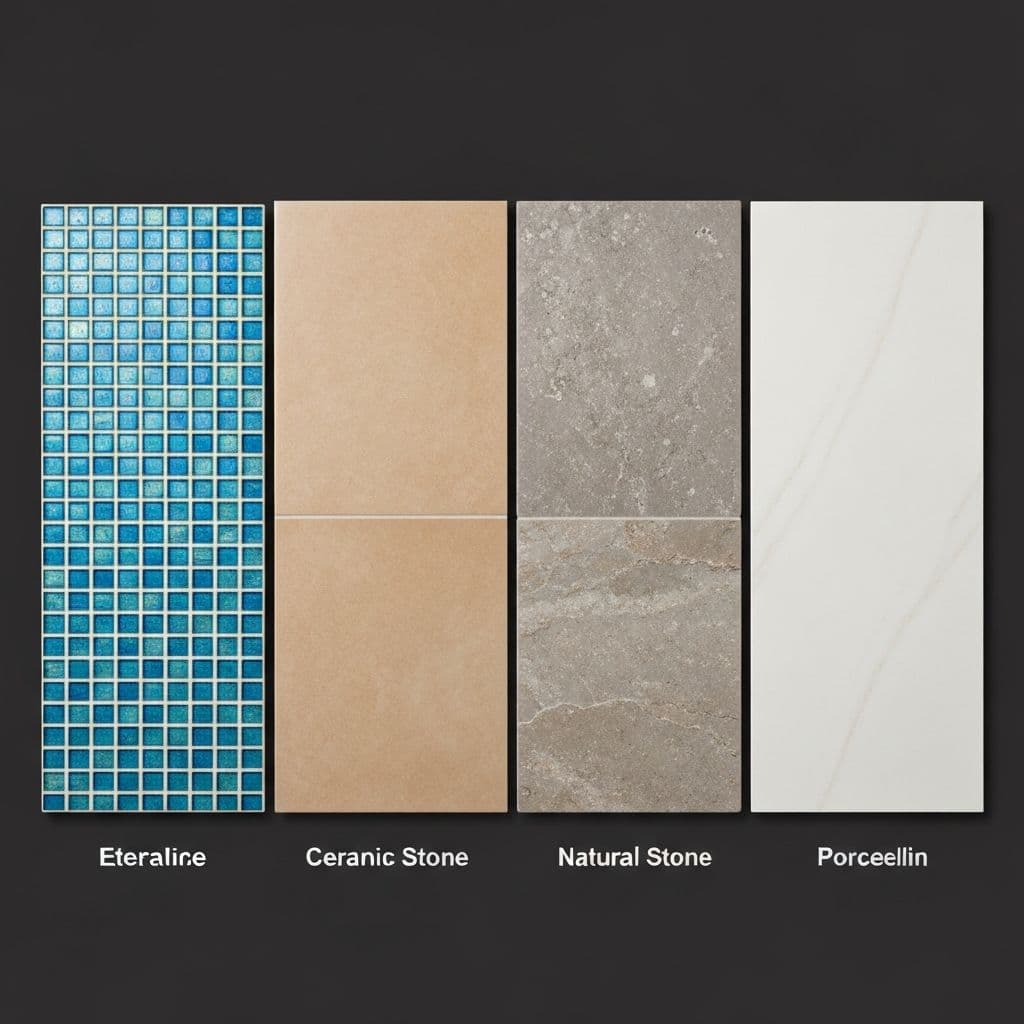
Poured-in-place cantilever concrete is the value option at $28 to $45 per lineal foot: forms are set on the bond beam, the deck is poured over and past the shell with a 1 to 2 inch overhang, and the edge gets a bullnose or chamfer. Precast concrete coping in 12 by 24 inch pieces runs $30 to $55, set in a mortar bed. Natural stone bullnose (travertine, limestone, granite, bluestone) runs $55 to $110 depending on stone and thickness. Porcelain coping runs $60 to $120, and mitered drop-edge fabrication pushes the top of that range. Add demolition of existing coping at $12 to $22 per lineal foot and a new waterline tile band at $28 to $55. On a 16 by 32 foot pool, roughly 96 lineal feet, that is $5,300 to $10,600 for stone coping with new tile.
Pro Tip
Price coping and waterline tile together. Removing old coping almost always breaks the tile band below it, so a coping-only quote is usually incomplete.
Cast and precast concrete: the honest budget choice
Cantilever concrete has one genuine advantage beyond price: it is monolithic with the deck, so there is no joint between coping and deck to seal, open up and reseal. It also gives the cleanest minimal edge for a modern pool, especially with a tight radius and a smooth finish. The costs are equally real. It cracks where the deck cracks, and a crack that runs through cantilever coping is not repairable without cutting out and re-pouring a section, which never matches. Color is integral or acid-stained and it fades under Southern California sun. Precast concrete coping solves the cracking problem by breaking the run into replaceable units, and modern precast in a limestone or shellstone texture is convincing at a fraction of stone cost. Both concrete options run hotter than travertine and cooler than dark porcelain.
Ready to Start Your Project?
Schedule a free consultation with our design team.
Natural stone: comfort at a price
Travertine bullnose remains the most-specified coping in Southern California backyards, and there is a reason. It is the coolest common surface underfoot, it is soft on hands and forearms at the edge, and it reads as a finished material rather than a substitute for one. Limestone behaves similarly with a tighter, more uniform face. Granite is the durable end: dense, effectively stain-proof, cool if light-colored, and a genuine option on a coastal property in Laguna Beach where salt air punishes softer stone. The trade-offs are chemistry and maintenance. Travertine and limestone are calcium carbonate: acid etches them, and salt chlorine systems can spall unsealed stone at the waterline where splash-out dries. Budget an impregnating sealer at installation and every two to three years after. Specify a 2 inch or 3cm thickness with a full bullnose, not a thin veneer edge.
Porcelain: the newest option and the most specific
Porcelain coping is the strongest technical performer and the least forgiving install. The material absorbs under 0.5 percent water, so salt cannot crystallize inside it, it does not etch, and its color is stable under UV, which matters on a south-facing deck in Chatsworth or Temecula. It comes as a factory bullnose or, in higher-end work, as a mitered drop edge fabricated on site so the coping face reads as a solid slab. That fabrication is where the cost sits: mitering, gluing and polishing a 45 degree return is slow, skilled work. Two cautions. First, color: dark porcelain coping in inland sun is uncomfortable to sit on. Second, slip: specify a textured or structured surface with a wet DCOF of 0.42 or better, never polished. Done right, porcelain is a genuine 25-year coping with no sealing cycle at all.
The details that decide whether it lasts
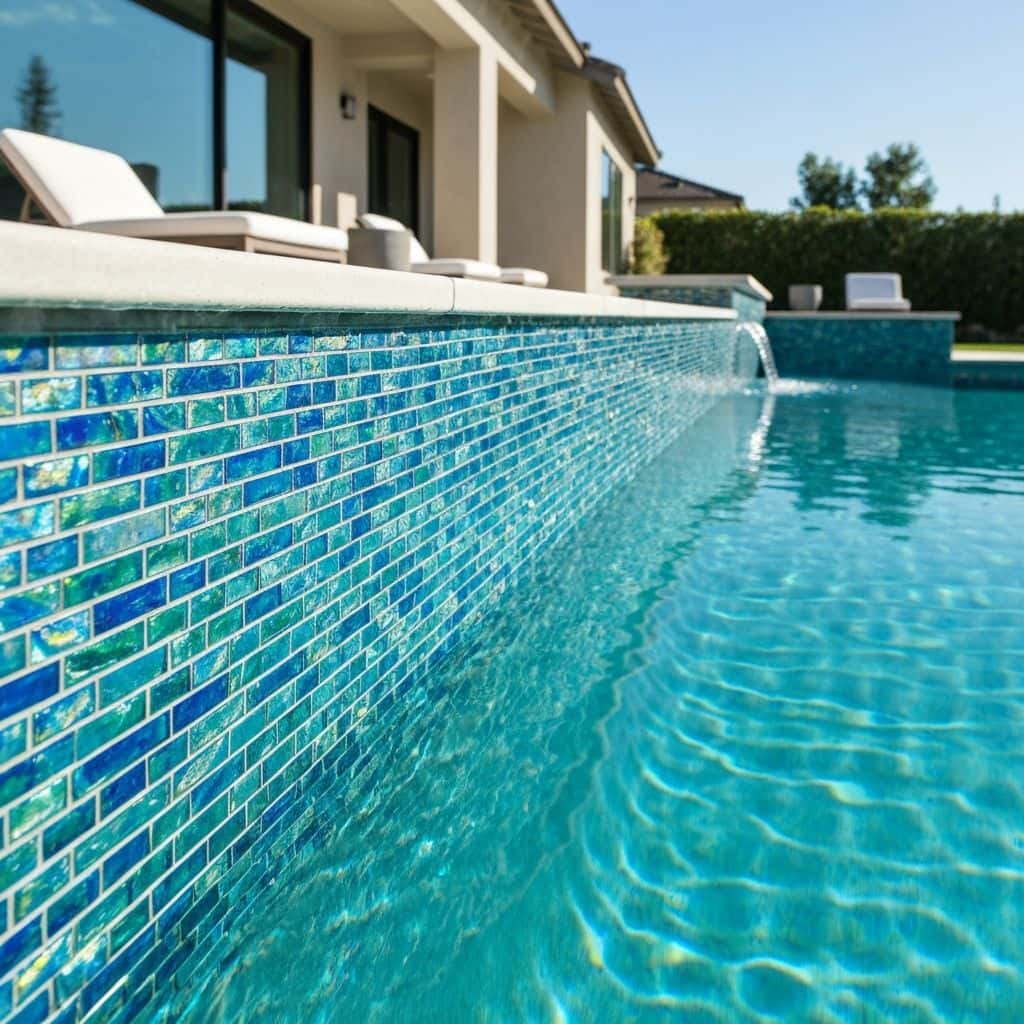
Coping sits at a specific point in the remodel sequence and skipping steps causes failures. Old coping and waterline tile are chipped off first, then the bond beam is inspected for cracks, spalling and exposed rebar and repaired before anything new is set. Coping is bedded in mortar with a consistent overhang, then the waterline tile band goes in below it, then the deck is poured or set, and plaster is last with water going in immediately after. The single most important detail is the expansion joint: a 3/8 inch flexible joint between the back of the coping and the deck, filled with a proper pool-grade sealant, not grout. That joint is what allows the deck to move without shearing the coping off the bond beam. It needs re-caulking every three to five years, a $400 to $900 job that prevents a $6,000 one.
Pro Tip
If your existing coping has lifted or cracked in a line, check the expansion joint first. Nine times out of ten it was grouted solid instead of sealed.
What we specify
For a full remodel where the deck is being replaced anyway and the look is contemporary, porcelain coping with a mitered edge over a light-colored deck is the best long-term specification: no sealing, no etching, no fading. For a traditional or Mediterranean home with a large deck where people sit on the edge for hours, travertine bullnose at 3cm is still the comfort winner and worth the sealing cycle. Cantilever concrete belongs on tight-budget refreshes and on minimalist pools where the owner genuinely wants no visible coping line and accepts that a deck crack becomes a coping crack. Precast concrete is the sensible middle: replaceable, affordable and convincing. On coastal lots, choose granite or porcelain and skip soft limestone entirely.
Final Thoughts
Coping is 70 to 96 lineal feet of a pool that costs six figures to build, and it is the part your hands and feet meet. Concrete is the budget path with a crack risk, travertine is the comfort choice with a sealing cycle, and porcelain is the durability choice with a demanding install. Whichever you pick, spend the money on bond beam prep and a properly sealed expansion joint.
Frequently Asked Questions
Cast or precast concrete runs $28 to $55 per lineal foot installed, natural stone $55 to $110, and porcelain $60 to $120. A typical residential pool has 70 to 96 lineal feet of perimeter. Add demolition of existing coping at $12 to $22 per lineal foot and a new waterline tile band at $28 to $55 per lineal foot.
Rarely, and we do not recommend planning on it. Chipping off old coping almost always damages the waterline tile below, and setting new coping and tile means working at the water level with the pool drained. Since the pool is already drained and the shell exposed, replastering at the same time is usually the efficient sequence rather than an upsell.
Light-colored travertine, followed by light limestone and light granite. Concrete sits in the middle. Dark porcelain and dark stone are the hottest and genuinely uncomfortable on an inland deck in August. Color drives surface temperature more than material does, so a bone-colored porcelain will outperform a charcoal travertine every time.
Usually the expansion joint. There should be a 3/8 inch flexible, pool-grade sealant joint between the back of the coping and the deck. If that joint was grouted solid or has never been re-caulked, deck movement transfers directly into the coping and shears it off the bond beam. Re-caulking every three to five years costs $400 to $900.
On a full remodel where the deck is being replaced, usually yes. Porcelain never needs sealing, does not etch from pool chemicals, resists salt systems and holds its color under UV, so you avoid a $1,000-plus maintenance cycle every few years. Choose a light color and a textured wet-slip surface, and budget for the slower, more skilled installation.