A pool remodel in Southern California runs $15,000 to $45,000. A new pool runs $70,000 to $150,000, and past $200,000 with a spa, features and a full deck. Removing the old pool first adds $9,000 to $35,000 depending on method. So the new-build path is typically three to five times the remodel. That gap is only worth crossing for specific reasons, and they are structural and geometric rather than cosmetic. Here is how we assess an existing pool and where the line actually falls.
What a remodel costs, item by item
Remodels are modular, which is why the range is wide. Replaster alone on an average residential pool is $8,000 to $15,000, higher for a pebble or polished aggregate finish than for white plaster. New waterline tile and coping together run $6,000 to $14,000. A full equipment change (variable-speed pump, filter, heater and automation) is $4,000 to $9,000. Deck resurfacing or replacement is priced separately at $12 to $32 per square foot depending on material. Structural repair to the shell, where it is needed, runs $2,500 to $12,000 for crack routing, staple ties and a bond coat. Adding lights, converting to salt, or adding a raised bond beam with a spillover all sit on top. A cosmetic refresh (plaster, tile, coping) lands near $18,000 to $30,000. A comprehensive remodel that also replumbs and re-decks reaches $45,000 and beyond.
Pro Tip
Ask for the shell to be sounded with a hammer before any quote is finalized. Hollow spots mean delamination, and delamination changes the price of the whole job.
How to read the existing shell
The shell decides everything. Fine spider cracking in the plaster, staining, and a rough or etched surface are cosmetic and normal after twelve to twenty years. That pool is a straightforward remodel. What is not cosmetic: a crack that runs through the gunite rather than just the plaster, especially one with vertical or lateral displacement between the two sides; rust staining that indicates rebar corroding inside the shell; hollow-sounding areas indicating the plaster has separated; and a shell that has lifted or dropped relative to the deck. Hillside pools in Sherman Oaks, La Cañada and Palos Verdes are the ones we look at hardest, because slope movement and inadequate original bearing are the usual causes of true structural cracking. A pool with genuine structural movement can sometimes be repaired and sometimes cannot, and the honest assessment requires draining it and, occasionally, a soils or structural engineer's opinion.
Ready to Start Your Project?
Schedule a free consultation with our design team.
Footprint, depth and 1970s design decisions
The second question is whether the pool you have is the pool you want. Many Southern California pools built in the 1960s and 1970s were designed around a diving board: an 8 to 9 foot deep end, a narrow shallow area and a kidney shape that eats the yard without giving anyone anywhere to stand. Raising a deep end floor to a usable 5 feet costs $6,000 to $14,000 and is one of the highest-satisfaction remodel items we do. Changing the shape is a different matter. Cutting back a shell edge or adding a shallow shelf is possible but the cost climbs fast, and at some point you are paying new-pool money for a compromised outcome. If the pool sits in the wrong place on the lot, blocks the connection between the house and the yard, or is too large for the space you now want for lawn, dining and an outdoor kitchen, that is a genuine reason to demolish and rebuild.
Pro Tip
Before deciding, lay out the yard you want with marking paint and stakes. If the existing pool sits inside that plan, remodel it.
Plumbing, equipment and safety upgrades
Older pools carry hidden work. Original 1.5 inch plumbing chokes a modern variable-speed pump and a heater's minimum flow rate; replumbing to 2 or 2.5 inch runs $4,000 to $9,000 and often has to happen anyway when the deck is replaced. Single main drains have to be brought to current anti-entrapment standards, which means compliant covers and usually a second drain or an alternative suction configuration, at $1,200 to $3,000. California appliance efficiency standards mean any meaningful replacement pump will be a variable-speed unit, $1,600 to $3,200 installed. When a permit is pulled for work that alters the pool, the drowning-prevention safety features required under the Swimming Pool Safety Act come into scope: enclosure, safety cover, alarms or equivalent approved measures. In Los Angeles, private pool work falls under the LADBS combined Building-Mechanical permit. Plumbing plan check applies to commercial and apartment pools, not to single-family residences.
What removing the old pool costs
If the answer is a new pool, the old one has to go, and this line item is frequently left off early budgets. Partial demolition (breaking holes in the bottom for drainage, collapsing the upper walls into the cavity and backfilling with engineered fill in compacted lifts) runs $9,000 to $18,000. Full removal, where all gunite and rebar are broken out, hauled off and the void backfilled with compaction testing and a geotechnical report, runs $18,000 to $35,000 and is the method required if anything will be built over that footprint. Access drives the number as much as size does: a backyard reachable only through a 36 inch side gate means everything moves by hand or conveyor, and that can add $4,000 to $10,000. On a hillside lot with export restrictions, disposal costs climb further. Add all of this to the new pool budget before comparing paths.
Where the line falls
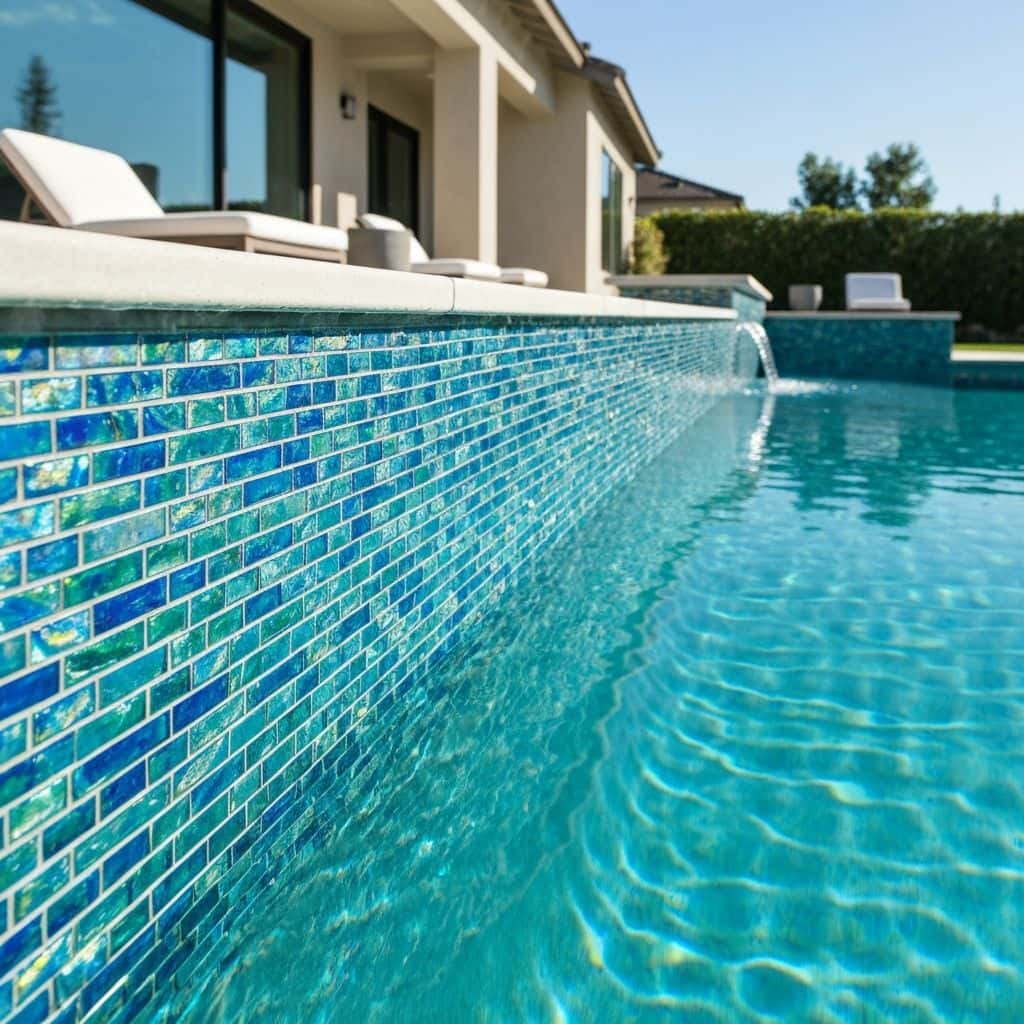
Remodel if the shell is structurally sound, the footprint works with the yard you want, and the complaints are surface, equipment and dated finishes. That is the majority of pools we look at, and $25,000 to $40,000 buys a genuinely transformed backyard: new pebble finish, glass or porcelain waterline tile, new coping, a variable-speed pump, LED lighting, automation and a new deck. Build new if the shell has real structural movement, if the pool is in the wrong location for the yard, if the geometry is unusable and cannot be economically corrected, or if you are regrading and rebuilding the whole backyard anyway and the pool is the only thing forcing the old layout. The decisive test is simple: if you would place the pool exactly where it currently sits when starting from a blank yard, remodel it.
Final Thoughts
Most Southern California pools are remodel candidates. A sound shell with tired plaster, dated tile and 1990s equipment becomes a modern pool for $25,000 to $40,000. Rebuild only when the shell has moved, the footprint fights the yard, or you are redesigning everything anyway, and price the $9,000 to $35,000 demolition into that comparison from the start.
Frequently Asked Questions
Age alone rarely decides it. Condition does. A pool from the 1970s with a sound shell is a straightforward remodel. What rules out remodeling is genuine structural movement: cracks running through the gunite with displacement between the sides, rebar corroding inside the shell, or a shell that has lifted or dropped relative to the deck. Those require draining and a professional structural assessment.
$8,000 to $15,000 for an average residential pool, with white plaster at the lower end and pebble or polished aggregate finishes at the upper end. Chipping out the old finish, prepping and acid-washing the shell, bond coat where needed, application, and the start-up brushing regime are all included in a properly scoped quote. New tile and coping are separate.
Partial demolition (breaking the bottom for drainage, collapsing the walls in and backfilling with compacted engineered fill) runs $9,000 to $18,000. Full removal with all material hauled off, compaction testing and a geotechnical report runs $18,000 to $35,000 and is required if anything will be built over the footprint. Narrow access can add $4,000 to $10,000.
Yes. Raising a 9 foot diving-era deep end to a usable 5 feet costs roughly $6,000 to $14,000 and involves new steel, gunite and a reshaped floor before replastering. It is one of the highest-satisfaction items in a remodel because it converts a section of pool nobody uses into the part where everyone stands. It is best done during a full replaster.
For work that alters the pool structure, plumbing or equipment, yes. Private residential pool work in Los Angeles falls under the LADBS combined Building-Mechanical permit. Plumbing plan check applies to commercial and apartment pools rather than single-family homes. Note that permitted work also brings the drowning-prevention safety features required under the Swimming Pool Safety Act into scope.