
Pool & Spa Remodeling in Los Angeles
New pools, spa additions, replastering, tile and coping, and full pool remodels. Designed, permitted and built by our own crews.
Pool & Spa Remodeling built for Los Angeles properties
We work across the City of Los Angeles, and the practical reality is that two addresses ten minutes apart can sit under completely different rule sets. One parcel is flat R1 with a straightforward pool permit; the next is inside a hillside area, a methane zone, an HPOZ, or a very high fire hazard severity zone. Our first move on any Los Angeles project is pulling the parcel's zoning and hazard overlays before a single line gets drawn.
Lot character varies enormously, from 5,000-square-foot flat R1 parcels in the older grid neighborhoods to steep, irregular hillside lots where usable outdoor space has to be manufactured with retaining structures and cantilevered decking.
We are a design-build team, which means the people who draw your project are the people who build it. Design, engineering, permits and construction run through one project manager and our own crews, so nothing gets lost in a handoff between a salesperson and a subcontractor. We are licensed and insured, LIC #1119054.
Permits in Los Angeles: LADBS issues residential building, grading, plumbing, electrical and pool permits citywide, with Development Services Centers downtown and in Van Nuys, West Los Angeles, South Los Angeles and San Pedro, while zoning entitlements and design review come from Los Angeles City Planning. Parcels inside a designated hillside area fall under the Baseline Hillside Ordinance (No. 184,802), which caps grading quantity, floor area, height and retaining wall dimensions. A large share of the city sits in a Methane Zone or Methane Buffer Zone under Ordinance 175,790 where mitigation must be addressed before permits issue, and coastal neighborhoods such as Venice and Pacific Palisades additionally require a Coastal Development Permit. Protected trees and shrubs (oak, western sycamore, Southern California black walnut, California bay, Mexican elderberry and toyon) are regulated under Ordinance 186,873 at four cumulative inches of trunk diameter and need an Urban Forestry permit; review length varies by parcel and scope.
What We Build
- Hillside pool and retaining structure engineering
- Methane mitigation coordination where zoned
- Protected-tree permitting through Urban Forestry
- New gunite pool and spa construction
- Full pool remodels and replastering
- Pebble, quartz and plaster interior finishes
- Waterline tile and coping replacement
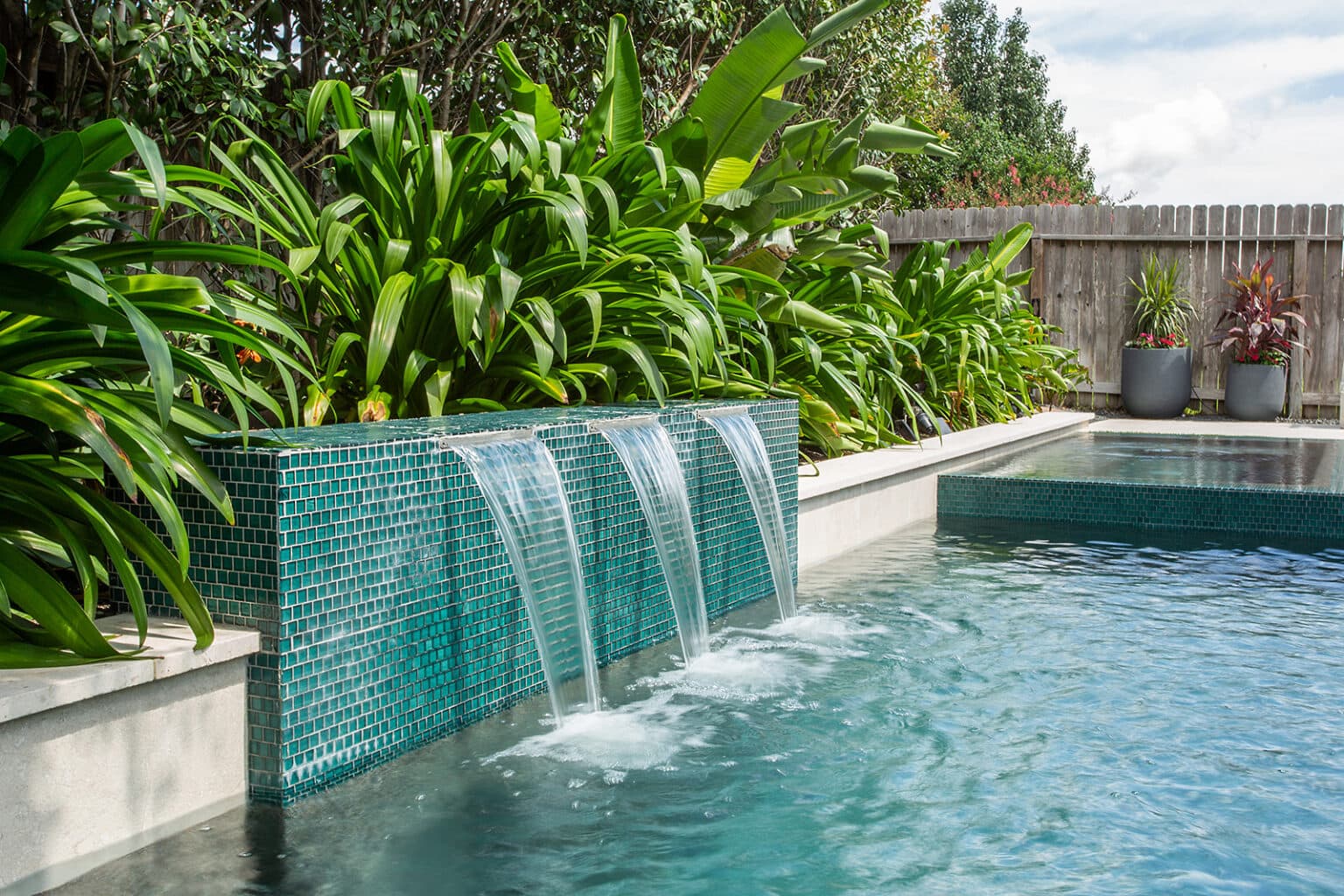
- Raised and attached spas with spillways
- Baja shelves, benches and sun ledges
- Water features, fire bowls and sheer descents
- Equipment upgrades, heaters and automation
- Pool decking in pavers, concrete or travertine
- LED lighting and salt-water conversions
Local Conditions
What building in Los Angeles actually involves
Every city in Southern California builds differently. These are the things that change the scope, the schedule or the budget on Los Angeles projects.
Soil swings from deep alluvial fill on the valley floors to weathered bedrock and old landslide debris in the hills, so the geotechnical report drives foundation and pool shell design more than the architecture does.
Older neighborhoods still carry 100-amp services, clay sewer laterals and galvanized supply lines that must be upgraded before a pool, spa heater and outdoor kitchen can be added.
Many pre-1940 parcels have a detached rear garage off an alley, and that alley is often the only viable equipment path, deciding whether excavation is machine work or conveyor and hand work.
Hillside streets are narrow and frequently lack turnarounds, so staging for concrete, gunite and crane picks has to be planned around fire access requirements and neighbors.
Investment
What this costs in Los Angeles
Real Southern California ranges, not a teaser number. Every project is priced line by line after we have seen the site.
New pool construction
$70,000 to $150,000+
What moves it: size and shape, spa, water and fire features, decking material, automation, and how much access and grading the site needs
Pool remodel and resurfacing
$15,000 to $45,000
What moves it: finish choice (plaster versus pebble or quartz), tile and coping replacement, new equipment, and whether the deck is being replaced at the same time
Paver patio and hardscape
from about $13,000
What moves it: square footage, paver type, base preparation, drainage, and any steps or retaining involved
How We Build
Your Los Angeles project, step by step
Site Review
We walk the property, check access, soil and slope, and confirm what the yard can actually take.
Design & 3D
You see the pool in 3D before anything is dug, with finishes, tile and decking chosen.
Plans & Permits
We draw the plans, handle engineering where the site needs it, and pull the permits. In Los Angeles that submittal goes to Los Angeles Department of Building and Safety (LADBS).
Excavation & Shell
Dig, steel, plumbing and gunite. This is where site access and grading matter most.
Finishes
Tile, coping, decking and your chosen interior finish go in.
Startup & Handover
We fill, balance the water, commission the equipment and walk you through every control.
Los Angeles Questions
Common questions from Los Angeles homeowners
Who issues the permits for this work in Los Angeles?
Los Angeles Department of Building and Safety (LADBS). LADBS issues residential building, grading, plumbing, electrical and pool permits citywide, with Development Services Centers downtown and in Van Nuys, West Los Angeles, South Los Angeles and San Pedro, while zoning entitlements and design review come from Los Angeles City Planning. Parcels inside a designated hillside area fall under the Baseline Hillside Ordinance (No. 184,802), which caps grading quantity, floor area, height and retaining wall dimensions. A large share of the city sits in a Methane Zone or Methane Buffer Zone under Ordinance 175,790 where mitigation must be addressed before permits issue, and coastal neighborhoods such as Venice and Pacific Palisades additionally require a Coastal Development Permit. Protected trees and shrubs (oak, western sycamore, Southern California black walnut, California bay, Mexican elderberry and toyon) are regulated under Ordinance 186,873 at four cumulative inches of trunk diameter and need an Urban Forestry permit; review length varies by parcel and scope. We prepare the drawings, make the submittal and handle plan-check corrections ourselves, so you are not the one chasing the city.
What makes building in Los Angeles different?
Lot character varies enormously, from 5,000-square-foot flat R1 parcels in the older grid neighborhoods to steep, irregular hillside lots where usable outdoor space has to be manufactured with retaining structures and cantilevered decking. In practice that means soil swings from deep alluvial fill on the valley floors to weathered bedrock and old landslide debris in the hills, so the geotechnical report drives foundation and pool shell design more than the architecture does..
Which parts of Los Angeles do you work in?
All of it, including Hancock Park, Los Feliz, Silver Lake, Cheviot Hills. We are based in Los Angeles at Cahuenga Pass, so Los Angeles is a short run for our crews rather than a job we service from out of the area.
What does pool & spa remodeling cost in Los Angeles?
New pool construction in this market generally runs $70,000 to $150,000+. What moves it is size and shape, spa, water and fire features, decking material, automation, and how much access and grading the site needs. We give line-item pricing after seeing the site rather than quoting a number over the phone.
How long does a pool remodel take?
A straightforward replaster with new tile and coping usually runs three to five weeks. A full remodel that includes new decking, equipment and features typically runs eight to twelve weeks. Site access and permit timing are the two things that move that most.
How long does a new pool take to build?
Most new pool builds run about three to five months from permit to first swim. Hillside sites that need engineered retaining or difficult access sit at the longer end of that range.
Should I replaster or fully remodel?
If the shell and plumbing are sound and you only dislike the surface, replastering with new tile and coping is the efficient choice. If the equipment is aging, the deck is cracked or the shape no longer suits how you use the yard, a full remodel costs less than doing it in two separate phases.
Do you self-perform the work?
Yes. Our own crews handle the build rather than passing it to a rotating set of subs, which is why the schedule and the finish standard stay consistent.
More services in Los Angeles
Los Angeles Guides
Planning guides for Los Angeles homeowners
Costs, materials and process notes from our own projects.
ADU Cost Breakdown by Size in Los Angeles
A detached ADU in Los Angeles runs $150,000 to $400,000-plus. Here is the real cost broken down by unit size, with the soft costs, utility work and finish decisions that move the number.
Read guideGarage Conversion to ADU: The Step-by-Step Build
A garage conversion runs $80,000 to $180,000 in Southern California. Here is the real sequence, from slab testing and plan check to the raised floor, the mini-split and final sign-off.
Read guideSecond Storey Addition vs Building Out: Which Costs Less
Building out runs $350 to $500 per square foot. Going up runs $450 to $700. Here is when the cheaper option is actually the wrong one, and what drives each number.
Read guideKitchen Remodel Cost in Los Angeles: Real Line Items
A mid-range LA kitchen remodel runs $75,000 to $130,000. Here is the full line-item breakdown at three budget levels, including the structural and electrical work that eats budgets.
Read guidePlanning pool & spa remodeling in Los Angeles?
Sit down with your project manager, go through the details, and get an accurate estimate for your property.
Licensed & Insured · LIC #1119054