A prefab modular outdoor kitchen island lands at $10,000 to $18,000 installed with mid-grade appliances. A fully custom build lands at $25,000 to $50,000 and can go higher with a hood, pizza oven and stone veneer. Both cook the same steak. What separates them is geometry, access and durability: prefab units come in fixed modules and fixed dimensions, and a 10 foot section has to physically reach your backyard. Here is exactly where the money goes on each, and how to tell which one your property can actually take.
What a prefab island costs and includes
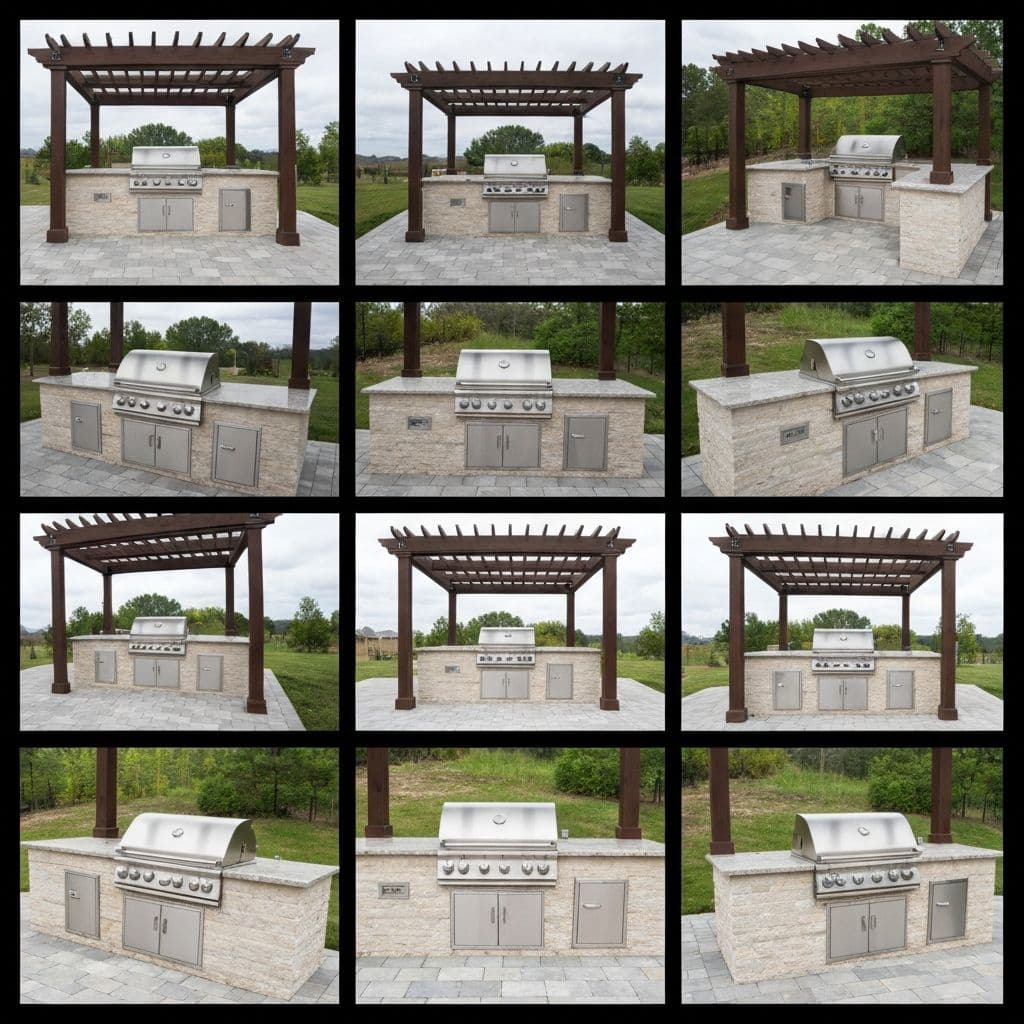
A prefab outdoor kitchen arrives as pre-built modules (typically steel-framed and concrete-clad or a lightweight polymer core) finished in stucco, tile or stone veneer at the factory, then set on a slab and connected. Budget $10,000 to $18,000 for a 6 to 10 foot straight run or a small L, and that price typically includes a 32 to 36 inch built-in grill, a side burner, a UL-listed outdoor refrigerator, doors and drawers, a granite top and the gas and electrical connections. The advantages are speed and predictability: a prefab install is generally a few days on site rather than a few weeks, and there is very little you can be surprised by. The trade-off is that dimensions are fixed. Counter overhangs, bar heights, appliance cutouts and corner returns come as the manufacturer built them, and awkward yards get awkward results.
Pro Tip
Measure your narrowest access point before you fall in love with a prefab unit. A 10 foot module will not pass through a 32 inch side gate, and craning over a house adds $1,200 to $4,000.
What custom construction costs and includes
Custom means framed and finished in place. The standard build is a galvanized steel stud frame with cement backer board and a stone, brick, tile or porcelain veneer; in coastal and high fire hazard areas we frame in CMU block instead. Budget $25,000 to $50,000 or more for an L or U-shaped cook suite. Typical line items: framing and veneer at $180 to $320 per lineal foot; countertops in granite at $65 to $110 per square foot installed, porcelain slab at $85 to $140, poured concrete at $90 to $150 and sintered surfaces at $100 to $160. A ventilation hood, required when the grill sits under a solid roof, runs $1,200 to $4,000 plus ducting. Custom buys geometry: a 36 inch cook surface and a 42 inch raised bar, a specific corner radius, appliance placement that matches the way you cook, and veneer that matches the house.
Ready to Start Your Project?
Schedule a free consultation with our design team.
Appliances and the materials that survive
Appliances are where budgets move fastest and where prefab packages usually economize. Realistic figures: a built-in grill at $1,200 to $6,000, a power or side burner at $400 to $900, an outdoor-rated refrigerator at $900 to $2,500, an ice maker at $1,800 to $3,500, a ceramic or gas pizza oven at $2,500 to $9,000, and a kegerator or beverage center at $1,200 to $3,000. Only ever use appliances listed for outdoor use. An indoor refrigerator in an outdoor cabinet fails in a Chatsworth summer. Steel grade matters by location: 304 stainless is fine inland, but within a mile or two of the water in Manhattan Beach, Newport Beach or Del Mar, specify 316 stainless for doors, drawers and fasteners or plan on rust streaks within three years. Avoid engineered quartz countertops outdoors entirely; the resin binder yellows and degrades under UV.
Gas, power, water and permits
Utilities are the same work in both cases and are frequently underpriced. Gas must be sized to total connected load, not to the grill alone: a 60,000 BTU grill plus a 15,000 BTU side burner plus a 40,000 BTU heater is 115,000 BTU, which usually means a 3/4 inch or 1 inch run at $18 to $35 per lineal foot from a meter that has to have capacity to spare. Electrical means at least one dedicated 20 amp GFCI circuit with weather-resistant receptacles and in-use covers, plus more if a refrigerator, ice maker and lighting are all on the island. A sink brings a hot and cold supply and a drain that has to tie into an approved point, not a dry well. Gas, electrical and plumbing work is permitted, and once the kitchen sits under a solid roof the assembly is reviewed as a structure with combustible clearance and ventilation requirements.
Which one we recommend
Go prefab when the layout is a straight run or a simple L against an existing patio, the appliances you want are standard sizes, access is wide enough to get modules in, and the budget is firm. Done well it is a genuinely good value and there is no shame in it. Go custom when any of the following is true: the space is an L or U with a bar, you want non-standard heights such as a 36 inch cook line with a 42 inch raised bar, the run has to follow a curve or a specific wall, the house is coastal, the kitchen sits under a roof or pergola requiring a hood, or you want the veneer to match existing stone or stucco. Also go custom if the island is more than about 12 lineal feet. At that size the module joints on prefab become visible and the price gap closes anyway.
Pro Tip
Whichever you choose, set the grill's prevailing downwind side away from the seating area and never put the cook facing away from the guests.
Final Thoughts
Prefab is faster, cheaper and entirely adequate for a straight-run island with standard appliances and clear access. Custom costs roughly double and buys geometry, durable materials, coastal-grade steel and a kitchen that matches the house. Decide on layout and access first. Those two facts usually make the choice before budget does.
Frequently Asked Questions
Between $10,000 and $18,000 for a 6 to 10 foot straight run or small L, including a built-in grill, side burner, outdoor-rated refrigerator, doors and drawers, a granite top and the gas and electrical connections. Delivery access, long gas runs, a new electrical circuit or a concrete pad are typically additional and are where quotes diverge.
When the layout is an L or U with a raised bar, you want non-standard counter heights, the run follows a curve or a specific wall, the property is coastal and needs 316 stainless and block framing, the kitchen sits under a roof requiring a vent hood, or the veneer must match the house. Above about 12 lineal feet the price gap closes anyway.
Granite, porcelain slab, poured concrete or sintered surfaces. Granite runs $65 to $110 per square foot installed and porcelain $85 to $140. Avoid engineered quartz outdoors. Its resin binder yellows and breaks down under UV, and most manufacturers void the warranty for exterior use. Seal natural stone annually if the kitchen sits in full sun.
The gas, electrical and plumbing work is permitted work in Southern California jurisdictions, even when the island itself is a prefab unit. If the kitchen sits under a solid roof or an enclosed patio cover, the assembly is also reviewed for combustible clearances and ventilation, which usually means a listed hood over the grill. Budget for plan review time in the schedule.
It depends on total connected BTU load and run length, not on the grill alone. A 60,000 BTU grill plus a 15,000 BTU side burner plus a patio heater is 115,000 BTU and typically calls for a 3/4 inch or 1 inch line at $18 to $35 per lineal foot. The meter also has to have spare capacity above the house's existing appliances.