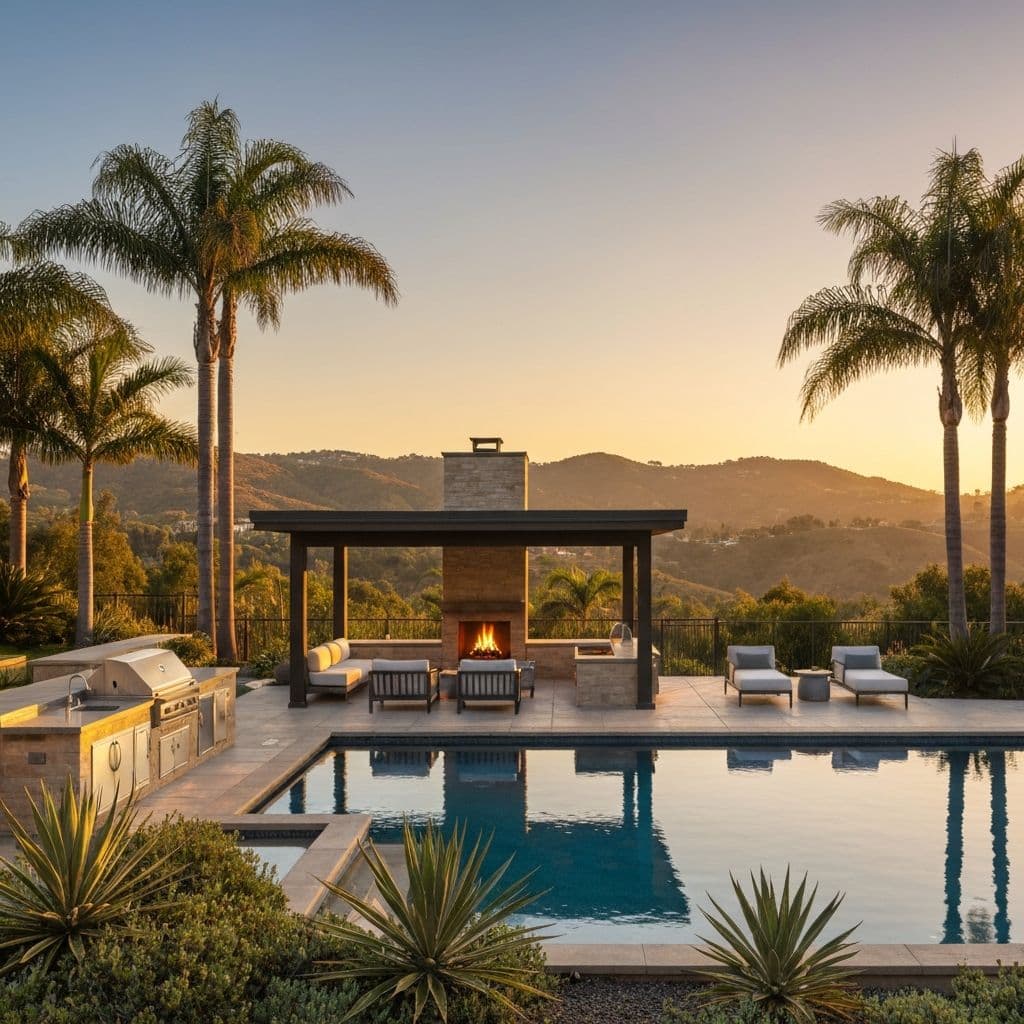
A full outdoor living build in Tarzana usually runs $85,000 to $220,000. The spread is mostly site, not taste. North of Ventura Boulevard you get flat, deep tract lots on decent soil and the work is straightforward. South of the boulevard, up toward Mulholland and the streets off Wells Drive and Reseda's climb, you are dealing with slope, expansive clay, retaining and sometimes the Baseline Hillside Ordinance. Tarzana also sits in one of the hottest pockets of the Valley. 100-plus degree afternoons are normal from July into late September. Shade is not decoration here. It is the reason the yard gets used.
The three Tarzana lot types and what each one costs
Flat tract lots north of Ventura: the postwar and 1960s tracts around Yolanda, Etiwanda and Oakdale. Typically 7,500 to 10,000 sq ft, level, easy access. A patio, pergola, kitchen and lighting package lands around $85,000 to $130,000 because there is no grading spend.
Deep flag and horse-era lots: pockets near Reseda Boulevard and the older Tarzana Ranch subdivisions carry 12,000 to 20,000 sq ft with long rear runs. More square footage to cover means more money: $140,000 to $220,000 for a full build, largely in hardscape quantity at $18-$32/sq ft installed.
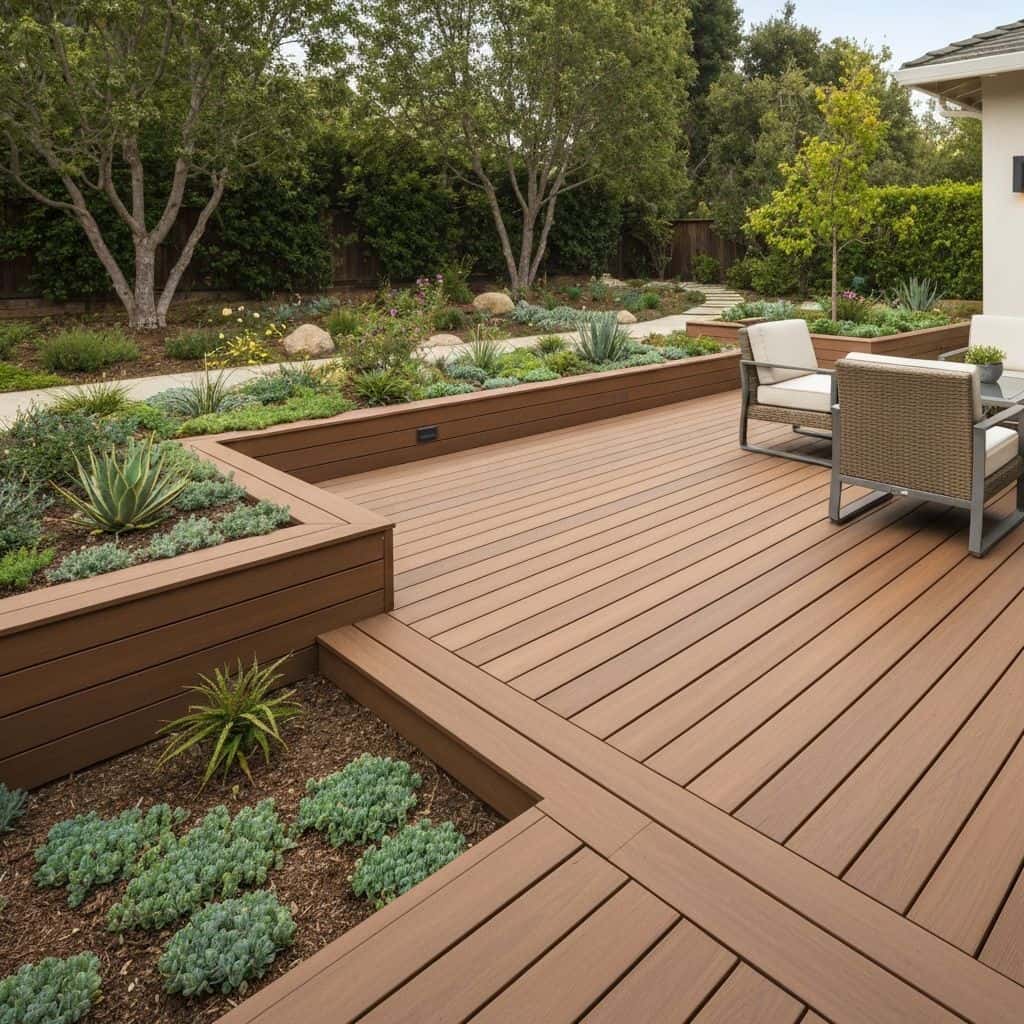
Hillside lots south of the boulevard: off Wells Drive, Corbin's south climb and the canyon streets. Add $25,000 to $80,000 before you place a single paver, because retaining at $60-$150 per face foot, soils reports and engineered plans come first. On a 4 ft high, 60 ft long wall you are at roughly $14,000 to $36,000 for the wall alone.
Pro Tip
Ask for a soils report before you commit to a layout on any lot south of Ventura Boulevard. Clay and fill dictate wall design more than any drawing does.
Shade first: what actually works in 105-degree Valley heat
Tarzana routinely runs 8 to 12 degrees hotter than Santa Monica on the same afternoon. Uncovered patios get abandoned by mid-June.
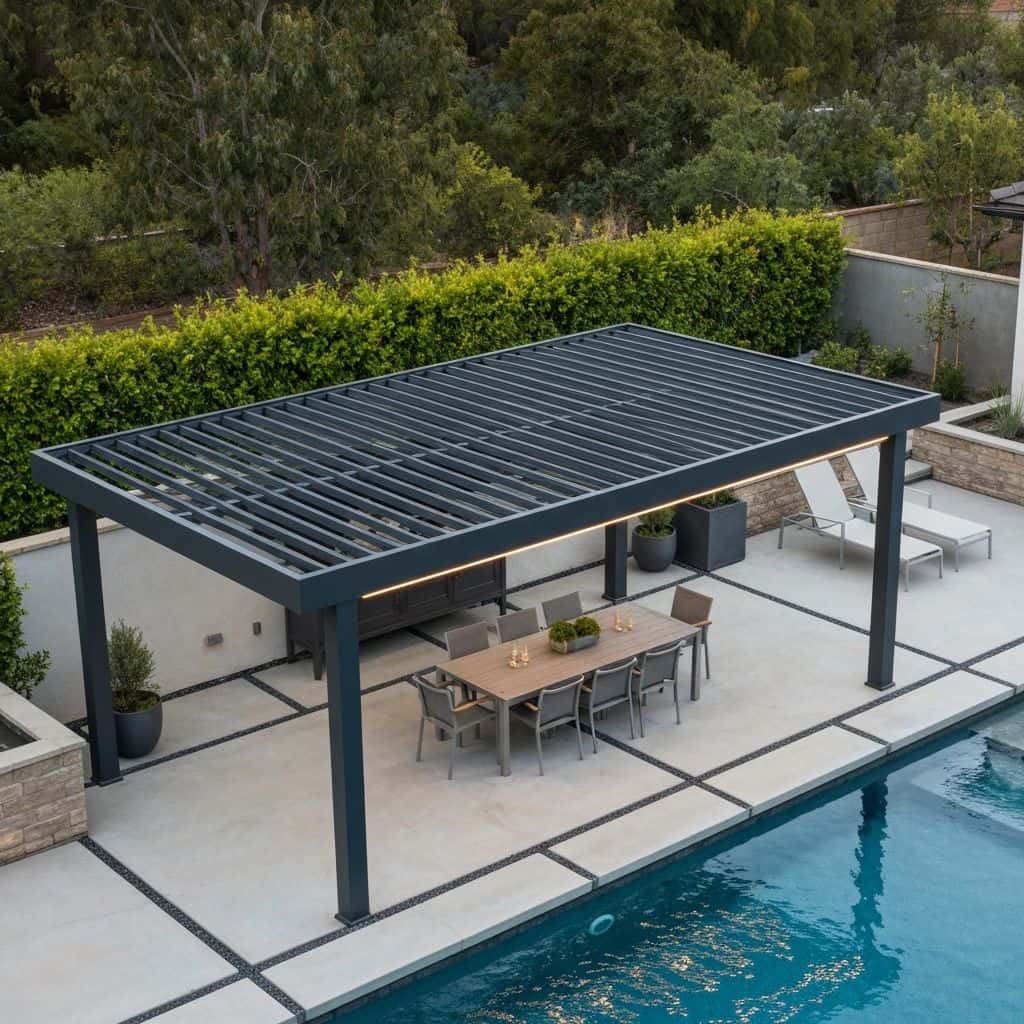
Aluminium louvered pergola: $18,000 to $40,000 depending on span. A 16 x 20 ft unit sits around $24,000 to $32,000 installed with footings and electrical. Louvers close for the Santa Ana dust and open for the evening. This is the workhorse in the Valley.
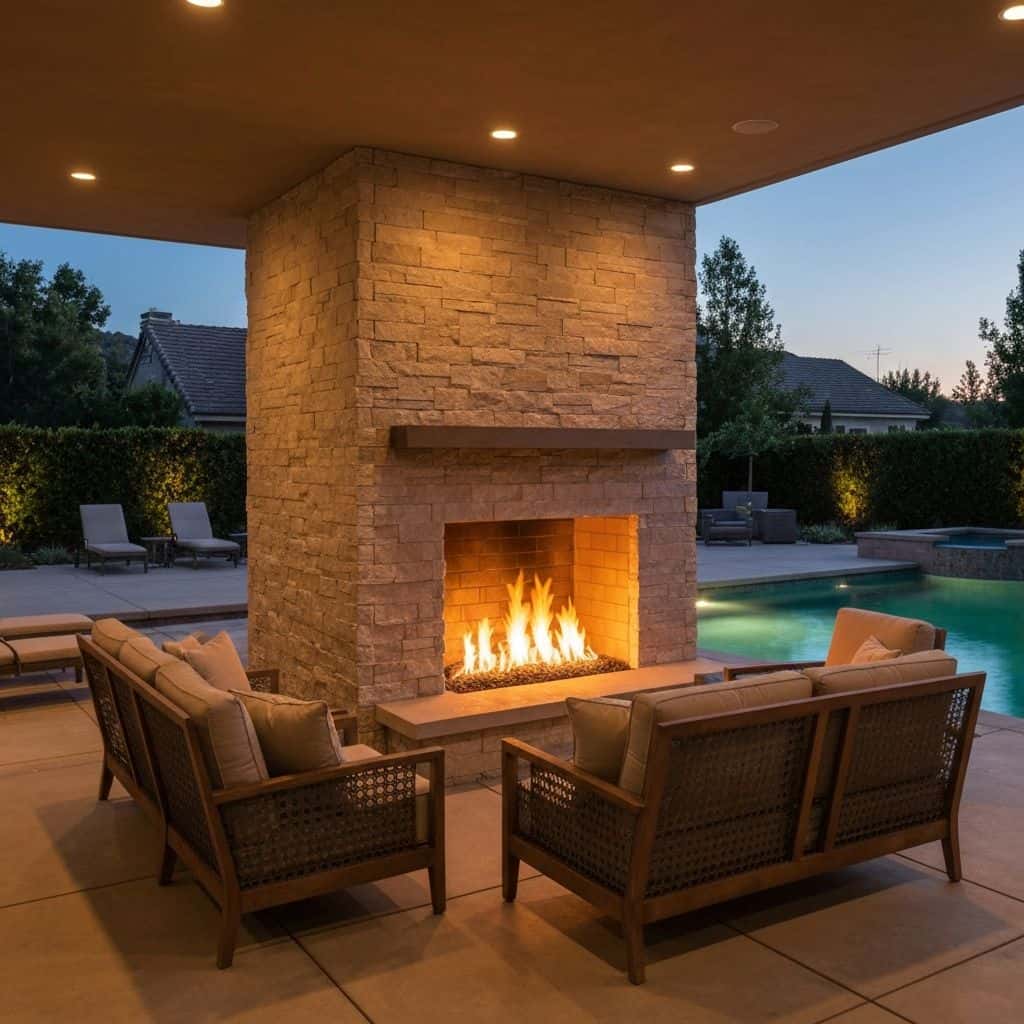
Wood or steel-frame solid cover: from about $9,500 for a modest attached cover, $18,000 to $35,000 for a substantial engineered structure with a finished ceiling, fans and recessed lighting.
Shade sails and cantilever umbrellas: $2,500 to $9,000. Cheap, and honestly fine as a stopgap, but Santa Ana gusts will find every weak attachment point.
Any structure over 120 sq ft, or one attached to the house, needs an LADBS building permit. Structures near a property line get scrutinised for setback and fire separation. Budget engineering on anything spanning more than about 14 ft.
Pro Tip
Specify ceiling fans in the cover framing during design. Retrofitting a fan-rated box into a finished ceiling costs three times what roughing it in does.
Ready to Start Your Project?
Schedule a free consultation with our design team.
Outdoor kitchen: realistic line items for a Valley cook space
A basic BBQ island (8 ft run, 36 in grill, doors, stone veneer, granite top) is $10,000 to $15,000. A full cook suite with a 42 in grill, side burner, refrigeration, sink with hot and cold, and 14 to 18 linear feet of counter runs $30,000 to $50,000 and up.
Line items worth knowing:
- Gas line from the meter, 40-60 ft trenched run with a new tee: $2,200-$4,500
- Dedicated 20A GFCI circuit for refrigeration: $900-$1,800
- Hot and cold water plus a drain tied to sewer or an approved receptor: $2,500-$5,500
- Porcelain or sintered stone countertop: $95-$180/sq ft installed
- Granite: $70-$120/sq ft installed
A note on materials in Tarzana sun: dark granite and dark porcelain hit surface temperatures that make them unusable at 3pm. Light-toned sintered stone or honed limestone-look porcelain stays workable. Stainless doors on a west-facing island will burn hands in August. Spec powder-coated aluminium or shade the run.
Pro Tip
Point the cook zone north or east if the layout allows. West-facing islands in the Valley get used in the morning and then never again.
Hardscape, base and drainage on Valley soil
Most of Tarzana north of the boulevard sits on alluvial soil with a clay fraction. Clay swells wet and shrinks dry, and that is what heaves pavers and cracks slabs.
Honest base spec for a paver patio here: 6 in compacted Class II aggregate base for foot traffic, 8-10 in for a driveway, over geotextile fabric on anything with a clay reading. Compact in 3-4 in lifts to 95 percent. That base is why paver work runs $18-$32/sq ft rather than the $9 you see advertised. The cheap number is 3 in of untested rock and it will move within two summers.
Drainage is not optional. A typical Tarzana yard needs 2 to 4 area drains, a 4 in solid SDR-35 line at 1 percent minimum fall, and a discharge to the street curb or an approved drywell. Budget $3,500 to $9,000. On hillside lots, add subdrain behind every retaining wall: 4 in perforated pipe in 3/4 in clean rock wrapped in fabric. Skipping it is the single most common reason walls in the south Tarzana hills fail.
Pro Tip
Set finished hardscape 6 in below the house weep screed. Building it flush is the fastest way to send water into the stucco.
Older service panels and what the yard actually draws
The 1950s-70s Tarzana tracts were built with 100A or 125A service. Add an outdoor kitchen, a pergola with fans and heaters, landscape lighting and a spa and you are asking for 40-60A the house does not have.
A main panel upgrade to 200A runs $3,500 to $7,500 in this area, more if LADWP requires a service drop or meter relocation. It needs its own LADBS electrical permit. Plan it early. Discovering it mid-build stalls everything downstream.
Landscape lighting for a typical Tarzana yard is $3,000 to $12,000. A worthwhile system: 12V LED, a 300W multi-tap transformer, direct-burial 12/2 in conduit under hardscape, brass or copper fixtures rather than aluminium (aluminium corrodes and seizes in irrigated beds), and 2700K throughout. Mixed colour temperature is the giveaway of an add-on-over-time system. Path lights at 2700K next to 4000K uplights look wrong even to people who cannot say why.
Pro Tip
Run one spare conduit sleeve under every hardscape crossing during construction. It costs about $150 and saves a saw-cut later.
Build sequence and realistic duration
A full Tarzana outdoor living project runs 10 to 20 weeks of construction on a flat lot, 16 to 30 weeks with retaining and hillside work. Design and LADBS plan check sit ahead of that and vary. We do not quote permit timing as a fixed number because it is not ours to control.
Order of operations that avoids rework:
- Survey, soils where required, and design, including final appliance and fixture schedule
- Demo and rough grading; establish finished elevations against the house
- Retaining walls and structural footings, inspected before backfill
- Underground: gas, electrical conduit, water, drainage, irrigation sleeves, all trenched in one pass
- Concrete footings for covers and kitchen framing
- Base rock, compaction, then hardscape
- Kitchen build, counters, appliance set
- Cover framing, electrical trim, fans and heaters
- Planting, turf, lighting aim and commissioning
The expensive mistake is running hardscape before underground is complete and inspected. Cutting a finished paver field to chase a gas line costs $2,000-$5,000 and never looks right afterwards.
Pro Tip
Get every appliance model number locked before framing. Cutouts are built to spec sheets, not to guesses.
Final Thoughts
Tarzana rewards planning more than most Valley markets because the site conditions vary so much within a two-mile radius. Flat tract lot north of Ventura, deep older parcel, or hillside south of the boulevard: each one carries a different base cost before design even starts. Get soils, drainage and electrical capacity settled first. The shade structure and the cook space are the easy part once the ground is right.
Frequently Asked Questions
Budget $85,000 to $220,000 for a full build with shade structure, hardscape, outdoor kitchen and lighting. Flat tract lots north of Ventura Boulevard sit at the lower end. Hillside lots south of the boulevard add $25,000 to $80,000 for retaining walls, soils work and engineered plans before any finish work begins.
Yes, in most cases. LADBS requires a building permit for shade structures over 120 square feet and for any structure attached to the house. Setback and fire-separation rules apply near property lines, and spans over roughly 14 feet generally need engineering. Electrical for fans, heaters or lighting requires its own permit scope.
Often. Tract homes from the 1950s through 1970s typically carry 100A or 125A service. A full outdoor build with kitchen refrigeration, fans, heaters, lighting and a spa can demand 40 to 60 amps. Upgrading to a 200A main panel runs $3,500 to $7,500 in this area and requires a separate LADBS electrical permit.
An aluminium louvered pergola at $18,000 to $40,000 is the most practical choice. Louvers close against Santa Ana dust and open for evening air, and the aluminium does not check or warp in 100-plus degree afternoons. A 16 by 20 foot unit typically installs around $24,000 to $32,000 including footings and electrical.
Plan on 10 to 20 weeks of construction on a flat lot and 16 to 30 weeks where retaining walls or hillside grading are involved. That is construction duration only. Design, engineering and LADBS plan check sit ahead of it and vary by project scope and reviewer workload.