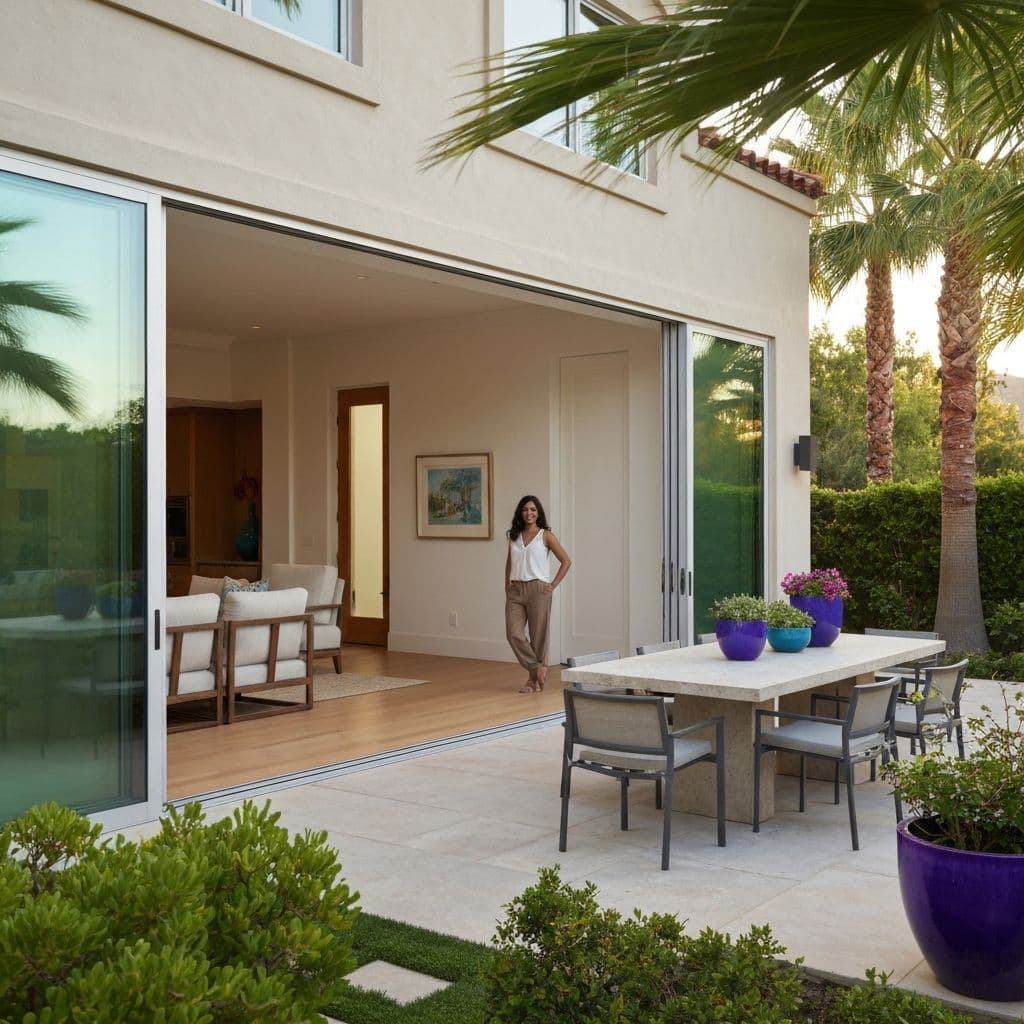
Outdoor living in Toluca Lake typically costs $110,000 to $260,000. That is more per square foot than Northridge or Chatsworth for less finished yard, and there is a reason. Toluca Lake lots between Riverside Drive and the lake, and the streets running off Forman and Placidia, are compact, often 6,000 to 9,000 sq ft with the house consuming a large share. Mature liquidambar, sycamore and camphor canopy shades half the yard and complicates every trench. Access is frequently a 4 to 6 ft side yard between houses. And privacy matters here more than almost anywhere in the Valley, because neighbours are close and the clientele values it. The design problem is not how to fill space. It is how to make a small yard feel complete.
Designing a small Toluca Lake yard so it works
A 900 to 1,400 sq ft rear yard cannot hold a pool, a lawn, a dining terrace, a cook suite and a fire lounge. Trying produces a cluttered yard where nothing is comfortable. Pick two or three programmes and build them properly.
What consistently works on Toluca Lake lots:
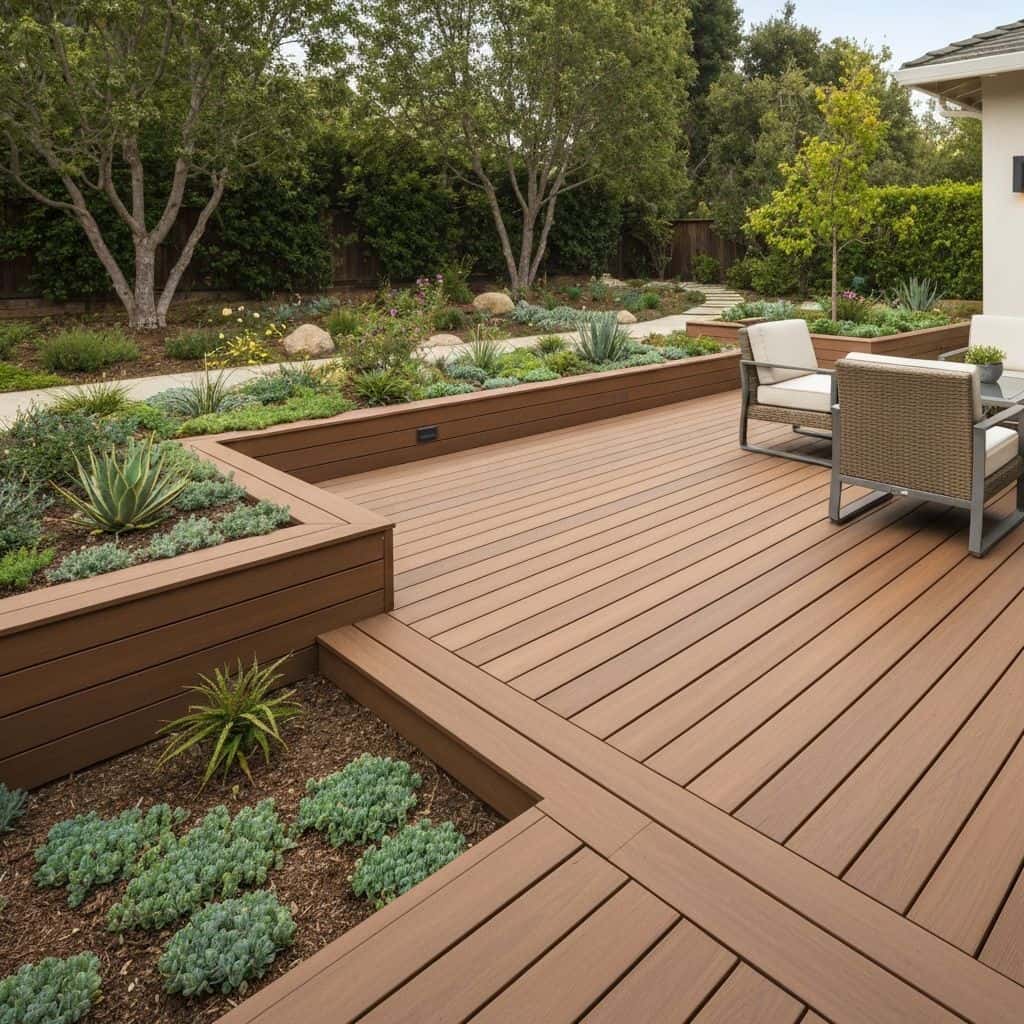
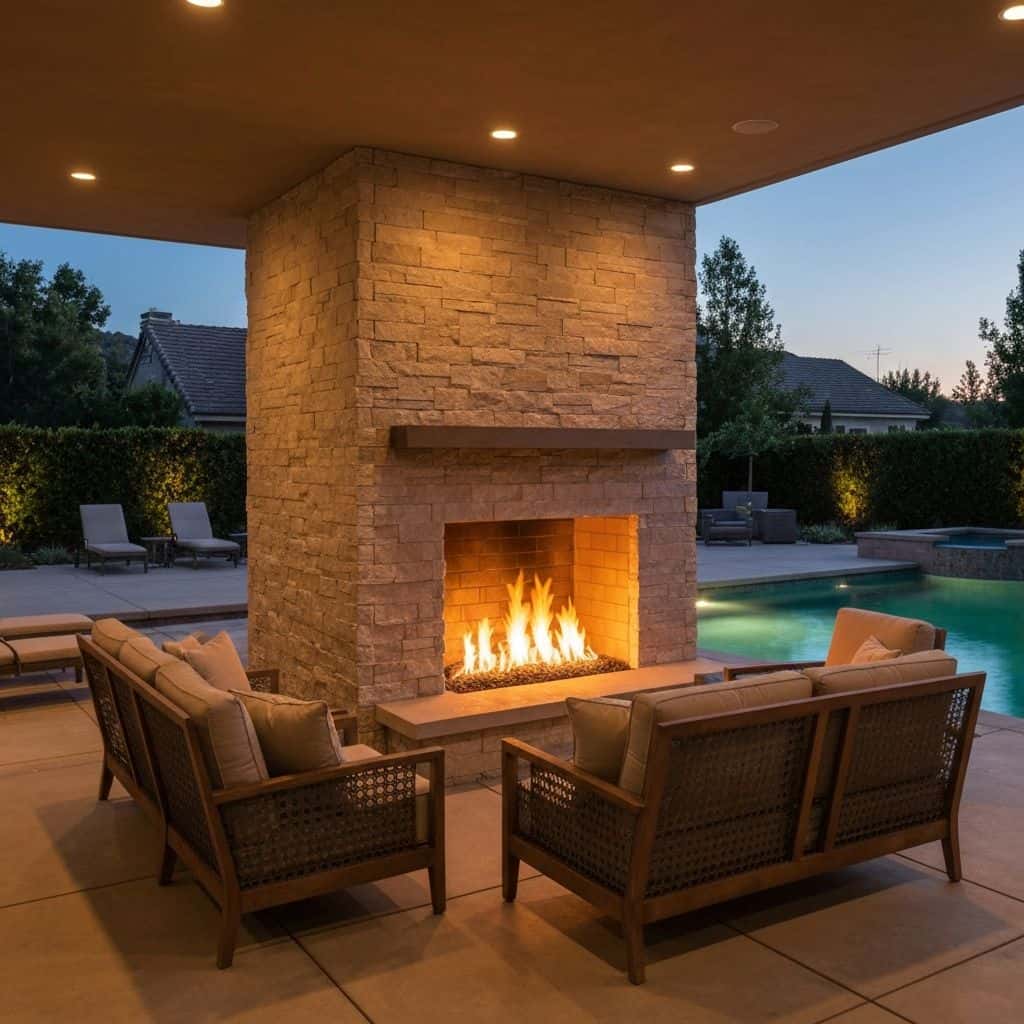
Terrace plus fire, no lawn. A 500-700 sq ft paved terrace with a covered dining zone and a gas fire lounge. No turf, no wasted circulation. $75,000-$140,000. Reads generous because it is all usable.
Plunge pool plus terrace. A 10 x 22 ft plunge pool or spa-pool at 4 ft uniform depth, $65,000-$110,000, with a 400 sq ft terrace wrapping it. Total $110,000-$185,000. Small water reads better than no water and costs half of a full pool.
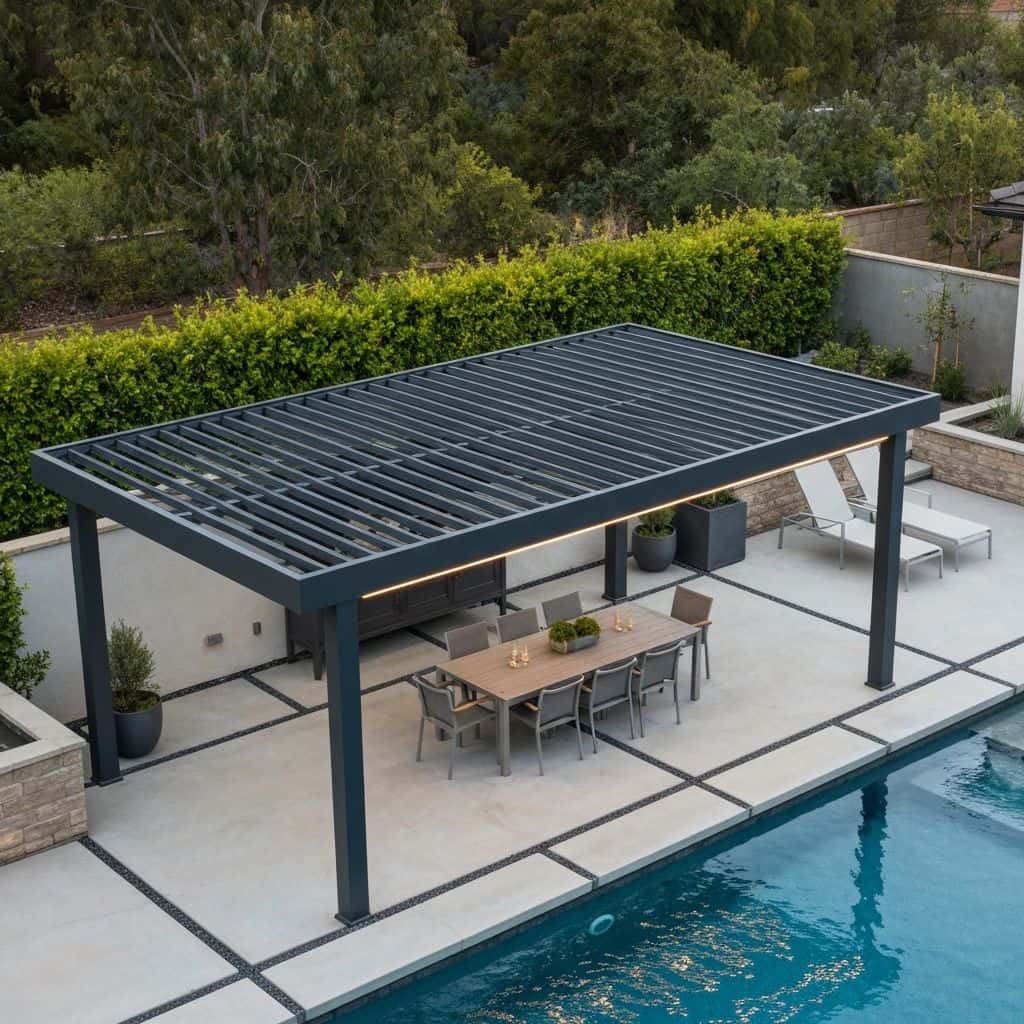
Cook and dine, fully covered. A 16 x 22 ft solid-roof structure with a full outdoor kitchen, heaters, fans and lighting, on a hardscape floor. $85,000-$160,000. Usable eleven months a year, which a lawn is not.
What does not work: a small lawn ringed by a narrow path. It gives you neither a real garden nor a real terrace.
Pro Tip
Build fewer, larger zones. Two well-proportioned areas beat five compromised ones in a yard under 1,500 square feet.
Privacy engineering on a tight lot
Toluca Lake houses sit close, and second storeys look down. Privacy is a construction problem, not a planting problem.
Vertical screening. A 6 ft fence does nothing against a second-storey window 30 ft away. Effective options: a louvered screen wall on the property line at maximum permitted height (verify with LADBS: fence height limits apply and vary by location on the lot), then a taller planted or structural element set back from the line where height rules allow. Louvered aluminium screen panels run $180-$340 per linear foot installed.
Overhead. The most effective privacy device is a roof. A solid-roof cover or a louvered pergola closes the sightline from above entirely. This is why covered structures are so common on Toluca Lake builds. They solve shade and privacy in one $18,000-$40,000 move.
Planting. Ficus nitida hedges deliver dense screening but roots are aggressive and will find sewer laterals and lift hardscape. On a small lot with old clay pipe, that is a real risk. Podocarpus, Little Gem magnolia and Japanese blueberry screen well with better manners. Boxed 24 in specimens run $350-$900 each installed.
Sound. Toluca Lake sits near the 134 and studio traffic. A water feature at 3-6 dB of masking makes conversation on the terrace materially better. A basin-and-wall feature runs $8,000-$22,000.
Pro Tip
Sit in the yard at 6pm on a weekday before you design. That tells you where the sightlines and the noise actually come from.
Ready to Start Your Project?
Schedule a free consultation with our design team.
Mature trees, root zones and 5 ft side yards
Two Toluca Lake realities drive cost more than finish level does.
Trees. The mature canopy is part of why people buy here, and it constrains everything. Trenching through a critical root zone kills trees slowly and expensively. Real practice: hand-dig or air-spade within the drip line, route utilities around root plates rather than through them, and never cut a root over 2 in diameter without an arborist call. Budget $1,500-$5,000 for arborist consultation and root-sensitive excavation on a treed lot. Protected species (coast live oak in particular) require review before any work in the protected zone. Do not let a crew start trenching near an oak on a verbal assurance.
Footing design changes too. Under a canopy, pier footings on hand-dug piers beat continuous footings because they let you place around roots.
Access. A 4-6 ft side yard means everything comes in by hand or over the house. Practical effects:
- Excavation for a plunge pool: add $8,000-$20,000 for conveyor or crane
- Material handling surcharge on hardscape: add roughly 15-25 percent to labour
- Boxed trees over 36 in box generally will not fit; plan the palette accordingly
- Concrete may need pumping rather than direct chute: $1,200-$2,500 per pour
Measure the tightest pinch point, including gate posts, meter housings and AC condensers, before anyone quotes.
Pro Tip
Relocate the AC condenser during design if it blocks the only access route. Moving it costs $1,500-$3,000 and unlocks machine access worth ten times that.
Real line items for a Toluca Lake build
For a 1,200 sq ft rear yard with covered dining, an outdoor kitchen, a fire lounge and screening:
- Design, survey, engineering: $7,000-$18,000
- Demo and disposal (hand-loaded, restricted access): $6,000-$14,000
- Drainage, area drains, 4 in SDR-35 at 1 percent to street: $4,000-$9,000
- Hardscape, 800 sq ft porcelain pavers on pedestals or mortar set at $28-$45/sq ft: $22,000-$36,000
- Solid-roof cover, 16 x 22 ft, finished ceiling, fans, recessed lighting: $28,000-$50,000
- Outdoor kitchen, 14 ft run with 42 in grill, refrigeration, sink: $28,000-$45,000
- Gas fire feature with seat wall: $9,000-$20,000
- Louvered privacy screening, 40 linear feet: $7,200-$13,600
- Planting, boxed screening trees, irrigation: $12,000-$30,000
- Landscape lighting: $5,000-$12,000
- Water feature for sound masking: $8,000-$22,000
Range: roughly $136,000 to $269,000. Porcelain over concrete pavers is common in this market because it holds colour and stays cooler underfoot. The premium is real but so is the difference.
Pro Tip
Spec pedestal-set porcelain over a waterproofed slab where you can. It gives you a serviceable cavity for conduit and drainage on a lot with no spare room.
Utilities, older infrastructure and LADBS
Toluca Lake's housing stock spans the 1920s through the 1960s. Older properties carry the corresponding infrastructure.
Electrical. Original 60A or 100A service is not unusual in the pre-war stock. A covered structure with fans, heaters, a kitchen with refrigeration and a lighting system needs 40-50A on its own. Panel upgrade to 200A: $3,500-$7,500, own LADBS electrical permit. In some Toluca Lake locations LADWP requires underground service work, which raises that.
Gas. Older meters at 175-250 CFH will not carry a 60,000 BTU fire feature plus a grill plus two 40,000 BTU heaters plus house load. Meter upgrade plus upsized line: $2,500-$6,000.
Sewer. Clay laterals with ficus roots are common. Camera it for $250-$500 before you build a kitchen sink drain into the plan.
Permits. LADBS building permit for the cover structure. Electrical permit for the yard circuits. Plumbing permit for gas and the kitchen sink and drain. Fence and screen height limits apply and are verified against the zoning for the parcel. If the property carries any historic designation or sits within a designated area, additional review applies. Check before design.
Construction duration: 12 to 22 weeks, longer than a comparable flat-lot Valley project purely because of access and hand work.
Pro Tip
Assume every trench near a mature tree takes twice as long as the estimate. Building that into the schedule prevents the pressure that gets roots cut.
Final Thoughts
Toluca Lake is a design problem before it is a construction problem. Small lots, close neighbours, mature protected canopy and 5 ft access all mean the yard that works is the one that commits to two or three well-built zones rather than trying to include everything. Budget $110,000 to $260,000, expect access and tree protection to add 15 to 25 percent over a comparable Northridge project, and put the money into a covered structure. It solves shade, privacy and usable season in a single move.
Frequently Asked Questions
Budget $110,000 to $260,000 for a full build with covered dining, an outdoor kitchen, fire feature, screening and lighting on a typical 1,200 square foot rear yard. Cost per square foot is higher than open Valley markets because restricted access adds roughly 15 to 25 percent to labour and material handling.
A roof. A solid cover or louvered pergola at $18,000 to $40,000 blocks second-storey sightlines completely while also solving shade. Combine it with louvered screen panels at $180 to $340 per linear foot and well-mannered screening plants like podocarpus or Japanese blueberry rather than aggressive ficus near old sewer laterals.
They add cost and constrain layout. Trenching through a critical root zone requires hand digging or air-spading, routing around root plates, and arborist involvement, adding $1,500 to $5,000. Protected species such as coast live oak require review before any work in the protected zone. Pier footings often replace continuous footings under canopy.
Often a plunge pool rather than a full pool. A 10 by 22 foot plunge at 4 foot uniform depth runs $65,000 to $110,000 and leaves room for a terrace. With 4 to 6 foot side-yard access, excavation adds $8,000 to $20,000 for conveyor or crane handling. Small water reads better than a crowded full-size pool.
Frequently. Pre-war and early postwar stock often carries 60A or 100A service and gas meters at 175 to 250 CFH. A covered structure with heaters, fans, kitchen refrigeration and lighting needs 40 to 50 amps. Panel upgrade runs $3,500 to $7,500 and meter plus line upsizing runs $2,500 to $6,000, each with its own LADBS permit.