
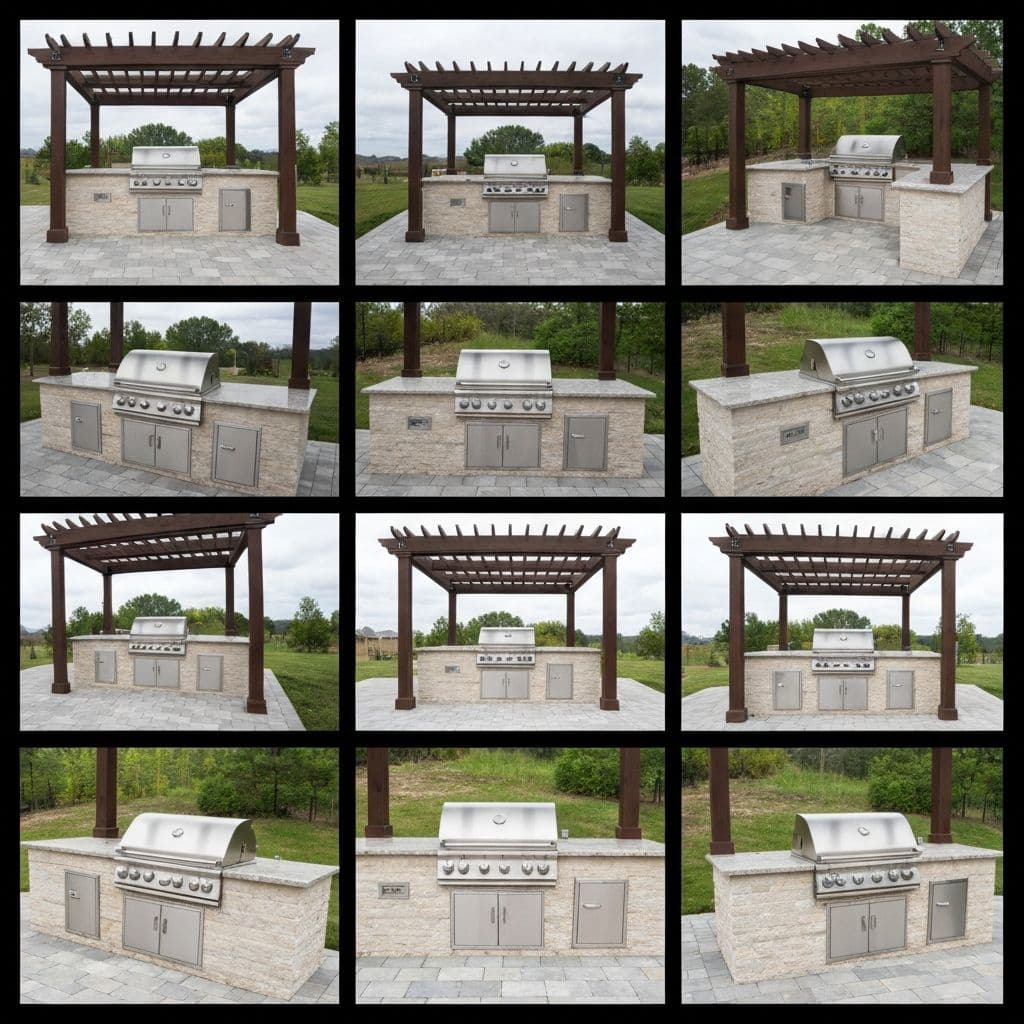
An outdoor kitchen is not cabinetry. It is a permitted gas line, a dedicated electrical circuit, a masonry or steel-framed structure and a ventilation problem, and it costs $10,000 to $15,000 for a basic island or $30,000 to $50,000 and up for a full cook suite. The contractor who builds it needs a B General Building licence or the right specialty classifications, and the gas and electrical work needs to be done by licensed trades and inspected. Most of the failures we get called to repair in Pasadena, Encino and Newport Beach are the same three: undersized gas supply, no vent penetrations in the island, and stone set on an unstable frame.
The Licences That Actually Matter Here
Check cslb.ca.gov for active status, the $25,000 bond and workers' comp. For the island itself, a B General Building licence covers the multi-trade scope; C-29 masonry or C-8 concrete shows self-performed structure. The two you must not skip are C-36 plumbing for the gas line and C-10 electrical for the circuits and low-voltage. Ask directly whether gas and electrical are pulled under permit and by which licensed trade. A patio island with a grill, side burner and 24-inch refrigerator typically needs a gas line sized for the total BTU load and at least one dedicated 20-amp GFCI circuit, often two. Request the general liability certificate from the insurer at $1,000,000 per occurrence. Fire, in this trade, is not a theoretical risk.
Pro Tip
Ask for the total BTU load of the appliance package and the gas line size and length that will serve it.
Red Flags in Outdoor Kitchen Bids
A quoted price with no appliance model numbers. Wood framing inside a masonry island, which will move and crack the stone. No ventilation openings called out, when built-in grills and any island housing an LP tank require them. Gas described as tie into existing without checking the meter capacity or the run length, which is the most common cause of a grill that never reaches temperature. Countertop listed as granite with no thickness or slab allowance. No permit line at all, on a job that includes gas and electrical. And a deposit over $1,000 or 10% of the contract, whichever is less, which California law does not allow. If the salesman cannot tell you what the island frame is made of, you are buying a photograph.
Pro Tip
Insist on a galvanised steel stud or masonry frame, never wood, for any island carrying stone and heat.
Ready to Start Your Project?
Schedule a free consultation with our design team.
What a Real Proposal Contains
Dimensions first: island length, depth and counter height, typically 36 inches for prep and 42 for a raised bar, with a 15-inch bar overhang supported. Then frame material and gauge. Appliances by brand and model with cut-out dimensions. Gas: line size, run length, BTU total, and permit. Electrical: number of circuits, GFCI, and any low-voltage for lighting. Counters priced by material and square footage, granite and porcelain being the two that survive UV and heat; concrete counters need sealing schedules. Veneer by square foot. Then the build cost bands: $10,000-$15,000 for a basic L-shaped island with grill and refrigerator, $30,000-$50,000 or more for a cook suite with pizza oven, ventilation hood under a covered structure, sink, dishwasher and seating. Covered structures add Title 24 lighting requirements.
Pro Tip
If the kitchen sits under a solid roof, a listed vent hood is not optional. Budget for it early.
Questions to Ask Before You Commit
Is the gas permitted, and who inspects it. What is the island frame and how is it anchored to the slab. How do you vent the island, and where do the openings sit relative to the appliances. What is the countertop overhang support detail. Which counter material do you recommend for full afternoon sun in the Valley, and why. Are appliances warrantied through you or direct with the manufacturer. Is the concrete slab under the island new, and if existing, how did you confirm it can carry the load. What is your workmanship warranty in years on the masonry and on the stone setting. Finally: can I see two islands you built more than three years ago, because outdoor kitchens look identical on day one and tell the truth at year three.
Pro Tip
Ask to see a three-year-old install. Grout lines, sealant joints and stone staining reveal the real build quality.
Final Thoughts
Judge an outdoor kitchen bid on the invisible parts: frame material, gas sizing, ventilation and slab. Verify the licence, insist on permits for gas and electrical, and keep the deposit inside the legal limit. RYV designs and self-performs outdoor kitchens across Los Angeles, the San Gabriel Valley and Orange County, and we specify appliances and structure together so the finished island still works in year ten.
Frequently Asked Questions
The island itself may not require one, but the gas line and electrical circuits serving it generally do, and any covered structure over the threshold size does. Permitted gas and electrical get inspected, which is exactly what protects you. A contractor who proposes skipping both is transferring risk to your homeowner's policy.
A basic island with a built-in grill, storage and a refrigerator runs about $10,000 to $15,000. A full cook suite with pizza oven, vent hood, sink, dishwasher, bar seating and stone veneer typically lands between $30,000 and $50,000, and larger covered installations go beyond that.
Galvanised steel studs or masonry block. Never wood. Wood moves with moisture and heat, which cracks stone veneer and countertop joints within a few seasons. Ask the contractor to state the frame material and gauge in the proposal, and to show how the island is anchored to the slab.
Granite and full-body porcelain are the two safest choices for Southern California exposure. Both resist UV fading and heat. Quartz is not recommended in direct sun because the resin binder discolours. Concrete works but needs a stated resealing schedule, usually annually, written into the proposal.