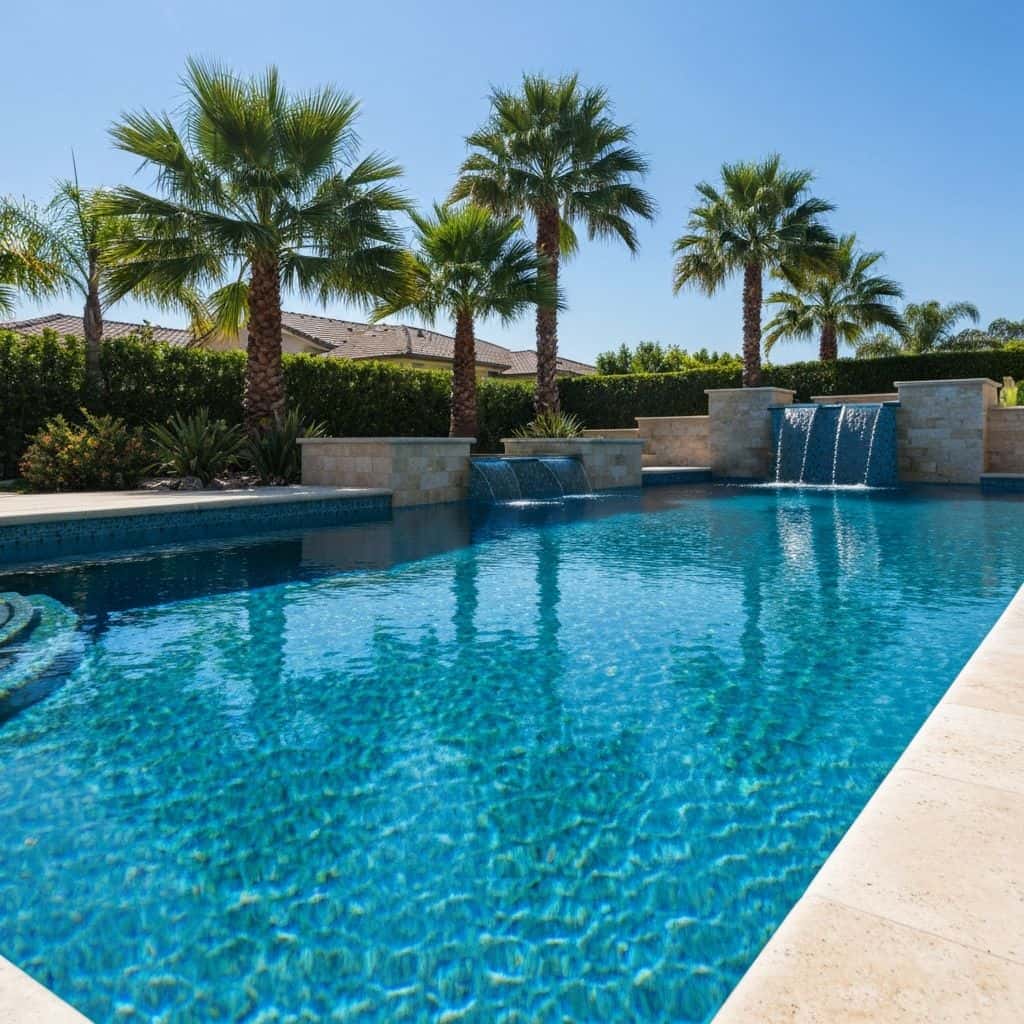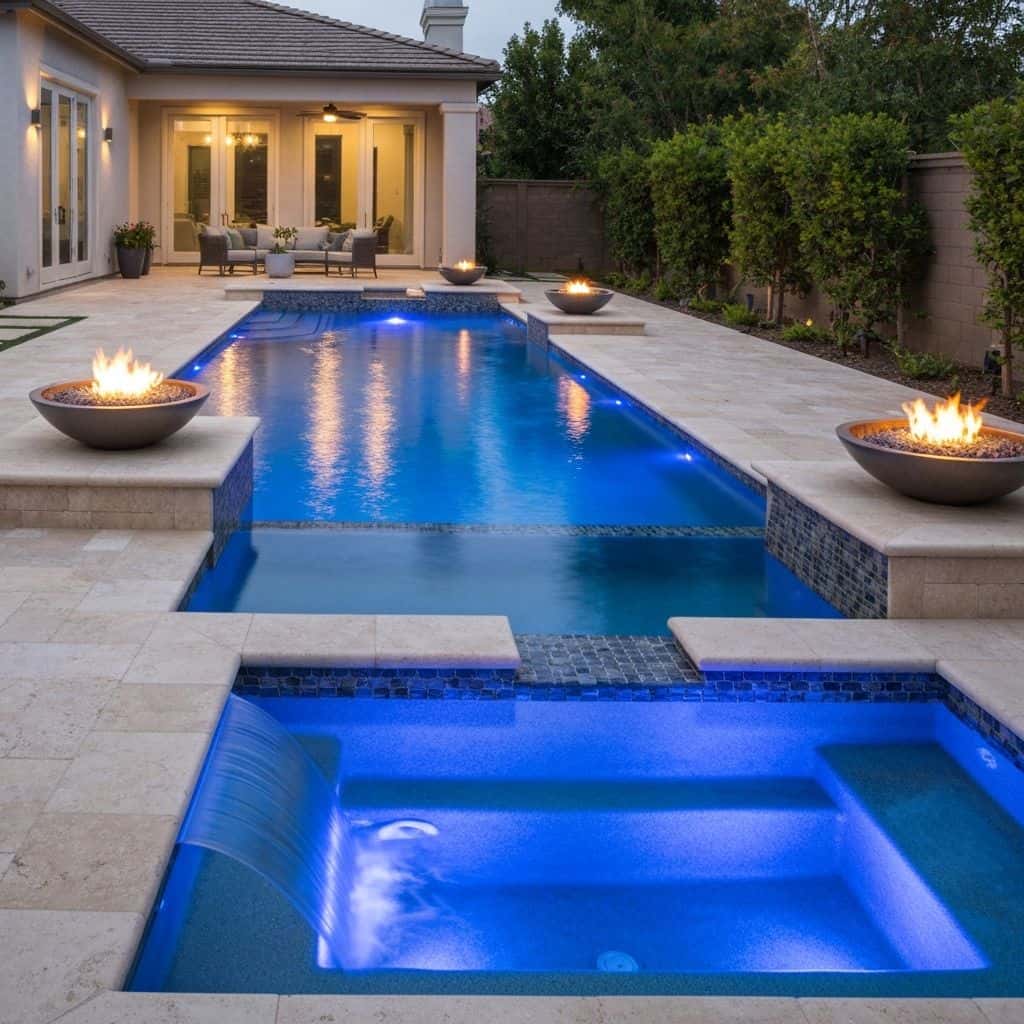
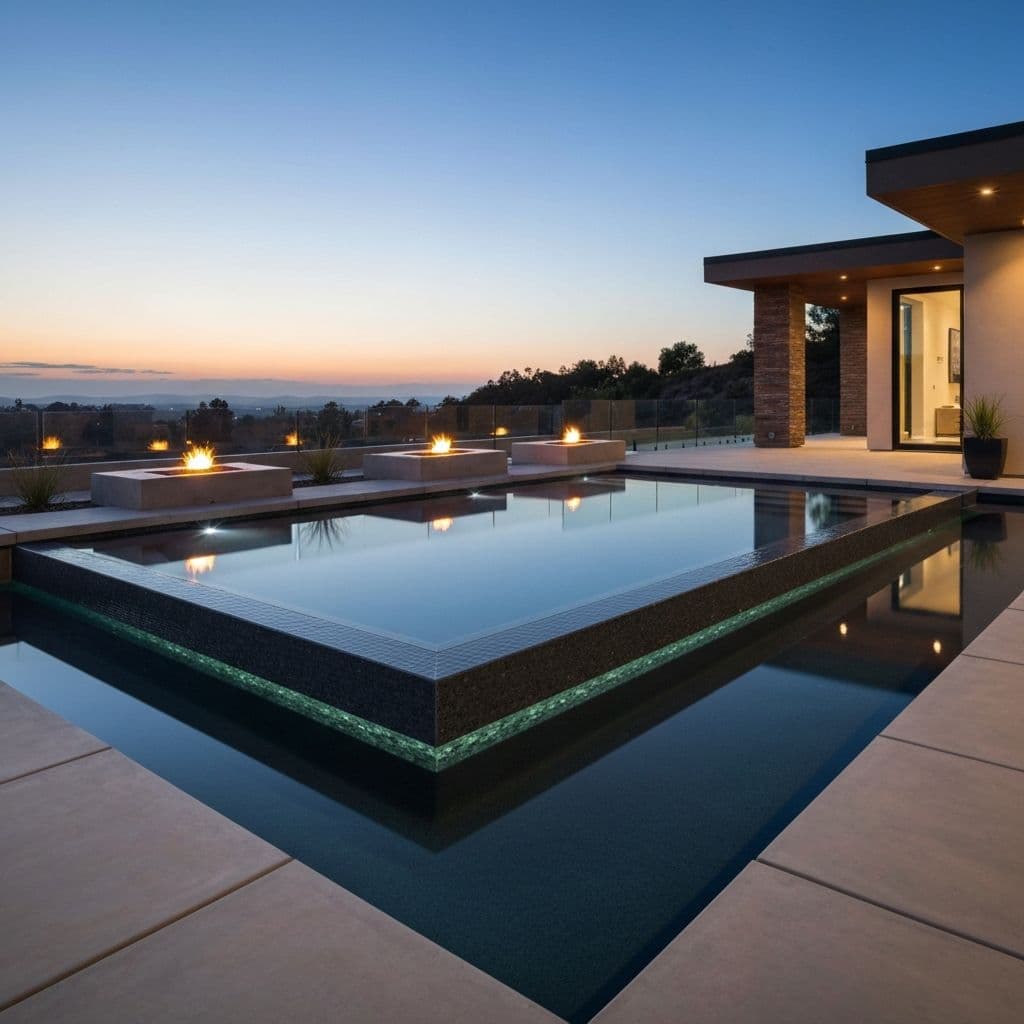
A new pool in Northridge lands between $85,000 and $165,000 once you include the deck, equipment, fencing and gas. Small and simple can start near $65,000. Add a raised spa, a shelf, fire features and 900 sq ft of deck and you clear $200,000. Northridge is one of the easier Valley markets to build a pool in: the postwar and 1960s tracts around Devonshire, Lassen and Reseda Boulevard sit on flat, deep lots with real setbacks, and the soil is mostly workable alluvium rather than the fill and bedrock you fight in the hills. What Northridge does throw at you is heat, older electrical service, and side-yard access that decides whether excavation costs $9,000 or $28,000.
What a Northridge pool actually costs, line by line
For a 16 x 32 ft pool with an attached spa on a flat tract lot with reasonable access, here is a realistic breakdown:
- Excavation and export (roughly 180-220 cubic yards): $9,000-$18,000
- Steel and engineering: $7,000-$12,000
- Gunite shell: $18,000-$28,000
- Plumbing, main drains, returns, spa jets: $8,000-$14,000
- Electrical, bonding, panel sub-feed: $5,000-$11,000
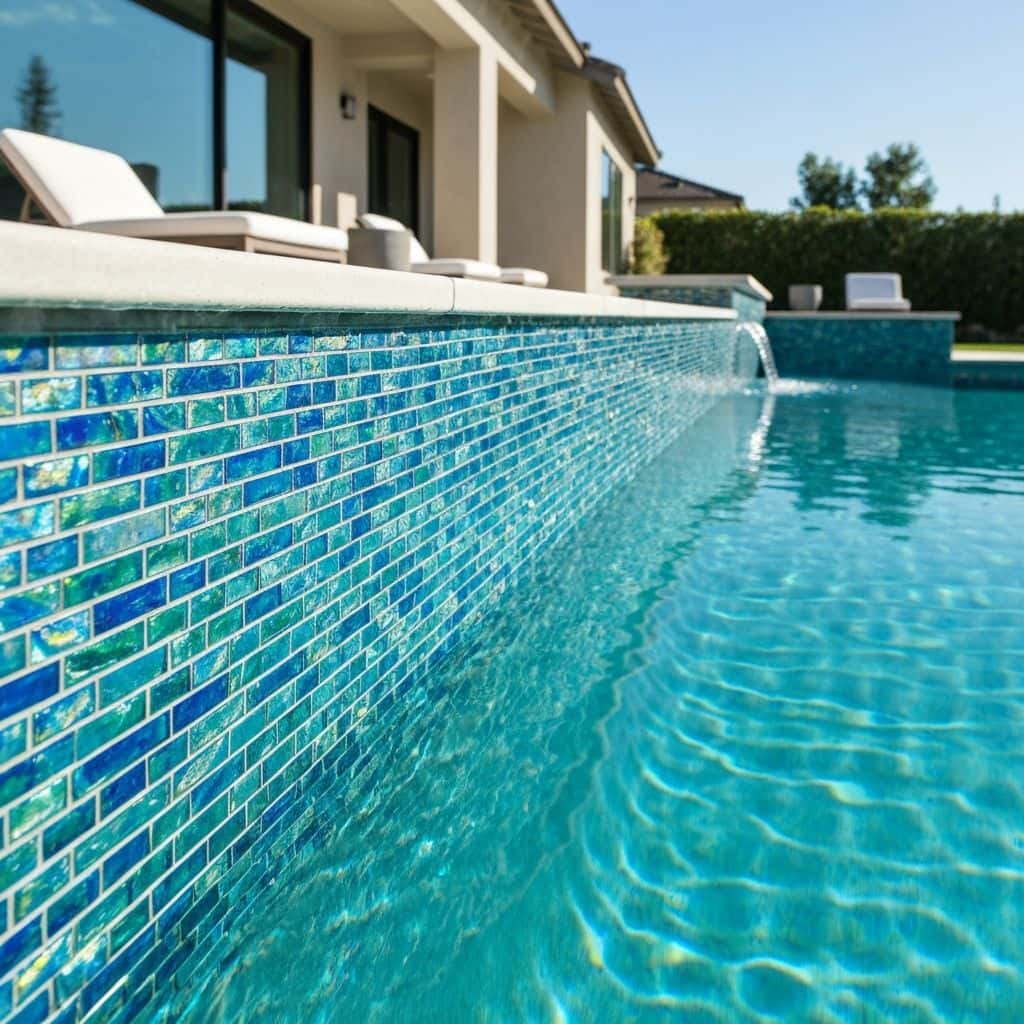
- Tile and coping (waterline tile plus 6 in bullnose): $9,000-$18,000
- Interior finish, pebble: $9,000-$16,000; standard plaster: $6,000-$10,000
- Equipment set: variable-speed pump, cartridge filter, 400k BTU heater, salt or chlorine sanitiser, automation: $9,000-$16,000
- Decking, 600-900 sq ft in pavers at $18-$32/sq ft: $11,000-$29,000
- Safety barrier and gates: $3,500-$9,000
That totals roughly $98,000 to $172,000. Strip the spa, use plaster and stamped concrete instead of pebble and pavers, and you can build a genuinely good pool in the mid $70,000s.
Pro Tip
Price the deck separately from the pool in every bid you compare. Deck square footage is where quotes diverge most and where the number quietly grows.
Side-yard access decides your excavation number
Northridge tract lots typically have 5 to 10 ft side yards. That single dimension changes the excavation line by $10,000 or more.
Over 8 ft clear with a removable fence panel: a mini excavator and small dumpers get in. Standard cost, 2-3 days of dig.
5 to 8 ft clear: smaller machine, more passes, sometimes a conveyor. Add $3,000-$8,000.
Under 5 ft, or no access at all: crane over the house or hand dig with conveyors. Add $12,000-$25,000. Crane days in this market run $3,500-$6,500 each and you need a street closure if the boom swings over the public way.
Walk the access route before signing anything. Look at gate width at the narrowest point, overhead lines, the neighbour's fence, mature trees you are unwilling to lose, and whether the driveway apron can take a loaded truck. Spoil export from a 16 x 32 pool is roughly 14-18 truckloads. In the tighter streets off Zelzah and Lindley, staging those trucks is its own conversation with neighbours.
Pro Tip
Photograph the access route and the neighbour's fence line before demolition day. It settles disputes that otherwise cost real money.
Ready to Start Your Project?
Schedule a free consultation with our design team.
Sizing equipment for Northridge summers and winters
Northridge runs hot in summer and genuinely cold on winter nights. The Valley floor drops into the 40s. Both ends matter.
Heater: a 400,000 BTU natural gas heater raises a 16,000 gallon pool about 1-1.5 degrees per hour. For a spa you want that capacity to reach temperature in under an hour. Verify the gas meter can supply it: a 400k BTU heater plus a 60k BTU fire feature plus house load frequently exceeds an older 250 CFH meter. A meter upgrade request to SoCalGas plus the upsized line runs $2,500-$6,000.
Pump: variable-speed is required by California Title 24 for pool pumps at this scale, and it is the right call anyway. Running a VS pump at 1,700 RPM for 10 hours costs a fraction of a single-speed at 3,450. Expect $250-$600 a year in savings versus an old single-speed.
Evaporation: Valley heat plus low humidity plus wind means a Northridge pool loses roughly a quarter to a half inch of water a day in summer. A cover pays for itself. Automatic covers run $12,000-$25,000; a simple solar cover with a reel is $600-$1,500 and cuts evaporation dramatically.
Pro Tip
Confirm gas meter capacity in CFH before ordering the heater. Undersized supply shows up as a heater that short-cycles and fails early.
The LADBS permit path and required safety features
A private single-family pool in the City of Los Angeles is permitted through LADBS on a combined Building-Mechanical permit. Plumbing plan check applies to commercial and apartment pools, not to single-family residential. That distinction saves a step people often assume they need.
Submittal generally includes a plot plan with setbacks and easements, the structural pool plan with engineering, the equipment location and sound considerations, the barrier detail, and the electrical scope including bonding.
California's Swimming Pool Safety Act requires drowning-prevention safety features on new pools. The common compliant choices are an isolation fence separating the pool from the home, approved safety pool covers, exit alarms on doors leading to the pool area, or self-closing self-latching devices on those doors. Your building official confirms which features satisfy the requirement on your plan. Equipotential bonding of the shell steel, deck reinforcement, ladders, rails and any metal within the required distance is inspected and is not a place to economise.
Inspection sequence typically runs: pre-gunite steel and bonding, plumbing pressure test, gunite, equipment rough, deck pre-pour, and final. Construction duration for a Northridge pool is normally 8 to 16 weeks from dig to fill.
Pro Tip
Set the equipment pad away from the neighbour's bedroom wall. A VS pump is quiet, but a 400k BTU heater under a window generates complaints.
Designing to a Northridge tract lot
The classic Northridge rear yard is 45 to 70 ft deep and 60 to 75 ft wide. That is enough for a pool and a genuine living zone if you resist centring the pool.
What works:
- Push the pool to one side, leaving a 16-20 ft wide flat run for a covered patio and dining. A centred pool leaves two useless 8 ft strips.
- Keep 4 ft minimum deck on the ladder and equipment sides, 8-12 ft on the lounging side.
- A Baja shelf 6-8 ft wide at 9-11 in deep is the single most-used feature in Valley heat. Cost is modest ($3,500-$8,000) and it is where people actually sit in August.
- Raised bond beam with a spa spillway adds sound and screens the fence. A raised spa runs $18,000-$35,000 over the base pool.
- Pool depth: 3.5 ft to 5.5 ft covers real use. Deep ends beyond 6 ft add gunite, water volume, heating cost and get used almost never in a family yard. If nobody is diving, do not pay for it.
Mature trees in the older Northridge tracts (liquidambar, Chinese elm, coast live oak) matter twice. Roots complicate excavation, and canopy over the water means daily skimming. Protected species require review before removal.
Pro Tip
Model the summer shade path before you fix the pool position. Water that sits in full sun until 6pm is 88 degrees in August and nobody swims in it.
The three Northridge pool mistakes worth avoiding
Deck too small. People spend on the pool and starve the deck. Then there is nowhere to put twelve people at a birthday. Deck at $18-$32/sq ft is the cheapest square footage in the whole project. Buy enough of it.
No shade plan. Northridge afternoons hit 100-plus for weeks. A pool with no covered area next to it gets used at 7pm and not before. Budget an aluminium louvered cover at $18,000-$40,000 or a solid structure from $9,500 in the same phase. Running the electrical and footings later costs double.
Undersized electrical. A 100A panel in a 1962 tract house cannot carry a pool sub-panel, automation, a heater blower, deck lighting and the existing HVAC. A 200A upgrade is $3,500-$7,500 and needs its own LADBS electrical permit. Find this out in design, not during equipment set.
A fourth, quieter one: not planning where the equipment pad goes and how it is screened and drained. A pad that floods in winter destroys heaters.
Pro Tip
Pour the equipment pad 3 in above grade with a gravel apron and a drain path. Standing water is the leading killer of pool heaters in the Valley.
Final Thoughts
Northridge is a good place to build a pool. The lots are deep, the soil cooperates, and LADBS runs a clear single-family path with a combined Building-Mechanical permit. Get three things right and the rest follows: honest access assessment before you sign, enough deck and shade to make the yard usable in real Valley heat, and an electrical service that can carry the load. Budget $85,000 to $165,000 for a complete build and treat anything dramatically below that as a scope question, not a bargain.
Frequently Asked Questions
Expect $85,000 to $165,000 for a complete build including deck, equipment, safety barrier and gas. A simple pool with plaster finish and stamped concrete decking can come in around $70,000 to $80,000. A large pool with raised spa, fire features and 900 square feet of paver deck exceeds $200,000.
A private single-family pool in the City of Los Angeles is permitted by LADBS on a combined Building-Mechanical permit. Plumbing plan check applies to commercial and apartment pools, not single-family residential. Submittal includes a plot plan, structural pool plan with engineering, equipment location, barrier details and the electrical bonding scope.
Significantly. With over 8 feet of clear access, standard machine excavation applies. Between 5 and 8 feet adds $3,000 to $8,000 for smaller equipment and extra passes. Under 5 feet means crane-over or hand excavation with conveyors, adding $12,000 to $25,000. Crane days in this market run $3,500 to $6,500.
California's Swimming Pool Safety Act requires drowning-prevention safety features on new residential pools. Common compliant options include an isolation fence separating the pool from the home, an approved safety cover, exit alarms on doors leading to the pool, or self-closing self-latching hardware. Your building official confirms which combination satisfies the requirement on your plan.
Construction typically runs 8 to 16 weeks from excavation to fill on a flat tract lot with reasonable access. That covers dig, steel, gunite, cure, plumbing, electrical, tile, coping, decking, equipment and finish. Design, engineering and plan check happen before that window and vary by project.