
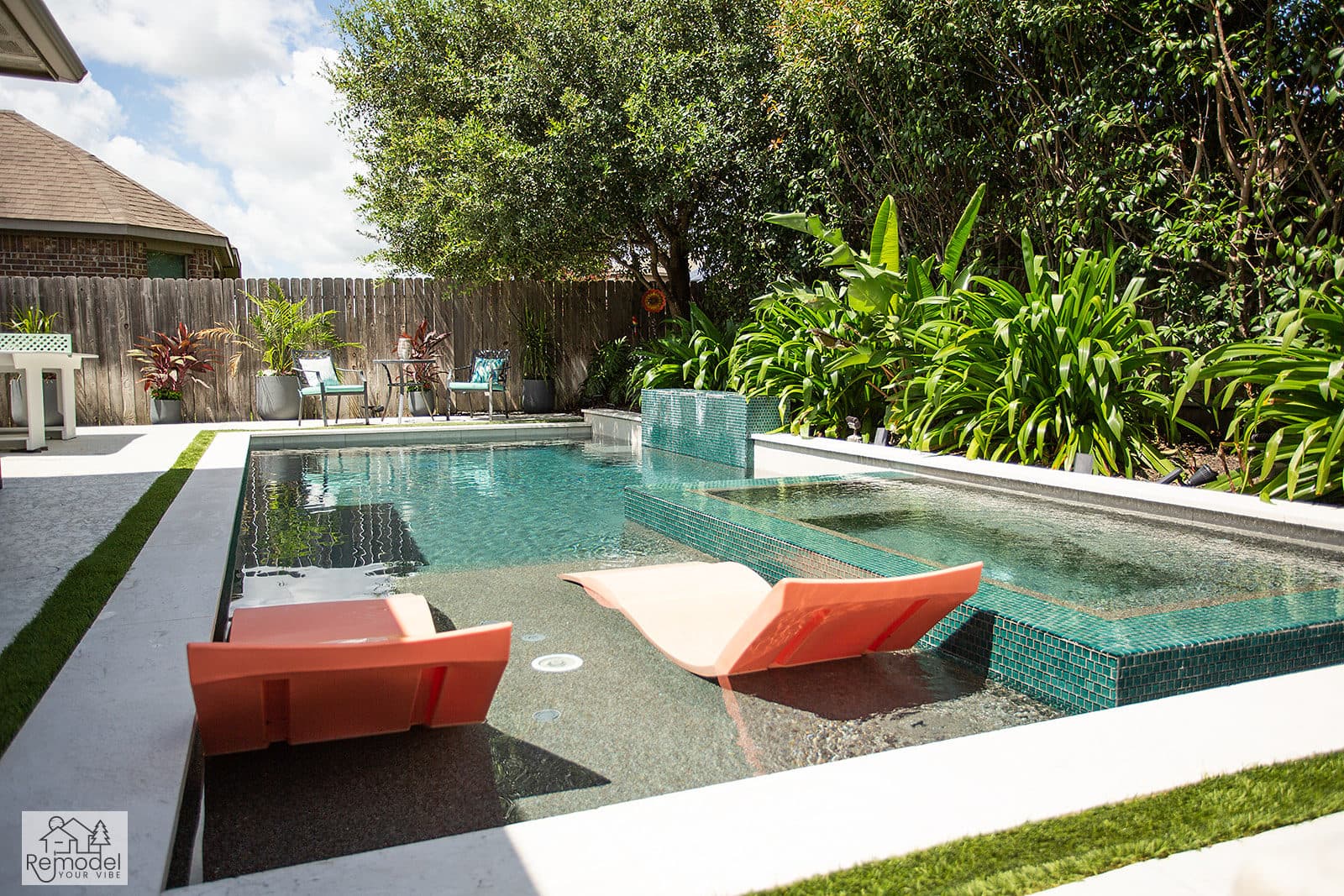
Pool & Spa Remodeling in San Gabriel
New pools, spa additions, replastering, tile and coping, and full pool remodels. Designed, permitted and built by our own crews.
Pool & Spa Remodeling built for San Gabriel properties
San Gabriel counts its history from 1771, when Mission San Gabriel Arcángel was founded, and the mission still stands on Mission Drive, across from City Hall, in the district that bears its name. The residential tracts belong to a later era: the city's 2024 historic resources survey found Rosemont Park and Country Club Crest built mostly in the 1920s and 1930s, many of the houses in Spanish Colonial Revival and Tudor Revival dress. Backyard plans here answer to specific zoning limits, among them a 35 percent lot coverage cap that counts patios, decks and pool equipment rooms alongside the house, a 200 square foot ceiling on pool houses, and protected Class 1 trees that can decide where a pool or ADU may go. That rewards restraint, with hardscape placed only where it earns its share of the coverage and planting left to do the rest.
In the R-1 single-family zone, newly created lots must be at least 7,260 square feet and 50 feet wide (55 feet on a corner), and lot coverage is capped at 35 percent of net lot area, a figure that counts the house, covered and uncovered patios, raised and at-grade decks, paved surfaces wider than 42 inches other than required driveways, gazebos and pool equipment rooms. Rear yards must be at least 25 feet deep, a detached accessory building may cover no more than half of that yard, and a pool house or any other accessory building besides a garage is limited to 200 square feet, with ADUs governed by their own rules.
We are a design-build team, which means the people who draw your project are the people who build it. Design, engineering, permits and construction run through one project manager and our own crews, so nothing gets lost in a handoff between a salesperson and a subcontractor. We are licensed, bonded and insured, CSLB license #1119054.
Permits in San Gabriel: Building permits are issued by the Building and Safety Division of the Community Development Department at City Hall, 425 South Mission Drive, and Planning Division approval usually comes first: a new house or a second-story addition to a one-story house goes to the Design Review Commission for Site Plan Review, while first-floor additions and ADUs are reviewed by Planning staff. Removing a mature Class 1 tree, or cutting away more than a third of its live foliage, requires a Tree Removal/Trimming Permit that the Community Development Director may grant only on specific findings. Under the 2017 Historic Preservation and Cultural Resource Ordinance, alterations to properties on the city's Register need an initial review for historic appropriateness, new construction inside a Register-listed historic district goes to the Historic Preservation and Cultural Resource Commission, and a permit to demolish a building 45 or more years old is generally referred to the Community Development Director for a preliminary determination of whether it meets criteria for historic designation.
Permit details checked September 2026 against San Gabriel Municipal Code. Rules change, so we confirm them again for your parcel.
What We Build
- Lot coverage planning for patios, decks and equipment rooms
- Design Review Commission packages for second-story work
- Class 1 tree permits and root-zone protection
- Additions detailed to match period architecture
- Historic initial review for Register-listed properties
- New gunite pool and spa construction
- Full pool remodels and replastering
- Pebble, quartz and plaster interior finishes
- Waterline tile and coping replacement
- Raised and attached spas with spillways
- Baja shelves, benches and sun ledges
- Water features, fire bowls and sheer descents
- Equipment upgrades, heaters and automation
- Pool decking in pavers, concrete or travertine
- LED lighting and salt-water conversions
Local Conditions
What building in San Gabriel actually involves
Every city in Southern California builds differently. These are the things that change the scope, the schedule or the budget on San Gabriel projects.
Class 1 trees, a list that includes oaks, sycamores, camphors and jacarandas, are protected once mature: on a single-family lot that means a trunk over 30 inches in circumference, measured four feet above natural grade, in a side or rear yard, or over 19 inches in a front yard. Removing one needs a permit granted only on specific findings, so a pool or ADU footprint is best planned around existing canopy from the start.
A house of more than one story is held to a floor area ratio of 0.35, its second floor must be 25 percent smaller than its first, and the upper story has to fit within angled planes drawn from the front, side and rear property lines, with no second-story wall running more than 25 feet without an offset or articulation.
A detached ADU may reach 850 square feet as a studio or one-bedroom, or 1,000 square feet with two bedrooms, must sit at least four feet from side and rear lot lines and is generally limited to 16 feet in height, and only its area above 800 square feet counts toward lot coverage.
The zoning code requires an addition to reflect the existing house's materials, textures, doors and windows, and in Rosemont Park, where the city's 2024 historic resources survey dates most houses to 1924 through 1939, that means carrying period detailing into any new room.
Investment
What this costs in San Gabriel
Real Southern California ranges, not a teaser number. Every project is priced line by line after we have seen the site.
New pool construction
$70,000 to $150,000+
What moves it: size and shape, spa, water and fire features, decking material, automation, and how much access and grading the site needs
Pool remodel and resurfacing
$15,000 to $45,000
What moves it: finish choice (plaster versus pebble or quartz), tile and coping replacement, new equipment, and whether the deck is being replaced at the same time
Paver patio and hardscape
from about $13,000
What moves it: square footage, paver type, base preparation, drainage, and any steps or retaining involved
Your number depends on your lot, your access and your finishes. We walk the site, then price every line so you can see exactly where the budget goes.
Get a line-item price for your San Gabriel propertyHow We Build
Your San Gabriel project, step by step
Site Review
We walk the property, check access, soil and slope, and confirm what the yard can actually take.
Design & 3D
You see the pool in 3D before anything is dug, with finishes, tile and decking chosen.
Plans & Permits
We draw the plans, handle engineering where the site needs it, and pull the permits. In San Gabriel that submittal goes to City of San Gabriel Community Development Department, Building and Safety Division.
Excavation & Shell
Dig, steel, plumbing and gunite. This is where site access and grading matter most.
Finishes
Tile, coping, decking and your chosen interior finish go in.
Startup & Handover
We fill, balance the water, commission the equipment and walk you through every control.
San Gabriel Questions
Common questions from San Gabriel homeowners
Who issues the permits for this work in San Gabriel?
City of San Gabriel Community Development Department, Building and Safety Division. Building permits are issued by the Building and Safety Division of the Community Development Department at City Hall, 425 South Mission Drive, and Planning Division approval usually comes first: a new house or a second-story addition to a one-story house goes to the Design Review Commission for Site Plan Review, while first-floor additions and ADUs are reviewed by Planning staff. Removing a mature Class 1 tree, or cutting away more than a third of its live foliage, requires a Tree Removal/Trimming Permit that the Community Development Director may grant only on specific findings. Under the 2017 Historic Preservation and Cultural Resource Ordinance, alterations to properties on the city's Register need an initial review for historic appropriateness, new construction inside a Register-listed historic district goes to the Historic Preservation and Cultural Resource Commission, and a permit to demolish a building 45 or more years old is generally referred to the Community Development Director for a preliminary determination of whether it meets criteria for historic designation. We prepare the drawings, make the submittal and handle plan-check corrections ourselves, so you are not the one chasing plan check.
What makes building in San Gabriel different?
In the R-1 single-family zone, newly created lots must be at least 7,260 square feet and 50 feet wide (55 feet on a corner), and lot coverage is capped at 35 percent of net lot area, a figure that counts the house, covered and uncovered patios, raised and at-grade decks, paved surfaces wider than 42 inches other than required driveways, gazebos and pool equipment rooms. Rear yards must be at least 25 feet deep, a detached accessory building may cover no more than half of that yard, and a pool house or any other accessory building besides a garage is limited to 200 square feet, with ADUs governed by their own rules. One local condition that shapes the work: Class 1 trees, a list that includes oaks, sycamores, camphors and jacarandas, are protected once mature: on a single-family lot that means a trunk over 30 inches in circumference, measured four feet above natural grade, in a side or rear yard, or over 19 inches in a front yard. Removing one needs a permit granted only on specific findings, so a pool or ADU footprint is best planned around existing canopy from the start.
Which parts of San Gabriel do you work in?
All of it, including Mission District, Rosemont Park, Country Club Crest and Old Mill Vista. Our crews run every job out of our Cahuenga Pass base in Los Angeles, with our own people on site.
What does a pool or spa project cost in San Gabriel?
New pool construction: generally $70,000 to $150,000+ across Southern California. What moves it is size and shape, spa, water and fire features, decking material, automation, and how much access and grading the site needs. We give line-item pricing after seeing the site rather than quoting a number over the phone.
How long does a pool remodel take?
A straightforward replaster with new tile and coping usually runs three to five weeks. A full remodel that includes new decking, equipment and features typically runs eight to twelve weeks. Site access and permit timing are the two things that move that most.
How long does a new pool take to build?
Most new pool builds run about three to five months from permit to first swim. Hillside sites that need engineered retaining or difficult access sit at the longer end of that range.
Should I replaster or fully remodel?
If the shell and plumbing are sound and you only dislike the surface, replastering with new tile and coping is the efficient choice. If the equipment is aging, the deck is cracked or the shape no longer suits how you use the yard, a full remodel costs less than doing it in two separate phases.
Do you self-perform the work?
Yes. Our own crews handle the build rather than passing it to a rotating set of subs, which is why the schedule and the finish standard stay consistent.
More services in San Gabriel
San Gabriel Guides
Planning guides for San Gabriel homeowners
Costs, materials and process notes from our own projects.
Building a Pool in Northridge: Costs, Soil and the LADBS Process
A new pool in Northridge typically runs $85,000 to $165,000 all-in with decking and equipment. The tract lots are generous, the soil is workable, and the real variables are access, spa and deck square footage.
Read guideVan Nuys Pool and Backyard Guide: Costs on the Valley Floor
A new pool in Van Nuys runs $75,000 to $145,000, and a pool-plus-backyard package $110,000 to $220,000. Flat lots keep excavation honest; older service panels and gas meters are where budgets slip.
Read guideTravertine vs Porcelain Pavers: The Honest Comparison for SoCal Yards
Travertine installs at roughly $22 to $30 per square foot, porcelain at $24 to $34. The real difference is heat, staining and how each one handles a chlorinated pool deck over ten years.
Read guidePool Coping Compared: Cast Concrete, Natural Stone and Porcelain
Coping runs $28 to $55 per lineal foot in concrete, $55 to $110 in natural stone and $60 to $120 in porcelain. On an average pool perimeter that is a $2,500 to $11,000 decision.
Read guidePlanning a pool or spa project in San Gabriel?
Sit down with your project manager, go through the details, and get an accurate estimate for your property. We call you back within one business day.
Licensed, bonded & insured · CSLB license #1119054