
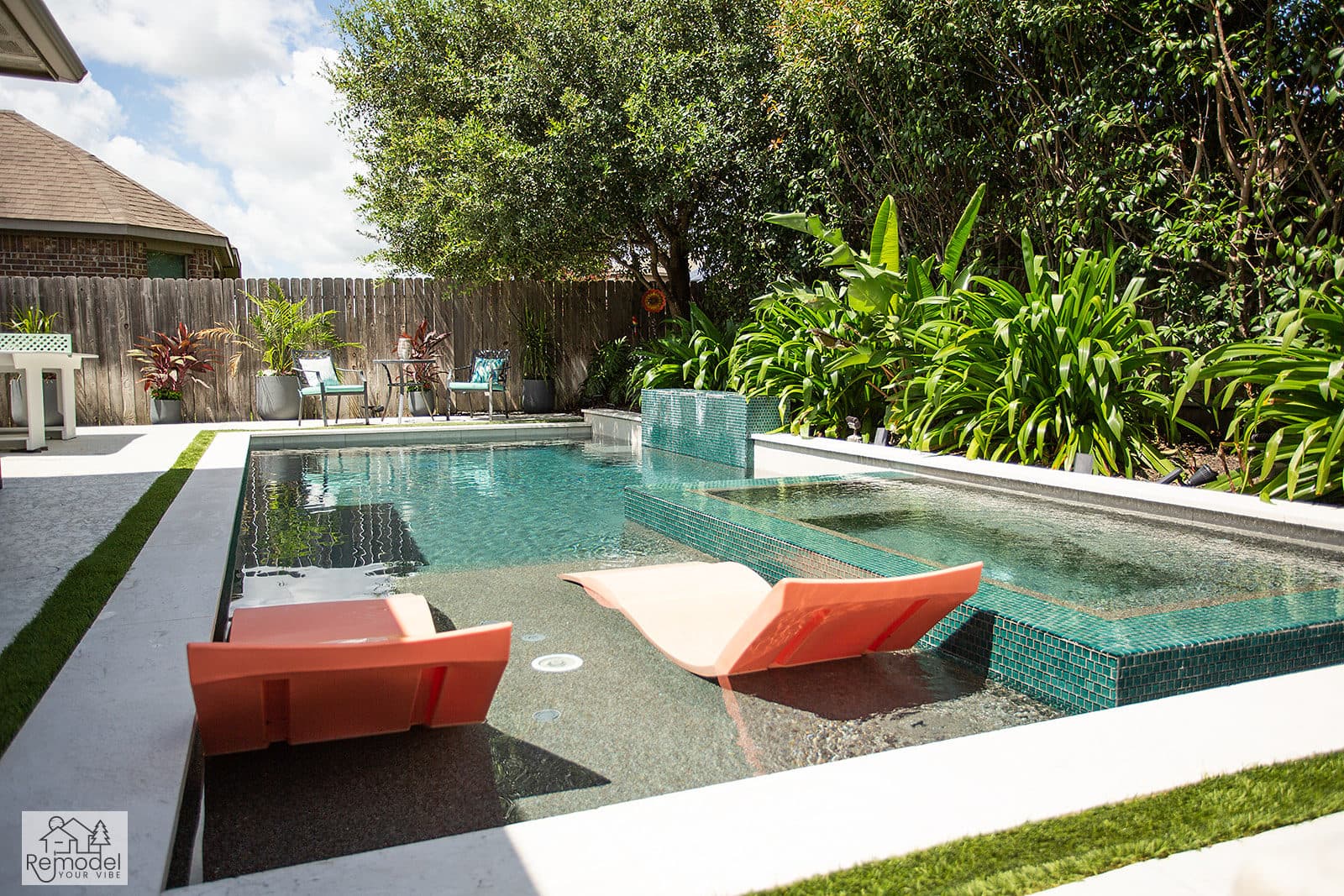
Pool & Spa Remodeling in Santa Ana
New pools, spa additions, replastering, tile and coping, and full pool remodels. Designed, permitted and built by our own crews.
Pool & Spa Remodeling built for Santa Ana properties
Santa Ana keeps much of its history on its residential streets. Heninger Park, just south of the Civic Center, is significant above all for its wide range of Craftsman and California Bungalow styles, French Park holds its own SD-19 zoning protection and a National Register listing from 1999, and Floral Park joined the National Register in 2023. Citywide, the Safety Element identifies the majority of Santa Ana as susceptible to liquefaction, so the soil beneath a pool or ADU matters from the first sketch. Two further checks, the parcel's FEMA flood zone and whether the house is a historic property or sits in a historic district, decide whether a pool or patio cover can clear same-day counter plan check or has to go through regular review.
The Heninger Park design guidelines describe the common residential site configurations in Santa Ana as prominent entries facing the street, front porches, ample front yards and detached garages located toward the rear of the property. Heninger Park itself, bounded by First Street, Sycamore Street, McFadden Avenue and Flower Street, has little vacant land for new infill, and the guidelines call rear additions almost always appropriate when they meet the SD-40 development standards. New garages and accessory structures there should be detached, placed at the rear of the residence and kept out of view from the street, and the Hollywood driveway, two parallel paved strips separated by turf or gravel, is the preferred design.
We are a design-build team, which means the people who draw your project are the people who build it. Design, engineering, permits and construction run through one project manager and our own crews, so nothing gets lost in a handoff between a salesperson and a subcontractor. We are licensed, bonded and insured, CSLB license #1119054.
Permits in Santa Ana: Plan review, permits and inspections run through the Building Safety Division of the Planning and Building Agency. For single-family homes and duplexes, swimming pools and spas, patio covers and enclosures, one-story room additions up to 500 square feet, garage-to-ADU conversions and ADUs built from the city's pre-approved plans qualify for over-the-counter plan check, with plans reviewed the same day as the permit application, but only when the project is not subject to FEMA Flood Zone A or AE requirements and does not involve a historic property or district. Any improvement or alteration to a property on the Santa Ana Register of Historic Properties, or to a contributing property in a historic district, must meet the Secretary of the Interior's Standards for Rehabilitation and requires a Certificate of Appropriateness, and since July 2026 the Planning Commission has served as the city's hearing body for the historic preservation matters previously considered by the Historic Resources Commission. In Heninger Park, the SD-40 zoning district, the neighborhood's architectural design guidelines require Planning Commission approval for residential additions and new accessory structures.
Permit details checked September 2026 against City of Santa Ana. Rules change, so we confirm them again for your parcel.
What We Build
- Certificate of Appropriateness packages
- Soils-first pool shell and ADU foundations
- FEMA flood zone screening before plan check
- Same-day counter plan check for pools and patio covers
- Detached rear-yard garages in Heninger Park
- New gunite pool and spa construction
- Full pool remodels and replastering
- Pebble, quartz and plaster interior finishes
- Waterline tile and coping replacement
- Raised and attached spas with spillways
- Baja shelves, benches and sun ledges
- Water features, fire bowls and sheer descents
- Equipment upgrades, heaters and automation
- Pool decking in pavers, concrete or travertine
- LED lighting and salt-water conversions
Local Conditions
What building in Santa Ana actually involves
Every city in Southern California builds differently. These are the things that change the scope, the schedule or the budget on Santa Ana projects.
No known active fault runs through Santa Ana, but the General Plan Safety Element warns that shaking from nearby faults could still cause significant damage and identifies the majority of the city as susceptible to liquefaction. The California Building Code's soils and foundation standards are how new construction answers that risk, which puts site soils near the front of any pool shell, addition or ADU scope.
An interconnected system of channels and basins, with the Orange County Flood Control District responsible for regional flood control, has largely mitigated flood risk in the city. New structures in or near a 100-year floodplain must still be sited and designed to be flood resistant, and a parcel subject to FEMA Flood Zone A or AE requirements loses access to over-the-counter plan check.
Among its environmental justice actions, the Safety Element commits the city to working with state, county and regional partners to understand lead contamination of soil across Santa Ana and to remove, cover or remediate hazardous lead-contaminated soils, a point worth raising before a pool excavation or foundation dig sends soil off site.
Investment
What this costs in Santa Ana
Real Southern California ranges, not a teaser number. Every project is priced line by line after we have seen the site.
New pool construction
$70,000 to $150,000+
What moves it: size and shape, spa, water and fire features, decking material, automation, and how much access and grading the site needs
Pool remodel and resurfacing
$15,000 to $45,000
What moves it: finish choice (plaster versus pebble or quartz), tile and coping replacement, new equipment, and whether the deck is being replaced at the same time
Paver patio and hardscape
from about $13,000
What moves it: square footage, paver type, base preparation, drainage, and any steps or retaining involved
Your number depends on your lot, your access and your finishes. We walk the site, then price every line so you can see exactly where the budget goes.
Get a line-item price for your Santa Ana propertyHow We Build
Your Santa Ana project, step by step
Site Review
We walk the property, check access, soil and slope, and confirm what the yard can actually take.
Design & 3D
You see the pool in 3D before anything is dug, with finishes, tile and decking chosen.
Plans & Permits
We draw the plans, handle engineering where the site needs it, and pull the permits. In Santa Ana that submittal goes to City of Santa Ana Planning and Building Agency, Building Safety Division.
Excavation & Shell
Dig, steel, plumbing and gunite. This is where site access and grading matter most.
Finishes
Tile, coping, decking and your chosen interior finish go in.
Startup & Handover
We fill, balance the water, commission the equipment and walk you through every control.
Santa Ana Questions
Common questions from Santa Ana homeowners
Who issues the permits for this work in Santa Ana?
City of Santa Ana Planning and Building Agency, Building Safety Division. Plan review, permits and inspections run through the Building Safety Division of the Planning and Building Agency. For single-family homes and duplexes, swimming pools and spas, patio covers and enclosures, one-story room additions up to 500 square feet, garage-to-ADU conversions and ADUs built from the city's pre-approved plans qualify for over-the-counter plan check, with plans reviewed the same day as the permit application, but only when the project is not subject to FEMA Flood Zone A or AE requirements and does not involve a historic property or district. Any improvement or alteration to a property on the Santa Ana Register of Historic Properties, or to a contributing property in a historic district, must meet the Secretary of the Interior's Standards for Rehabilitation and requires a Certificate of Appropriateness, and since July 2026 the Planning Commission has served as the city's hearing body for the historic preservation matters previously considered by the Historic Resources Commission. In Heninger Park, the SD-40 zoning district, the neighborhood's architectural design guidelines require Planning Commission approval for residential additions and new accessory structures. We prepare the drawings, make the submittal and handle plan-check corrections ourselves, so you are not the one chasing plan check.
What makes building in Santa Ana different?
The Heninger Park design guidelines describe the common residential site configurations in Santa Ana as prominent entries facing the street, front porches, ample front yards and detached garages located toward the rear of the property. Heninger Park itself, bounded by First Street, Sycamore Street, McFadden Avenue and Flower Street, has little vacant land for new infill, and the guidelines call rear additions almost always appropriate when they meet the SD-40 development standards. New garages and accessory structures there should be detached, placed at the rear of the residence and kept out of view from the street, and the Hollywood driveway, two parallel paved strips separated by turf or gravel, is the preferred design. One local condition that shapes the work: No known active fault runs through Santa Ana, but the General Plan Safety Element warns that shaking from nearby faults could still cause significant damage and identifies the majority of the city as susceptible to liquefaction. The California Building Code's soils and foundation standards are how new construction answers that risk, which puts site soils near the front of any pool shell, addition or ADU scope.
Which parts of Santa Ana do you work in?
All of it, including Floral Park, Historic French Park, Heninger Park and Park Santiago. Our crews run every job out of our Cahuenga Pass base in Los Angeles, with our own people on site.
What does a pool or spa project cost in Santa Ana?
New pool construction: generally $70,000 to $150,000+ across Southern California. What moves it is size and shape, spa, water and fire features, decking material, automation, and how much access and grading the site needs. We give line-item pricing after seeing the site rather than quoting a number over the phone.
How long does a pool remodel take?
A straightforward replaster with new tile and coping usually runs three to five weeks. A full remodel that includes new decking, equipment and features typically runs eight to twelve weeks. Site access and permit timing are the two things that move that most.
How long does a new pool take to build?
Most new pool builds run about three to five months from permit to first swim. Hillside sites that need engineered retaining or difficult access sit at the longer end of that range.
Should I replaster or fully remodel?
If the shell and plumbing are sound and you only dislike the surface, replastering with new tile and coping is the efficient choice. If the equipment is aging, the deck is cracked or the shape no longer suits how you use the yard, a full remodel costs less than doing it in two separate phases.
Do you self-perform the work?
Yes. Our own crews handle the build rather than passing it to a rotating set of subs, which is why the schedule and the finish standard stay consistent.
More services in Santa Ana
Santa Ana Guides
Planning guides for Santa Ana homeowners
Costs, materials and process notes from our own projects.
Building a Pool in Northridge: Costs, Soil and the LADBS Process
A new pool in Northridge typically runs $85,000 to $165,000 all-in with decking and equipment. The tract lots are generous, the soil is workable, and the real variables are access, spa and deck square footage.
Read guideVan Nuys Pool and Backyard Guide: Costs on the Valley Floor
A new pool in Van Nuys runs $75,000 to $145,000, and a pool-plus-backyard package $110,000 to $220,000. Flat lots keep excavation honest; older service panels and gas meters are where budgets slip.
Read guideTravertine vs Porcelain Pavers: The Honest Comparison for SoCal Yards
Travertine installs at roughly $22 to $30 per square foot, porcelain at $24 to $34. The real difference is heat, staining and how each one handles a chlorinated pool deck over ten years.
Read guidePool Coping Compared: Cast Concrete, Natural Stone and Porcelain
Coping runs $28 to $55 per lineal foot in concrete, $55 to $110 in natural stone and $60 to $120 in porcelain. On an average pool perimeter that is a $2,500 to $11,000 decision.
Read guidePlanning a pool or spa project in Santa Ana?
Sit down with your project manager, go through the details, and get an accurate estimate for your property. We call you back within one business day.
Licensed, bonded & insured · CSLB license #1119054