
Check three documents before anything else: the CSLB licence record, the workers' compensation certificate, and the general liability certificate issued directly by the insurer. A full backyard transformation in Southern California costs $50,000 to $250,000 or more and touches concrete, masonry, electrical, plumbing, low-voltage and landscape trades. That is a general contracting job, which means a B General Building licence, or a specialty licence for each trade being self-performed. Most disputes we get called into afterwards trace back to one of three things: an unverified licence, a deposit that broke state law, or a contract with no schedule of values.
Licence, Insurance, and Who Is Actually Building
Pull the record at cslb.ca.gov. For a multi-trade backyard you want a B General Building licence, ideally alongside specialty classifications the company self-performs: C-27 landscaping, C-8 concrete, C-29 masonry, C-53 pools, C-10 electrical. Confirm active status, the $25,000 bond, and workers' comp. Then ask the harder question: who swings the hammer. Some companies are sales offices that broker every trade to whoever is cheapest that month. Ask which crews are W-2 employees, and for the subs, ask for their licence numbers so you can check them too. Request a certificate of general liability at $1,000,000 per occurrence and $2,000,000 aggregate. If a sub without workers' comp is injured in your yard, your homeowner's policy becomes the target.
Pro Tip
Check each subcontractor's licence number as well as the general contractor's. It takes two minutes each.
Red Flags in Backyard Bids
A one-page bid with a single number and the word turnkey. A deposit request above $1,000 or 10% of the contract, whichever is less, which California law prohibits. No demolition and haul-off quantity for a yard that currently has 900 square feet of cracked concrete. No drainage line item on a sloping Studio City or La Cañada Flintridge lot, where surface water has to be captured and routed to a legal point of discharge. Turf, pavers and pergola all priced as allowances with no square footage. A start date but no substantial completion date, which a home improvement contract is required to carry. And the classic: pressure to sign today for a price that expires tonight. Real schedules are booked weeks out and real pricing survives a weekend.
Pro Tip
If a bid has no square-foot quantities, you cannot compare it to any other bid. Ask for them in writing.
Ready to Start Your Project?
Schedule a free consultation with our design team.
What a Real Backyard Proposal Contains
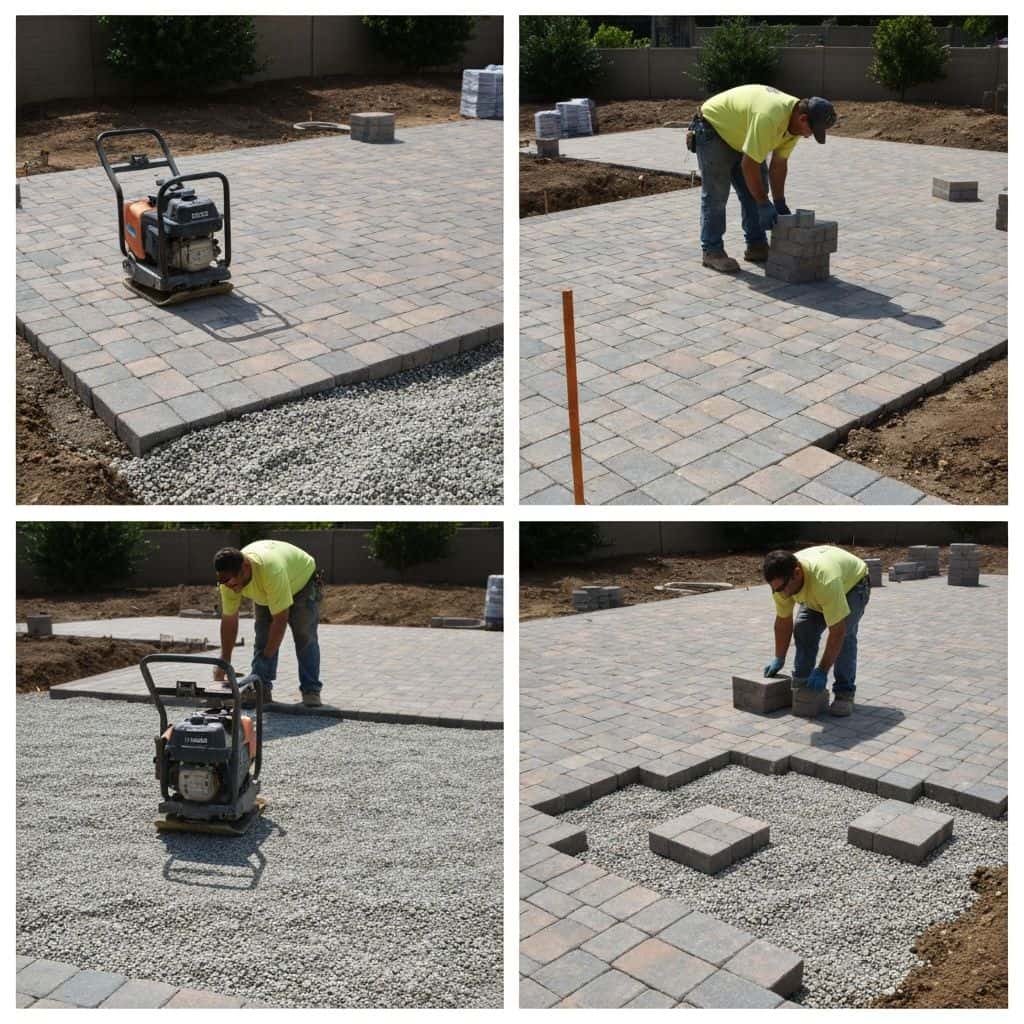
A schedule of values, trade by trade, with quantities. Demolition with tonnage or truck loads. Grading and drainage with linear feet of pipe and the discharge point. Hardscape at square footage and unit price, roughly $18-$32 per square foot installed for pavers depending on paver and base depth. Artificial turf at $12-$20 per square foot. Retaining walls priced per face foot, typically $60-$150 depending on height, material and whether engineering is required over four feet. Outdoor kitchen from $10,000-$15,000 for a basic island to $30,000-$50,000 for a full cook suite. Pergola from about $9,500 in wood, $18,000-$40,000 for aluminium louvered by span. Landscape lighting $3,000-$12,000. Then permits, engineering, and a payment schedule tied to milestones.
Pro Tip
Ask which items require permits. Structures over 120 square feet, retaining walls over four feet, gas and electrical usually do.
Contract Terms and Questions to Ask
A California home improvement contract over $500 must be in writing and must show the contractor's name, address and licence number, the approximate start and completion dates, a description of the work and materials, the schedule of payments, the three-day right to cancel, and the mechanics lien warning. If any of that is missing, the contract is defective. Ask: is the payment schedule tied to completed milestones. Will I receive conditional lien waivers with each progress payment and unconditional waivers at final. What is the change order process, and is it in writing before work proceeds. Who is my single point of contact and how often will I get an update. What is your workmanship warranty in years, and what is excluded. Finally, ask for three addresses in my city where you built and whether I can drive by.
Pro Tip
Hold a final retention until you have unconditional lien waivers from every subcontractor and supplier.
Final Thoughts
The homeowners who avoid trouble all do the same boring things: check the licence on the CSLB site, keep the deposit legal, insist on a schedule of values with quantities, and pay against milestones with lien waivers in hand. RYV self-performs backyard construction with our own crews from the Cahuenga Pass across Los Angeles, the South Bay and Orange County, and every proposal we issue is written to that standard.
Frequently Asked Questions
A B General Building licence for multi-trade work, ideally with specialty classifications for what they self-perform: C-27 landscaping, C-8 concrete, C-29 masonry, C-53 pools, C-10 electrical. Verify status, the $25,000 bond and workers' compensation coverage at cslb.ca.gov, and check the subcontractors' licences as well.
Written form for any job over $500, the contractor's name, address and licence number, approximate start and completion dates, a description of work and materials, the payment schedule, the three-day right to cancel, and the mechanics lien warning. Missing elements are a legitimate reason to pause and ask for a corrected contract.
Between $50,000 and $250,000 or more. A hardscape refresh with turf and lighting can land near $50,000 to $80,000. Add a pool, an outdoor kitchen, a louvered pergola and retaining walls and the same yard passes $200,000. Slope, access and drainage move the number more than finishes do.
Subcontractors and suppliers can record a mechanics lien against your property if the general contractor does not pay them, even if you paid the general in full. Collect a conditional waiver with each progress payment and an unconditional waiver at final from every sub and supplier who served a preliminary notice.