Grade the ground away from the house at a minimum of 2 percent, a quarter inch per foot, for the first ten feet. Pitch buried solid drain lines at 1 percent minimum and 2 percent wherever you can get it. And know where the water ends up before anyone digs. Those three decisions account for almost every backyard drainage failure we are called out to fix in Studio City, Calabasas and the Pasadena foothills. Whole-yard drainage on a 3,000 square foot backyard typically runs $8,000 to $25,000.
The slopes: what the numbers should be
Soil next to a structure should fall roughly 5 percent over the first ten feet away from the foundation, which is six inches of drop. Where hardscape replaces that soil, 2 percent, a quarter inch per foot, is the working minimum.
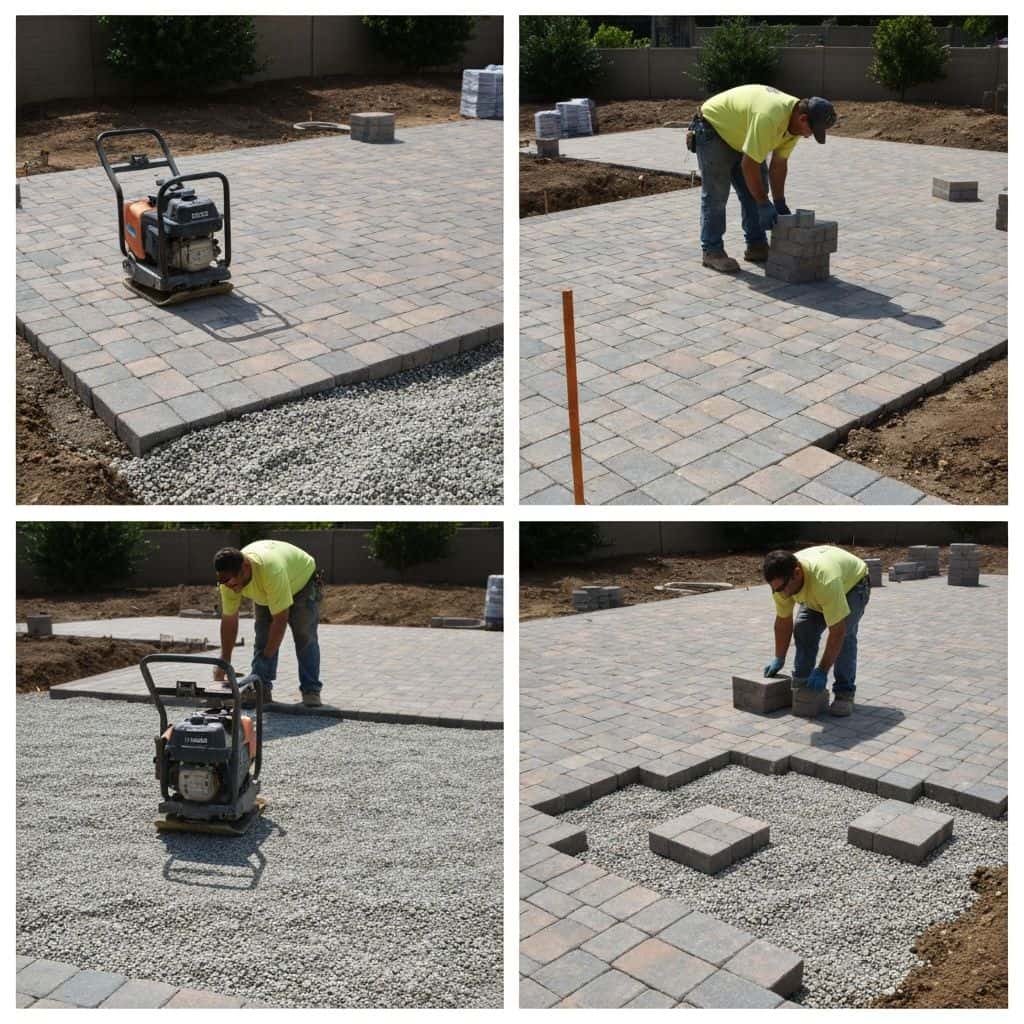
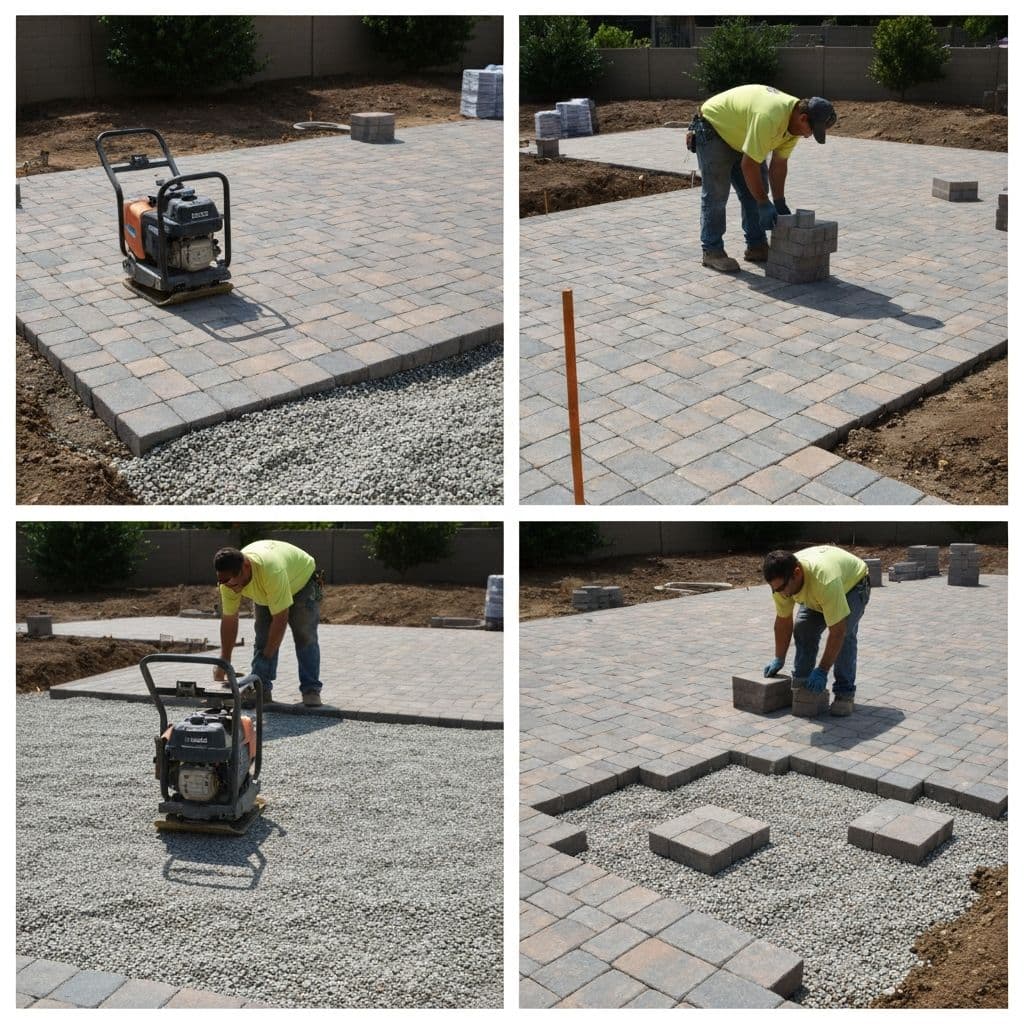
Paver and concrete patios: 1.5 to 2 percent is the target. Below 1 percent, surface tension and normal construction tolerance win and you get standing water after every wash-down.
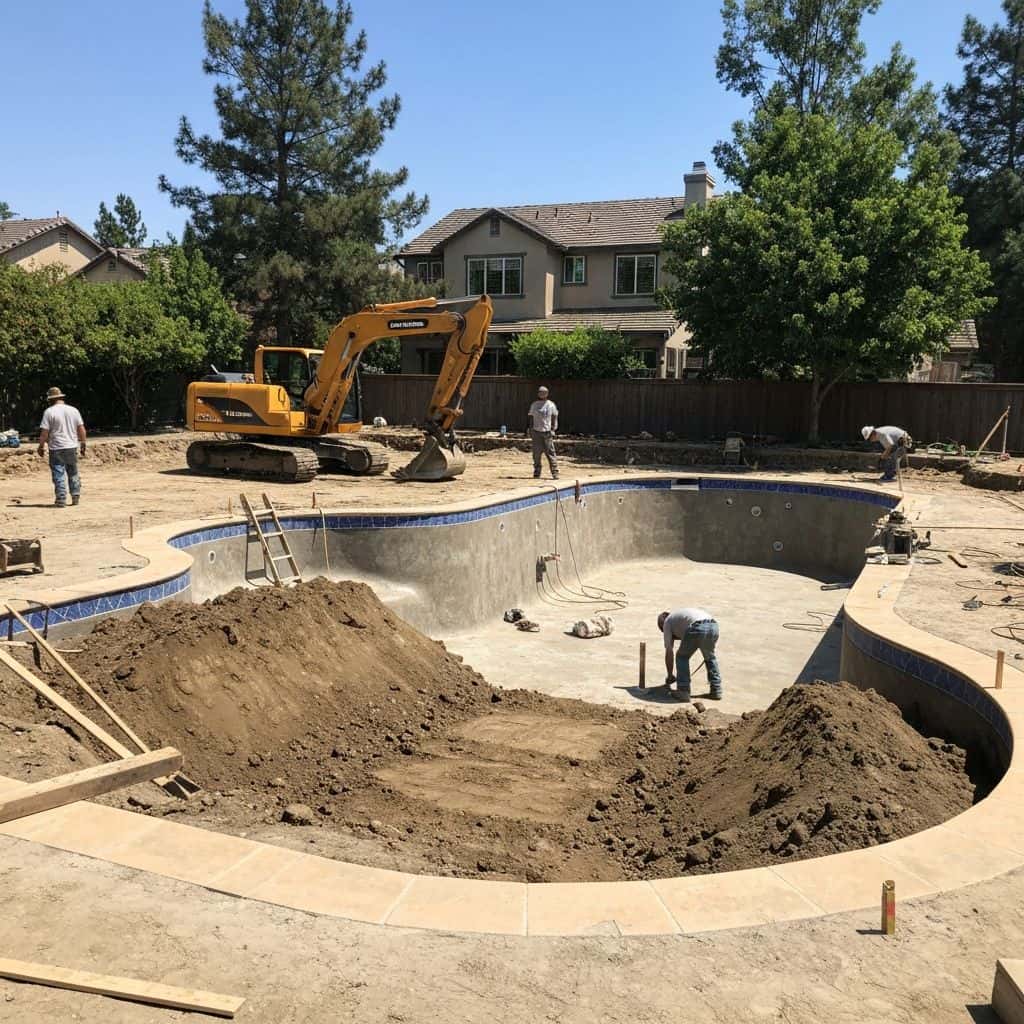
Pool decks: pitch away from the water at a quarter inch per foot to a deck drain or a sheet-flow edge, never back toward the coping.
Lawn and planting: 2 percent on swales, 1 percent as an absolute floor.
Buried solid pipe: 1 percent minimum, 2 percent preferred. Flat pipe silts up. A 60-foot run at 1 percent drops 7.2 inches, and that has to be found somewhere in the grade, which is why drainage must be laid out before finished elevations are locked.
Pro Tip
Set finished elevations for patios, thresholds and drains on paper before demolition. Retro-fitting fall into a finished yard is the expensive version.
Pipe, basins and the materials that hold up
Use solid SDR-35 or Schedule 40 PVC for main lines. Four inches for area drains and branch runs, six inches for trunk lines collecting several downspouts or more than roughly 2,500 square feet of contributing area.
Corrugated black pipe belongs almost nowhere in a permanent system. It is thin, it deflects under compacted base, and its ribbed interior traps sediment. Under a paver patio or a driveway it crushes.
Catch basins: 9 by 9 inch in planters, 12 by 12 inch at patio low points, always with a sediment sump below the outlet invert so grit drops out instead of travelling down the line. Add a cleanout at every direction change greater than 45 degrees and at roughly 100-foot intervals.
French drains: 4-inch perforated pipe, holes down, bedded in clean angular 3/4-inch rock, with the trench, not the pipe, wrapped in 4 to 6 ounce non-woven geotextile. Minimum 12 inches wide by 18 inches deep.
Ready to Start Your Project?
Schedule a free consultation with our design team.
The six failures we find most often
Downspouts discharging at the foundation. A 2,000 square foot roof sheds roughly 1,250 gallons in a one-inch rain. A splash block does not move that.
No fall in the pipe. The line was laid on the trench bottom, which followed existing ground instead of a set grade.
Sock-wrapped pipe in silty soil. The fabric blinds with fines within a few seasons and the drain simply stops working. Wrap the aggregate, not the pipe.
Corrugated pipe under hardscape. Crushed during base compaction and discovered years later when the patio ponds.
No outlet. The system collects water beautifully and delivers it to a pop-up emitter sitting in a low spot that never drains.
A patio set below surrounding grade with no sump. Sunken courtyards and below-grade fire pit lounges need a pumped basin with a check valve and a dedicated GFCI circuit, $2,500 to $5,500 installed. It is the only way water leaves.
Where the water is allowed to go
This is a jurisdictional question as much as a technical one. Many Southern California cities have adopted low-impact development requirements that make you retain or infiltrate the runoff generated by new impervious area rather than pipe it straight to the street. On a project adding a large patio, driveway or pool deck, that changes the design.
Options, roughly in order of preference:
Infiltration. A drywell or infiltration pit sized to the contributing roof or paved area, $2,500 to $7,000 installed. It needs soil that percolates, which the clays of Calabasas, Agoura Hills and parts of Chatsworth often are not.
Permeable pavers over an open-graded stone reservoir. The base doubles as storage, typically 6 to 18 inches of No. 2 and No. 57 stone depending on the volume required.
Curb-face outlet to the street where the city permits it.
On hillside lots, drainage is a slope-stability question and forms part of the review associated with Baseline Hillside Ordinance 184,802.
Costs and when the work has to happen
Installed pricing in the Los Angeles and Orange County market:
Four-inch solid line with catch basins, $28 to $55 per linear foot. French drain, $35 to $70 per linear foot. Drywell or infiltration pit, $2,500 to $7,000. Sump basin with pump and check valve, $2,500 to $5,500. Regrading and reshaping a yard, $3 to $8 per square foot. Tying and burying roof leaders, $600 to $1,800 per downspout depending on run length.
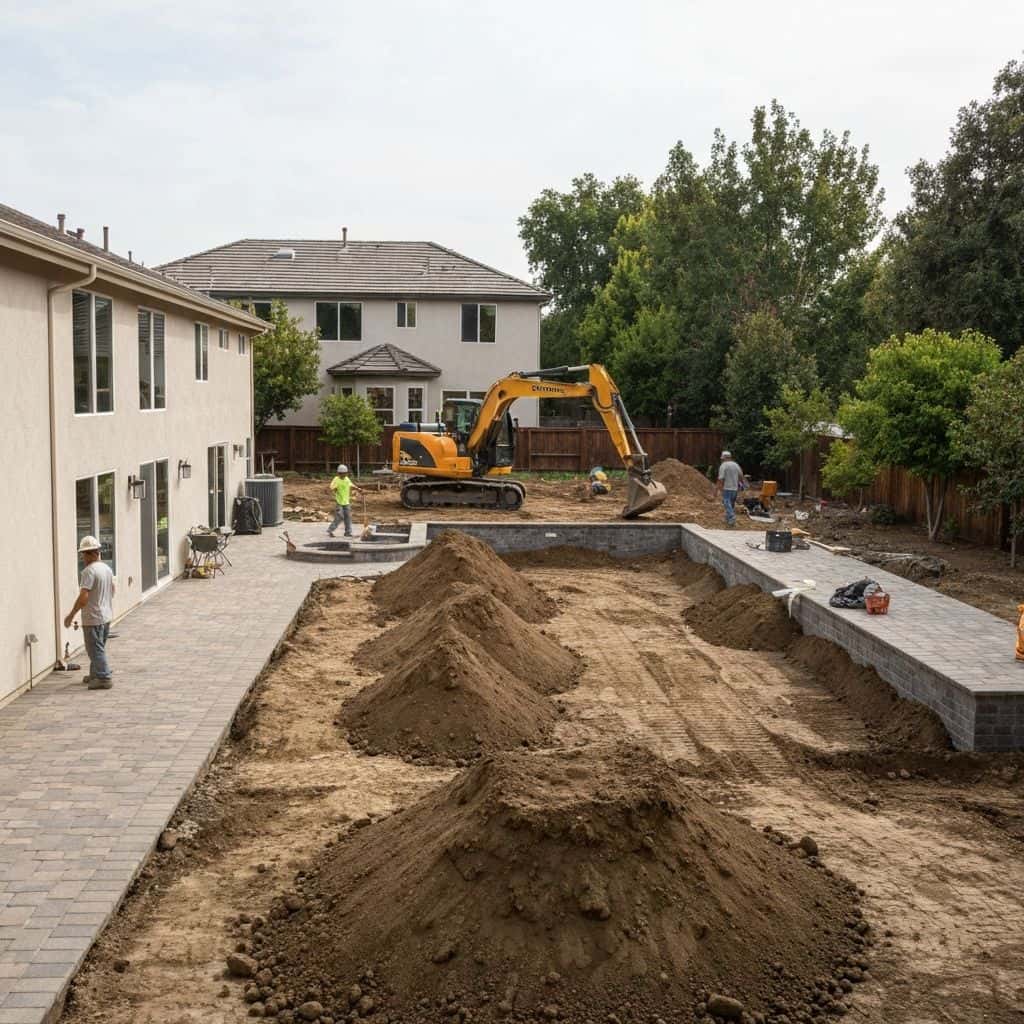
Sequencing matters more than pricing. Drainage goes in before base rock, before turf, before pavers and before the outdoor kitchen slab. Every sleeve, whether drainage, gas, electrical, low-voltage lighting or irrigation, is cheap in an open trench and expensive through a finished patio.
Before building over existing lines, camera them. Running a hose into an old area drain for twenty minutes tells you most of what you need to know for nothing.
Final Thoughts
Drainage is not an add-on line item. It sets the finished elevations of everything else in the yard and it has to be designed before demolition rather than repaired after the pavers are down. Two percent away from the house, one percent minimum in the pipe, solid PVC, real catch basins with sumps, and a legal outlet. Everything else is detail.
Frequently Asked Questions
Between 1.5 and 2 percent, which is roughly a quarter inch of fall per foot of run. On a 20-foot patio that is 4 to 5 inches of drop across the surface. Below 1 percent, normal construction tolerance and surface tension leave puddles. Slope always runs away from the house and away from pool coping.
Only for subsurface water in saturated soil, a wet slope, or seepage against a wall. Surface water from roofs and hardscape needs catch basins and solid pipe instead. Many yards need both: a French drain to intercept groundwater, and a piped surface system to carry roof and patio runoff to a legal outlet.
A complete system on a 3,000 square foot backyard usually falls between $8,000 and $25,000. Component pricing runs $28 to $55 per linear foot for solid line with catch basins, $35 to $70 for a French drain, $2,500 to $7,000 for a drywell, and $2,500 to $5,500 for a sump basin with pump.
It can, but it means cutting and resetting pavers or saw-cutting concrete, which typically doubles the cost of the same pipe run. This is why sleeves and drain lines go in during the excavation phase, before base rock is placed and compacted. Plan the drainage on the same drawing as the finished elevations.
Four usual causes. No fall in the pipe because the line followed the trench bottom. A catch basin without a sediment sump that has silted the outlet. A sock-wrapped pipe blinded by fines in silty soil. Or a blocked or non-existent outlet, so the system fills and has nowhere to discharge.