
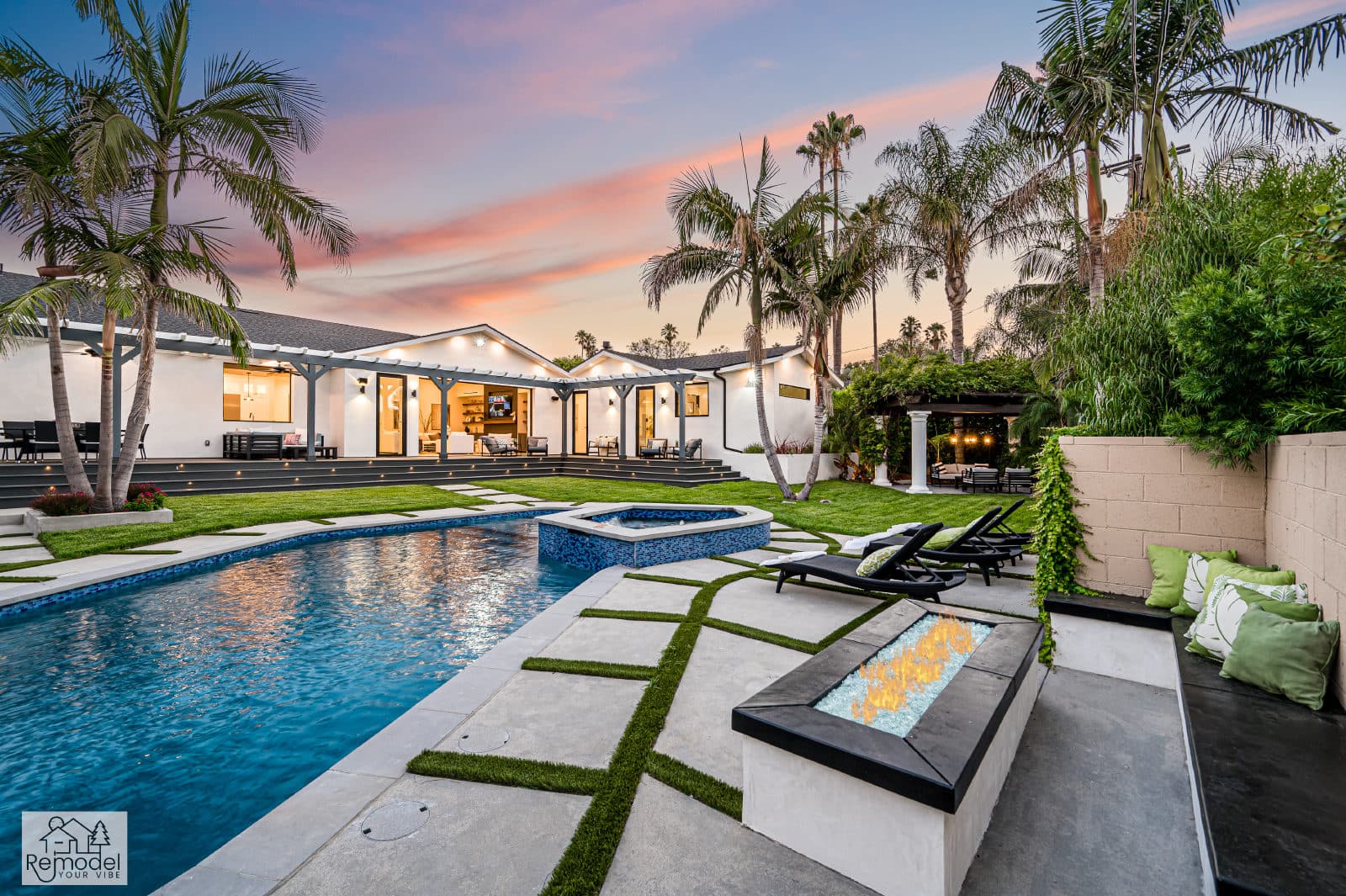
Luxury Remodeling in Brea
Design-build pools, backyards and ADUs in Brea, planned around hillside grading rules, fire zones and historic review.
Building in Brea
Pools, outdoor living and ADUs for Brea's flatland blocks and hillside lots.
Brea takes its name from the Spanish word for tar, plenty of which was found in the hills above town, and the city was founded as an oil community. Those hills, part of the Puente and Chino Hills, still form its backdrop and shape much of what can be built: density on hillside land is tied to average slope, a Hillside Zoning Ordinance governs grading and retaining walls, and new structures in the High and Very High Fire Hazard Severity Zones follow the city's wildland interface standards. The fire risk is concrete here, since the 2008 Freeway Complex Fire destroyed homes in Olinda Village along Carbon Canyon Road. Below the hills, the older blocks around City Hall Park keep a traditional street grid, and a house listed on the city's Historic Resources Register brings its own plan review for additions and exterior changes. Before a pool, backyard or ADU is drawn, it pays to know which of those settings the lot belongs to.
The historic core around City Hall Park still holds a traditional grid street pattern, while neighborhoods built from the 1960s through the 1990s are suburban, with curving streets and cul-de-sacs, and more compact, clustered development in the foothills was arranged largely to avoid environmentally constrained land. On land designated Hillside Residential, the General Plan caps density by average slope, from 2.2 units per acre on slopes of 10 percent or less down to one unit per 20 acres where the average slope exceeds 30 percent.
One team designs, permits and builds every project, and our own crews self-perform the work, so the people who plan your Brea project are the people on site building it.
Part of our service area in Orange County.
Local Conditions
What building in Brea involves
Permits in Brea
City of Brea Community and Economic Development Department, Building & Safety Division
Residential permits are issued by the Building & Safety Division at 1 Civic Center Circle, which accepts building permit applications through the city's online permit center and coordinates review among several city departments. Properties designated Hillside Residential are subject to the city's Hillside Zoning Ordinance, which sets standards for density on slopes, ridgeline preservation, grading and retaining walls, and all new structures in the High and Very High Fire Hazard Severity Zones must meet the city's wildland interface construction standards, with examples including automatic fire sprinklers, Class A roof coverings, one-hour fire-rated exterior walls, spark arrestors on chimneys and site landscape fuel modification. For a resource listed on the city's Historic Resources Register, minor exterior alterations, including remodeling and additions, require a plan review, and the Planning Commission reviews any major alteration at a public hearing.
Permit details checked September 2026 against City of Brea. Rules change, so we confirm them again for your parcel.
What we plan for here
- Hillside Zoning Ordinance grading and retaining wall review
- Wildland interface construction and fuel modification planning
- Fault zone, liquefaction and landslide geotechnical studies
- Oil well and methane record checks before excavation
- Historic Resources Register plan review
The city's General Plan Public Safety Element describes many hillside areas as highly unstable, citing steep topography, fractured and unconsolidated bedrock, expansive soils and high erosion potential, and notes that Brea's hillsides have historically experienced many failures, so a hillside pool or terrace should begin with a geotechnical study.
The Whittier/Elsinore Fault cuts through the eastern half of the city in a northwesterly direction within a state-delineated Alquist-Priolo Earthquake Fault Zone, where the Act requires permits to be withheld until geologic investigations show a site is not threatened by surface displacement from future faulting, and liquefaction susceptibility is mapped along Tonner Canyon Creek, Brea Canyon and around the Carbon Canyon Dam.
Brea was founded as an oil community, and the Brea-Olinda oil field is one of the oldest producing regions in California; the city's oil fields still hold producing wells alongside many that have been closed and abandoned, and the Public Safety Element notes that oil seeps or methane concentrations at or near explosive limits can constrain development, so well records are worth checking before any excavation.
In the High and Very High Fire Hazard Severity Zones, the Brea Fire Department sets a fuel modification zone extending 200 feet beyond the construction boundary of any property where a new structure can be built, laid out as Zone A at 30 feet, Zone B at 100 feet and Zone C at 200 feet, so planting plans around any new structure there follow those zones.
Neighborhoods we work in
- Downtown Brea
- Olinda Ranch
- Tonner Hills
Brea Services
Everything we build in Brea
Each page covers permits, costs and the build process for that work in Brea.
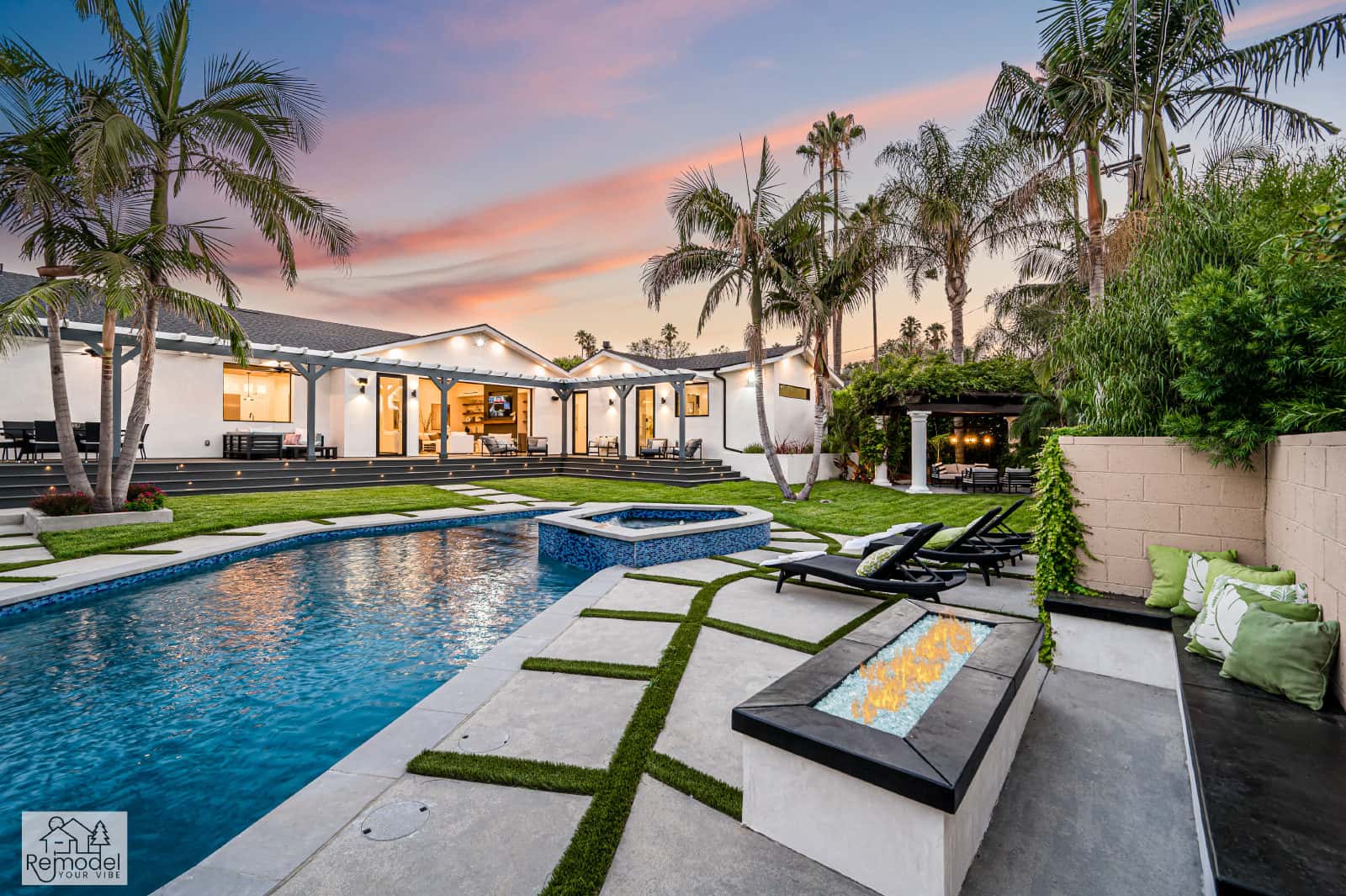
Pool & Spa Remodeling in Brea
We design and build pools and spas with our own crews, start to finish.
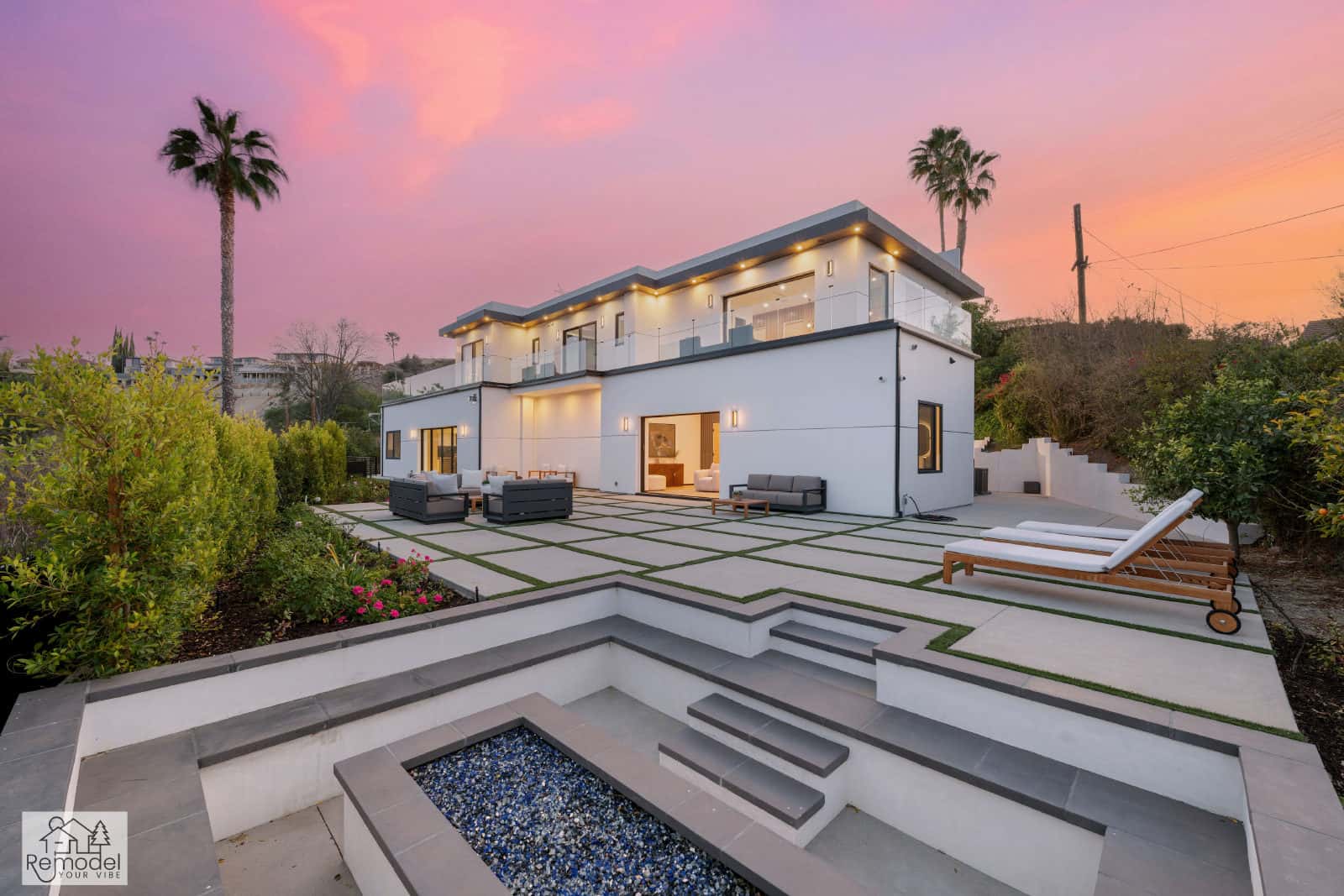
Backyard & Outdoor Living in Brea
Outdoor living, hardscape, and curb appeal, designed and built to outlast the SoCal sun.
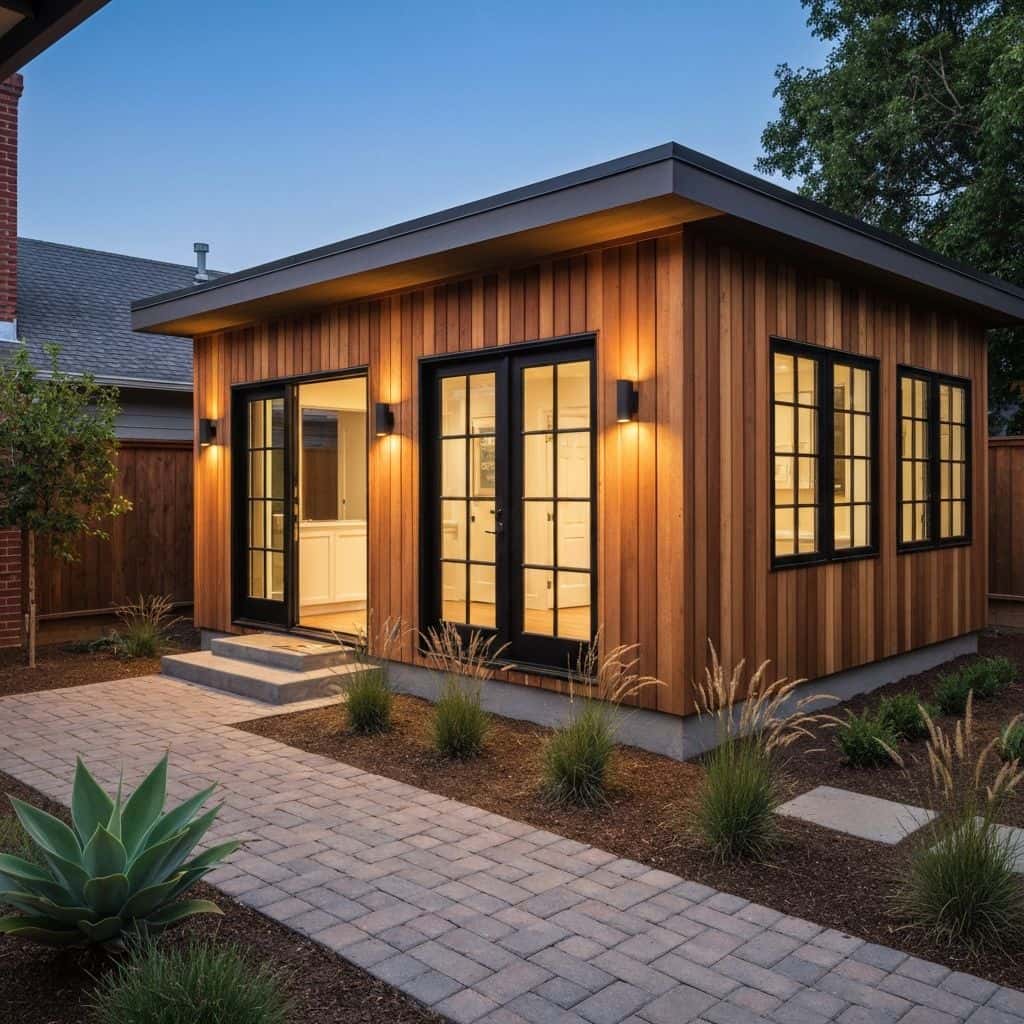
ADUs & Additions in Brea
We design, permit, and build ADUs and additions that actually add value.
Also available in Brea
Brea Guides
Remodeling guides for Brea
Local planning notes, costs and design direction for Brea homeowners.
ADU Cost Breakdown by Size in Los Angeles
A detached ADU in Los Angeles runs $150,000 to $400,000-plus. Here is the real cost broken down by unit size, with the soft costs, utility work and finish decisions that move the number.
Read guideADU Cost in California: Complete 2026 Breakdown
California ADU costs explained: garage conversions, detached ADUs, and attached additions. Understand permitting, construction, and total project costs.
Read guideWhole-Home Remodel Sequencing: What to Do First
A whole-home remodel done in the wrong order costs 15 to 25 percent more. Here is the correct sequence, from structural and roof through to paint, and why each stage has to precede the next.
Read guideIndoor-Outdoor Living Conversions in Southern California
A 16-foot multi-slide door runs $18,000 to $45,000 installed. Here is how the full indoor-outdoor conversion works, from structural header to flush threshold to covered patio tie-in.
Read guideStart Your Project
Now booking design consultations in Brea.
Tell us about your home and what you want from it. We call you back within one business day.
Licensed, bonded and insured · CSLB #1119054 · Veteran-owned and family-operated